

Crypto investors searching for passive income often face one problem. There are hundreds of DeFi investment platforms, yet only a small number offer solid yield, security, and active liquidity.That is why this guide reviews the best DeFi investment platforms available in 2026. The goal is simple.
Decentralised finance has expanded rapidly. According to DeFiLlama, total value locked in DeFi protocols crossed $90 billion in early 2026. Meanwhile, reports from Chainalysis show that DeFi transactions now represent over 25% of all crypto market activity.
That growth means one thing for investors. More platforms compete for liquidity. And that gives you more options to earn yield through staking, lending, liquidity pools, and yield farming.
This guide is written for:
- Crypto traders
- Passive income investors
- Web3 founders
- Portfolio managers
- Blockchain developer
We researched dozens of platforms and filtered the top 20 DeFi investment platforms based on security, yield options, liquidity depth, and user adoption.You will see which DeFi platform suits long term investors, yield farmers, and advanced traders.
What Are DeFi Investment Platforms
DeFi investment platforms are blockchain based financial systems that allow users to earn returns on crypto assets without banks or traditional brokers.
Instead of relying on a central authority, these platforms operate through smart contracts deployed on blockchains such as:
- Ethereum
- BNB Chain
- Polygon
- Avalanche
However, the space also requires careful platform selection due to security risks, protocol bugs, and liquidity volatility.That is why selecting the right DeFi investment platform matters.
Quick Comparison Table of Top DeFi Investment Platforms
When comparing DeFi investment platforms, investors usually care about six factors:
- blockchain support
- yield opportunities
- starting capital requirements
- platform security
- user experience
- community trust
The table below summarises the top DeFi investment platforms in 2026.
| Platform | Best For | Starting Capital | Yield Options | Supported Chains | Ease of Use | Rating |
| Aave | Crypto lending | $10 | Lending | Ethereum | Medium | 4.8 |
| Uniswap | Liquidity pools | $50 | LP fees | Ethereum | Easy | 4.7 |
| Curve Finance | Stablecoin yield | $50 | Liquidity pools | Ethereum | Medium | 4.6 |
| Compound | Lending markets | $20 | Interest | Ethereum | Easy | 4.6 |
| MakerDAO | Stablecoin lending | $100 | Vault yield | Ethereum | Medium | 4.5 |
| SushiSwap | Yield farming | $50 | LP farming | Multi chain | Medium | 4.5 |
| PancakeSwap | BNB chain DeFi | $20 | Farming staking | BNB Chain | Easy | 4.6 |
| Yearn Finance | Yield automation | $100 | Vault yield | Ethereum | Medium | 4.5 |
| Balancer | Portfolio pools | $100 | Liquidity pools | Ethereum | Medium | 4.4 |
| Lido | Liquid staking | $10 | Staking | Ethereum | Easy | 4.7 |
| Convex Finance | Curve rewards | $50 | Boosted yield | Ethereum | Medium | 4.4 |
| Rocket Pool | ETH staking | $10 | Staking | Ethereum | Easy | 4.6 |
| Venus | Lending protocol | $20 | Interest | BNB Chain | Easy | 4.3 |
| Trader Joe | Avalanche trading | $20 | Liquidity pools | Avalanche | Easy | 4.3 |
| GMX | Perpetual trading | $100 | Fee rewards | Arbitrum | Medium | 4.4 |
| dYdX | Derivatives trading | $100 | Trading rewards | Cosmos | Medium | 4.5 |
| Beefy Finance | Yield farming | $50 | Auto vaults | Multi chain | Easy | 4.4 |
| Frax Finance | Stablecoin yield | $50 | Lending staking | Ethereum | Medium | 4.3 |
| Pendle Finance | Yield trading | $100 | Yield markets | Ethereum | Medium | 4.4 |
| Thorchain | Cross chain swaps | $100 | Liquidity pools | Multi chain | Medium | 4.3 |
Aave
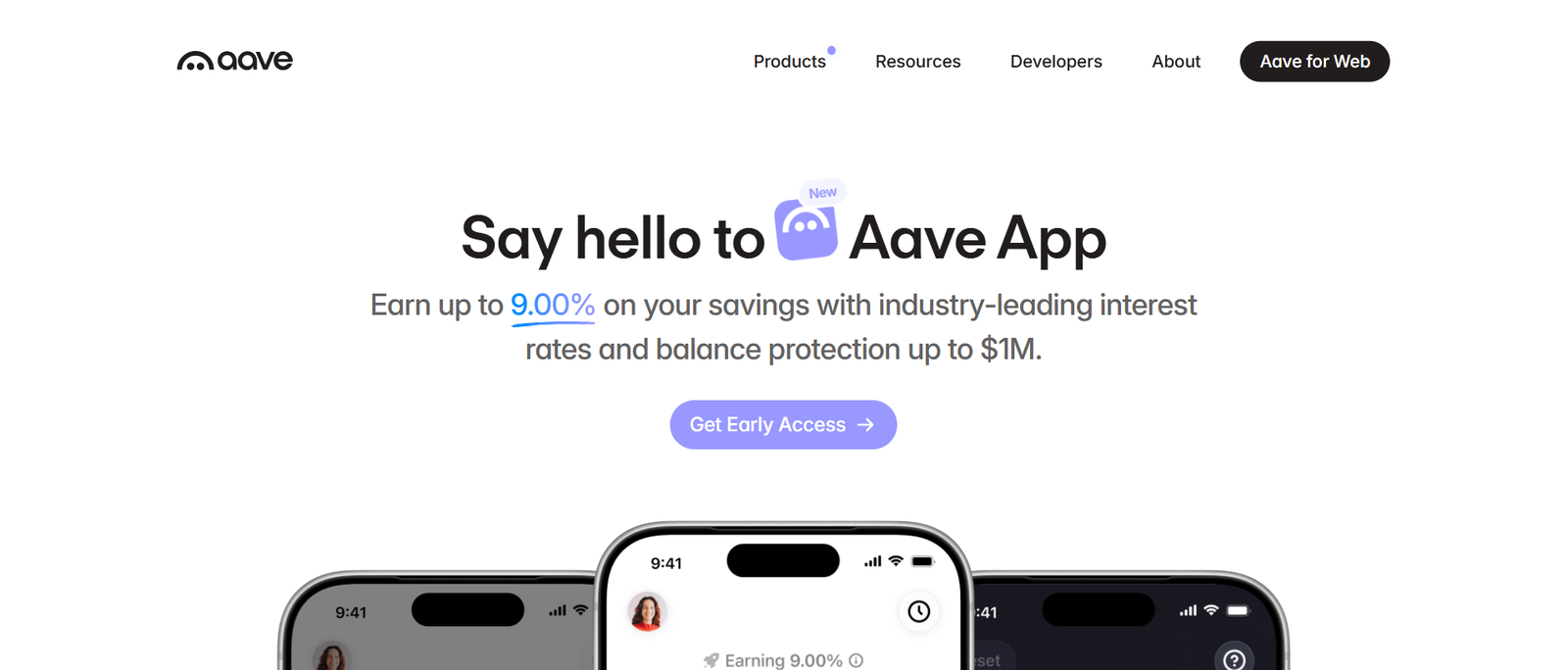
Aave is widely recognised as one of the most trusted DeFi investment platforms in the crypto market. It allows users to deposit digital assets into liquidity pools and earn interest when borrowers take loans from those pools.
Investors looking for passive income frequently choose Aave because it offers flexible lending markets across multiple blockchains including Ethereum and Polygon. When reviewing any Aave review, analysts often highlight its strong liquidity depth and transparent interest rate models.
Key Features
Decentralised Lending Pools
The core feature inside the Aave investment platform is its lending pool system. Users deposit tokens into smart contract pools and earn variable interest rates based on borrowing demand. This makes Aave suitable for investors who want passive crypto income without active trading.
Flash Loans
Flash loans are a unique feature where traders borrow funds instantly without collateral, provided the loan is repaid within the same transaction block. Arbitrage traders and developers use this feature to capture short term trading opportunities across decentralised exchanges.
Multi Chain Support
Unlike early DeFi platforms that relied on a single blockchain, Aave operates across several networks including Avalanche and Optimism. This lowers transaction costs and increases liquidity access. Many investors comparing Aave alternatives prefer this cross chain availability.
Collateralised Borrowing
Users can borrow crypto assets by locking other digital assets as collateral. This allows investors to access liquidity while still maintaining exposure to their holdings. Institutional traders often reference this feature when writing an Aave review focused on portfolio management strategies.
Governance Through AAVE Token
The platform runs through community governance using the AAVE token. Token holders vote on upgrades, risk parameters, and new asset listings. Investors researching Aave pricing often note that governance participation gives long term holders influence over protocol decisions.
Pros and Cons
| Pros | Cons |
| Large liquidity pools | Gas fees on Ethereum |
| Strong security audits | Interface learning curve |
| Multi chain support | Variable interest rates |
| Flash loan capability | Requires crypto knowledge |
Pricing
The Aave pricing model does not charge direct subscription fees.
Costs come from:
- Blockchain gas fees
- Loan interest payments for borrowers
- Small protocol fees on certain transactions
Typical capital requirements start from $10 worth of crypto depending on network gas fees.
Best For Crypto Investors Seeking Passive Lending Yield
Aave works best for investors who want interest income from idle crypto assets.
Ideal Users
- Crypto long term holders — earn interest while holding assets
- DeFi investors — generate yield through lending markets
- Arbitrage traders — use flash loans for market opportunities
- Portfolio managers — access liquidity without selling assets
Pro Tip
Many investors researching Aave vs Compound overlook Aave’s flash loans. These can be used to capture price differences across decentralised exchanges without using personal capital.
Hidden Strategy Many Investors Miss
One lesser known tactic with Aave investment platforms is looped lending.
Steps often used by experienced investors:
- Deposit stablecoins into Aave
- Borrow against that collateral
- Re deposit the borrowed assets
- Repeat the cycle
This increases exposure to lending yield while still maintaining collateral backing.Use caution though. This strategy increases liquidation risk during market volatility.
Best Alternate Tool
Many investors comparing Aave alternatives often review Compound because both platforms focus on decentralised lending markets.
Compound offers a simpler interface, while Aave provides more advanced lending options and flash loan functionality.
Uniswap
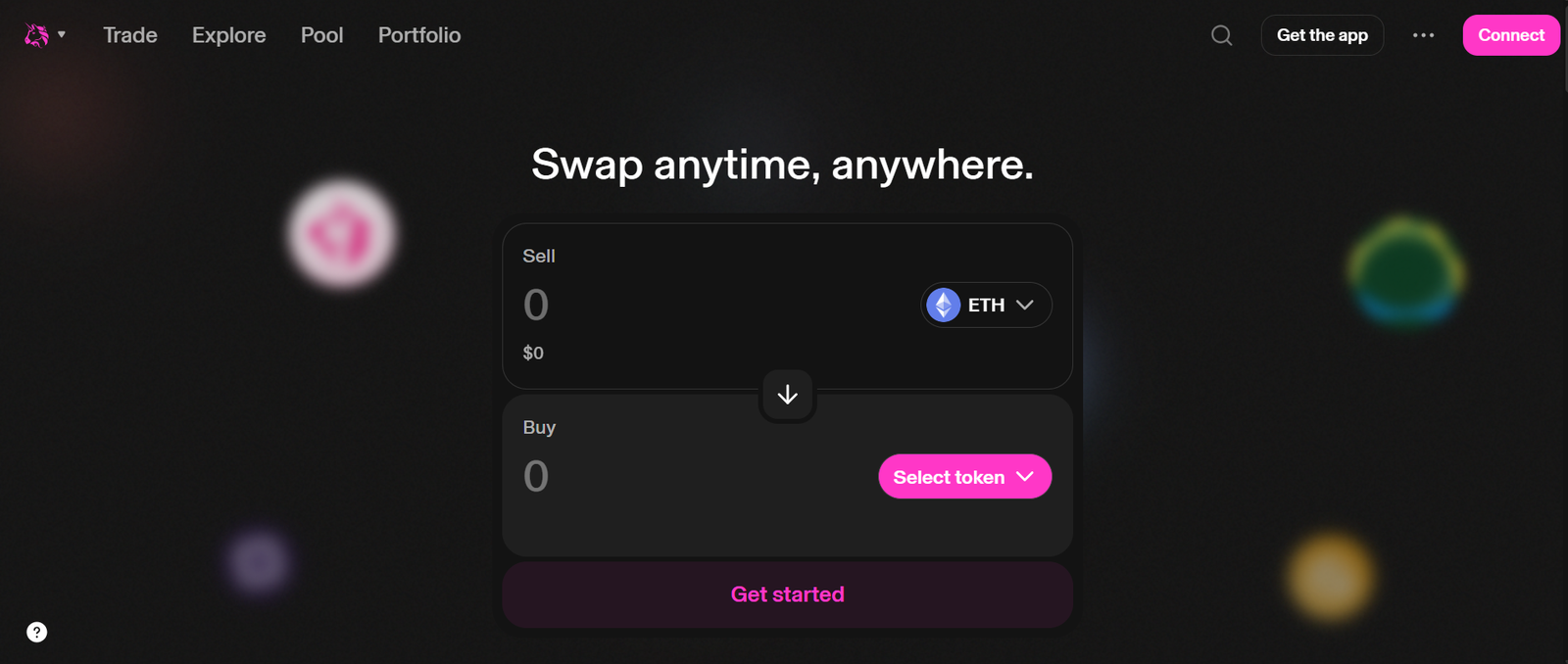
Uniswap is one of the most widely used DeFi investment platforms for liquidity provision and token trading. Built on Ethereum, it allows users to swap tokens directly from their wallets without relying on central exchanges.Investors using Uniswap investment platforms primarily earn income by supplying token pairs to liquidity pools.
When reading a typical Uniswap review, analysts often highlight its massive liquidity depth and dominance in decentralised trading. According to DeFiLlama, Uniswap frequently ranks among the top protocols for daily trading volume.
People researching Uniswap pricing, Uniswap alternatives, or Uniswap vs SushiSwap comparisons usually find that Uniswap still leads in liquidity and developer adoption.
Key Features
Automated Market Maker System
The core of the Uniswap investment platform is its automated market maker model. Instead of order books, liquidity pools determine token prices through mathematical formulas. This allows anyone to trade tokens instantly. Most Uniswap review discussions highlight how this model simplified decentralised trading across crypto markets.
Liquidity Provider Rewards
Users who deposit token pairs into pools earn a portion of the trading fees generated by swaps. These rewards accumulate automatically based on trading activity within the pool. Investors researching Uniswap pricing often note that earnings depend heavily on pool volume and liquidity demand.
Permissionless Token Listings
One important reason Uniswap dominates many DeFi investment platforms is that any developer can list tokens without approval. This allows new projects to gain liquidity quickly. Traders comparing Uniswap vs SushiSwap often notice that many tokens launch liquidity first on Uniswap.
Concentrated Liquidity in V3
The V3 upgrade introduced concentrated liquidity. Liquidity providers can allocate funds within specific price ranges. This improves capital efficiency and allows advanced users to earn higher fee returns. Analysts frequently mention this feature when writing a Uniswap review.
Wallet Based Trading
Uniswap connects directly with crypto wallets such as MetaMask. This means traders keep custody of their assets while interacting with the protocol. Many investors comparing Uniswap alternatives value this security model.
Pros and Cons
| Pros | Cons |
| Large liquidity pools | Gas fees on Ethereum |
| Simple token swaps | Impermanent loss risk |
| No account required | Advanced LP strategy needed |
| Strong DeFi reputation | Limited customer support |
Pricing
The Uniswap pricing model operates through trading fees rather than subscriptions.
Typical fees include:
- 0.05% low fee pools
- 0.30% standard trading pools
- 1% high volatility pools
Liquidity providers earn a portion of these fees depending on their share of the pool.Transaction gas costs depend on the network used. Ethereum transactions tend to cost more than layer 2 networks such as Arbitrum.
Best For Liquidity Providers Seeking Trading Fee Income
Uniswap works best for crypto investors interested in earning income from trading activity.
Ideal Users
- DeFi investors — generate yield from liquidity pools
- Crypto traders — swap tokens without central exchanges
- Token founders — launch liquidity for new projects
- Yield farmers — combine Uniswap with other DeFi strategies
Pro Tip
Investors comparing Uniswap vs SushiSwap often overlook one tactic. Providing liquidity in high volume trading pairs such as ETH stablecoin pools usually produces more consistent fee income than smaller tokens.
Strategy Many Liquidity Providers Use
Experienced users of Uniswap investment platforms frequently track trading volume before entering a pool.
Common research steps include:
- Check pool volume and liquidity ratio
- Evaluate impermanent loss risk
- Choose concentrated liquidity ranges
- Monitor trading activity weekly
Liquidity pools with consistent volume generally produce more reliable fee income.
Best Alternate Tool
Many traders researching Uniswap alternatives compare it with SushiSwap.SushiSwap offers similar liquidity pools but also includes additional DeFi tools such as staking rewards and governance incentives.
Curve Finance
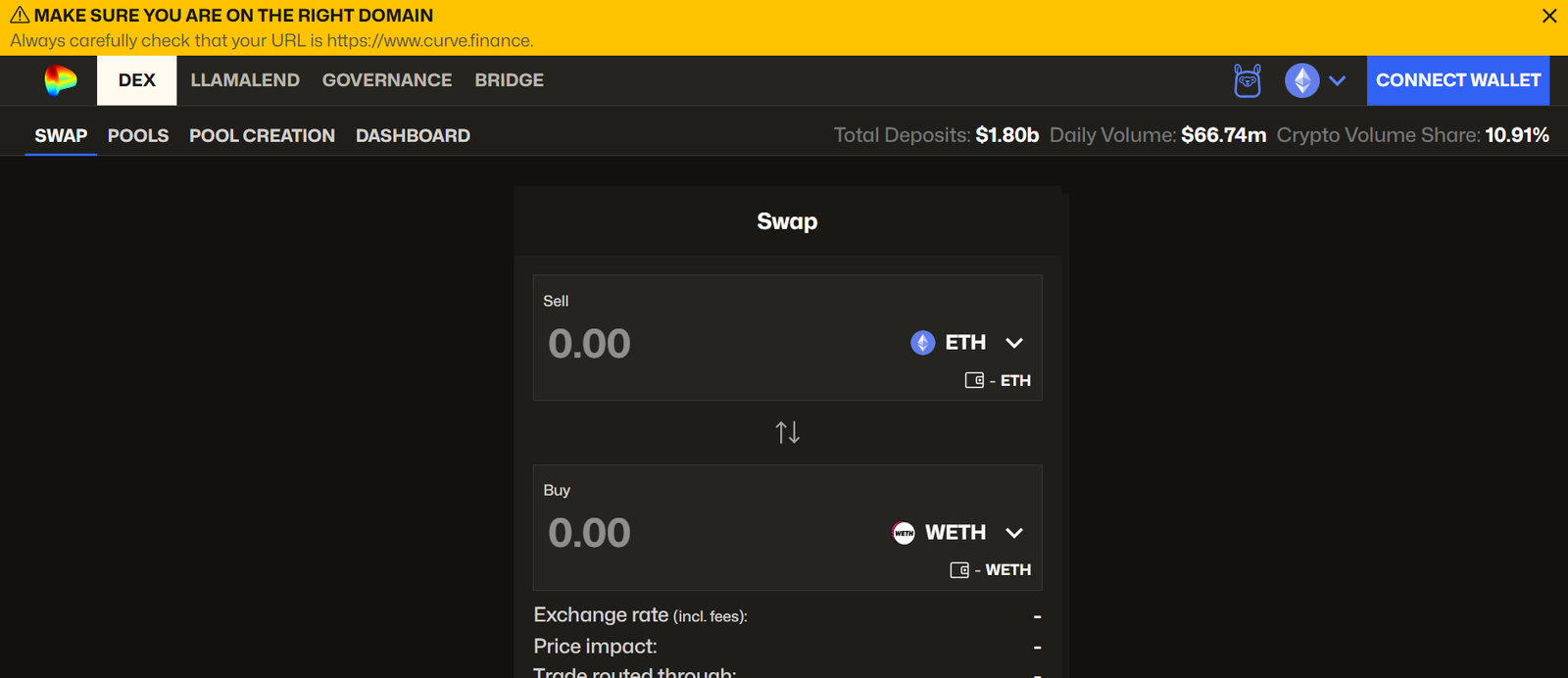
Curve Finance is one of the most specialised DeFi investment platforms built primarily for stablecoin trading and liquidity provision. The protocol focuses on assets that track similar values, such as stablecoins and wrapped tokens.
Because of this design, Curve Finance reduces price slippage during swaps and creates efficient liquidity pools for stable assets. Many investors reading a Curve Finance review note that it plays a central role in the DeFi ecosystem due to its deep liquidity and strong integrations with other protocols.
Curve runs mainly on Ethereum but also supports networks such as Polygon and Arbitrum.When investors research Curve Finance pricing, Curve Finance alternatives, or Curve Finance vs Uniswap, the conversation usually focuses on its efficiency for stablecoin pools and long term yield farming strategies.
Key Features
Stablecoin Liquidity Pools
The primary feature of the Curve Finance investment platform is its stablecoin liquidity pools. These pools allow traders to swap assets such as stablecoins with minimal slippage. Investors supplying liquidity earn a portion of trading fees. Most Curve Finance review articles highlight this design as the reason large DeFi funds use the protocol.
Low Slippage Trading
Curve uses specialised pricing algorithms designed for assets with similar values. This allows traders to exchange stablecoins with much smaller price impact compared to many other decentralised exchanges. Investors comparing Curve Finance vs Uniswap frequently prefer Curve for large stablecoin swaps.
CRV Token Governance
The protocol runs through its governance token known as CRV. Token holders can vote on liquidity incentives, protocol upgrades, and reward allocations. Many Curve Finance review discussions point out that governance participation also influences yield distribution within liquidity pools.
Integration With Other DeFi Platforms
Curve integrates with many other DeFi investment platforms such as Yearn Finance. These integrations allow investors to earn additional rewards on top of normal liquidity fees. This cross protocol interaction often appears in Curve Finance alternatives comparisons.
Gauge Reward System
Curve uses a system called gauges to allocate token rewards across pools. Investors who stake liquidity provider tokens can earn additional CRV incentives. This mechanism is often highlighted when analysing Curve Finance pricing and yield opportunities.
Pros and Cons
| Pros | Cons |
| Very low slippage | Complex interface |
| Strong stablecoin liquidity | Limited non stablecoin pools |
| Widely integrated in DeFi | Yield varies by pool |
| Extra CRV rewards | Learning curve for beginners |
Pricing
The Curve Finance pricing model does not charge account fees.
Typical costs include:
- Swap trading fees
- Network transaction fees
- Liquidity pool participation costs
Liquidity providers receive part of the swap fees along with CRV token rewards depending on the pool and staking options selected.Starting capital typically ranges from $50 or more in stablecoins depending on network gas costs.
Best For Investors Focused on Stablecoin Yield
Curve Finance works best for investors who want relatively stable DeFi yield using stablecoin liquidity pools.
Ideal Users
- Stablecoin investors — earn yield on idle stable assets
- Yield farmers — combine Curve pools with other DeFi platforms
- Crypto funds — perform large stablecoin swaps with low slippage
- Liquidity providers — collect trading fees from high volume pools
Pro Tip
When investors compare Curve Finance vs Uniswap, one tactic often used by advanced users is combining Curve with yield aggregators such as Yearn Finance. This allows liquidity positions to generate additional rewards beyond trading fees.
Strategy Used by Experienced Yield Farmers
Many advanced users of DeFi investment platforms combine Curve liquidity pools with CRV staking.
A common process includes:
- Provide stablecoin liquidity on Curve
- Receive LP tokens from the pool
- Stake LP tokens in CRV gauges
- Earn both trading fees and CRV rewards
This dual reward system is one reason Curve frequently appears near the top of DeFi investment platform reviews.
Best Alternate Tool
Investors researching Curve Finance alternatives often compare it with Balancer, another liquidity platform that supports multi token pools and portfolio style liquidity management.
Compound
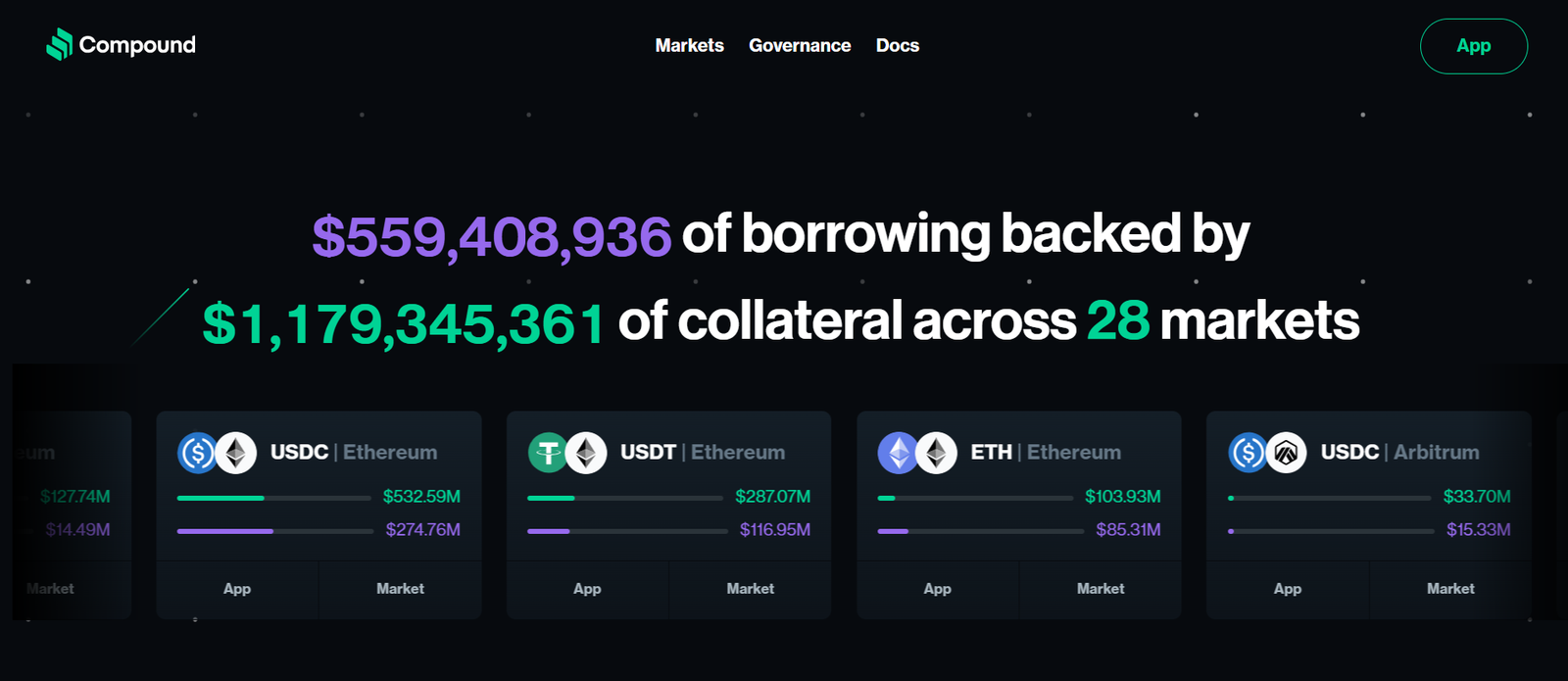
Compound is one of the earliest and most widely used DeFi investment platforms for decentralised lending and borrowing. It allows users to deposit crypto assets into liquidity pools and earn interest automatically when borrowers take loans from those pools.
The protocol runs mainly on Ethereum and operates through smart contracts that set interest rates using algorithmic supply and demand models. Many analysts writing a Compound review highlight how this automated interest system simplified decentralised lending.
When investors compare Compound pricing, Compound alternatives, or Compound vs Aave, they often focus on its clean interface and predictable lending structure.Compound remains a popular choice for investors seeking passive income from crypto holdings through DeFi investment platforms.
Key Features
Algorithmic Interest Rate Model
The core feature of the Compound investment platform is its algorithmic interest rate system. Interest rates change automatically depending on how much liquidity is available and how much is borrowed. This ensures that markets stay balanced. Most Compound review reports highlight this automated pricing structure.
Crypto Lending Pools
Users deposit assets into liquidity pools where borrowers can take loans by providing collateral. Lenders earn interest while their assets remain in the pool. Investors researching Compound pricing often choose the platform because the process is straightforward compared with many other DeFi protocols.
Collateral Based Borrowing
Borrowers must deposit collateral before accessing loans. This system protects lenders by ensuring that loans remain overcollateralised. Analysts comparing Compound vs Aave often note that both platforms follow similar collateral models to maintain stability.
COMP Governance Token
Compound operates through the COMP governance token. Token holders vote on protocol changes such as new assets, risk limits, and reward distribution. Many Compound review discussions mention governance participation as a key benefit for long term token holders.
Transparent On Chain Interest Markets
All lending markets operate on a chain, meaning interest rates, liquidity, and transactions are publicly visible. Investors reviewing Compound alternatives frequently value this transparency when choosing between lending platforms.
Pros and Cons
| Pros | Cons |
| Simple lending interface | Limited asset variety |
| Transparent interest markets | Lower yield than farming |
| Trusted early DeFi protocol | Ethereum gas fees |
| Strong security record | No flash loans |
Pricing
The Compound pricing structure does not involve account fees.
Costs generally include:
- Ethereum transaction fees
- Borrowing interest payments
- Minor protocol transaction costs
Minimum investment can start from $20 worth of crypto, depending on gas fees and network congestion.Returns depend on market demand for the assets supplied.
Best For Crypto Investors Wanting Simple Lending Income
Compound suits investors who want a straightforward way to earn interest from digital assets.
Ideal Users
- Long term crypto holders — generate passive lending income
- DeFi beginners — start with simple lending pools
- Portfolio managers — maintain exposure while accessing liquidity
- Stablecoin investors — earn interest on idle stablecoins
Pro Tip
Many investors comparing Compound vs Aave overlook a useful tactic. Lending stablecoins during high market volatility often produces higher interest rates because borrowing demand rises sharply during those periods.
Strategy Used by Experienced DeFi Investors
Some experienced users of DeFi investment platforms combine Compound with other protocols.
Typical approach:
- Deposit stablecoins into Compound lending pools
- Earn interest from borrowers
- Use earned tokens in other DeFi platforms
- Rotate capital based on changing interest rates
Monitoring interest rate trends is important since yields can change rapidly.
Best Alternate Tool
Investors researching Compound alternatives often compare it with Aave.
Aave offers additional features such as flash loans and broader asset markets, while Compound remains popular due to its simpler lending structure.
MakerDAO
MakerDAO is one of the oldest and most influential DeFi investment platforms in the crypto ecosystem. It is best known for creating the decentralised stablecoin DAI.
The platform allows investors to lock crypto assets as collateral inside vaults and generate DAI stablecoins against those assets. This means investors can access liquidity without selling their crypto holdings.
Most analysts writing a MakerDAO review describe it as the foundation of the decentralised stablecoin economy. The protocol runs mainly on Ethereum and has supported billions of dollars in collateral since its launch.
When investors compare MakerDAO pricing, MakerDAO alternatives, or MakerDAO vs Compound, they often focus on its stablecoin generation system and collateral vault model.
Key Features
Collateral Vault System
The primary feature of the MakerDAO investment platform is its vault system. Users deposit crypto assets such as ETH into smart contract vaults and generate DAI stablecoins as loans against their collateral. Many MakerDAO review articles explain that this system allows investors to unlock liquidity while still keeping their crypto exposure.
DAI Stablecoin Creation
MakerDAO powers the stablecoin DAI, which is designed to maintain a value close to one US dollar. Investors frequently use DAI across other DeFi investment platforms for lending, yield farming, and trading. The stability of DAI is a major topic in any MakerDAO review.
Collateral Risk Management
Each vault has a required collateral ratio that protects the system from loan defaults. If the collateral value falls below the threshold, liquidation mechanisms activate. Analysts comparing MakerDAO vs Compound often highlight this strict collateral control system.
Governance With MKR Token
The protocol operates through governance using the MKR token. MKR holders vote on interest rates, collateral requirements, and protocol upgrades. Investors researching MakerDAO pricing often study governance proposals because they influence borrowing costs.
Integration Across DeFi
One reason MakerDAO remains among the most important DeFi investment platforms is that DAI is widely used across other protocols. Platforms like Aave and Curve Finance support DAI in their liquidity pools.
Pros and Cons
| Pros | Cons |
| Stablecoin backed lending | Liquidation risk |
| Strong DeFi adoption | Complex vault management |
| Large collateral markets | Ethereum gas fees |
| Transparent governance | Requires collateral monitoring |
Pricing
The MakerDAO pricing structure mainly involves borrowing fees rather than platform subscriptions.
Typical costs include:
- Stability fee on generated DAI loans
- Ethereum transaction fees
- Liquidation penalty if collateral drops below threshold
Most investors start with $100 or more in crypto collateral to open a vault position.Borrowing rates depend on governance decisions and market conditions.
Best For Investors Wanting Stablecoin Liquidity Without Selling Crypto
MakerDAO is ideal for investors who want to access stablecoins while still holding long term crypto positions.
Ideal Users
- Long term crypto holders — access liquidity without selling assets
- DeFi investors — generate DAI for yield strategies
- Stablecoin traders — use DAI across multiple protocols
- Portfolio managers — maintain exposure while accessing funds
Pro Tip
Many investors comparing MakerDAO vs Compound overlook one strategy. Borrowing DAI during market rallies allows investors to deploy stablecoins into yield pools while their collateral continues to gain value.
Strategy Used by Experienced DeFi Users
Advanced users of DeFi investment platforms frequently combine MakerDAO vaults with other yield strategies.
Typical workflow:
- Deposit ETH into a MakerDAO vault
- Generate DAI stablecoins
- Supply DAI into lending or liquidity pools
- Earn yield while maintaining ETH exposure
Monitoring collateral ratios is important to avoid liquidation during market volatility.
Best Alternate Tool
Investors researching MakerDAO alternatives frequently compare it with Compound, which also allows lending and borrowing but does not focus on stablecoin creation like MakerDAO.
SushiSwap

SushiSwap is a well known protocol among DeFi investment platforms that combines decentralised trading with yield farming and staking rewards. It started as a fork of Uniswap but later expanded into a full DeFi ecosystem.
The platform supports multiple blockchains including Ethereum, Polygon, and Avalanche.
Most analysts writing a SushiSwap review highlight its broad range of yield opportunities compared with many other decentralised exchanges. Investors researching SushiSwap pricing, SushiSwap alternatives, or SushiSwap vs Uniswap usually focus on its additional staking rewards and multi chain trading support.
Because of these features, SushiSwap remains a popular choice among yield farmers and crypto traders looking for flexible DeFi investment platforms.
Key Features
Decentralised Token Swaps
The core feature of the SushiSwap investment platform is token swapping through liquidity pools. Users can exchange cryptocurrencies directly from their wallets without centralised exchanges. Many SushiSwap review discussions highlight the convenience of this decentralised trading model.
Yield Farming Opportunities
Liquidity providers can stake their pool tokens to earn additional rewards through yield farming programmes. These rewards are often paid in the platform’s governance token. Investors analysing SushiSwap pricing often calculate potential returns from both trading fees and farming rewards.
Multi Chain Support
One major advantage in many SushiSwap review reports is its support for several blockchains. This reduces network fees and gives investors flexibility when moving funds between chains. Traders comparing SushiSwap vs Uniswap often prefer SushiSwap for this broader blockchain compatibility.
Staking With SushiBar
Users can stake SUSHI tokens in SushiBar to receive a share of platform trading fees. This mechanism allows long term token holders to earn passive income from the protocol’s activity. Investors researching SushiSwap alternatives frequently compare staking rewards across different DeFi exchanges.
DeFi Tool Ecosystem
SushiSwap includes several DeFi tools such as lending markets, launchpad features, and liquidity incentives. This wider ecosystem makes the protocol more than just a trading platform. Many analysts writing a SushiSwap review highlight its role as a full DeFi hub.
Pros and Cons
| Pros | Cons |
| Multi chain support | Lower liquidity than Uniswap |
| Additional staking rewards | Interface can feel complex |
| Active DeFi ecosystem | Token rewards fluctuate |
| Suitable for yield farming | Market competition rising |
Pricing
The SushiSwap pricing structure is based on trading and liquidity fees.
Typical costs include:
- Trading fee around 0.3% per swap
- Network transaction fees
- Optional staking participation
Liquidity providers earn a share of trading fees and additional token incentives depending on the pool.Investors usually start with $50 or more in crypto depending on network gas fees.
Best For Yield Farmers Seeking Multiple Reward Streams
SushiSwap is suitable for investors who want more than simple token swaps.
Ideal Users
- Yield farmers — earn trading fees and token rewards
- DeFi investors — access multi chain liquidity pools
- Crypto traders — swap tokens without central exchanges
- Token holders — earn passive income through staking
Pro Tip
Many investors comparing SushiSwap vs Uniswap overlook the advantage of staking SUSHI tokens in SushiBar. This allows holders to earn part of the platform’s trading fees without actively providing liquidity.
Strategy Used by Experienced DeFi Investors
Experienced users of DeFi investment platforms sometimes combine SushiSwap farming with liquidity pools.
A common approach includes:
- Provide liquidity to a high volume token pair
- Stake LP tokens in a farming pool
- Earn trading fees and SUSHI rewards
- Reinvest rewards into additional liquidity
This compound strategy is often discussed in advanced SushiSwap review analysis.
Best Alternate Tool
Investors researching SushiSwap alternatives frequently compare it with Uniswap, which still leads in liquidity depth and trading volume across DeFi markets.
PancakeSwap
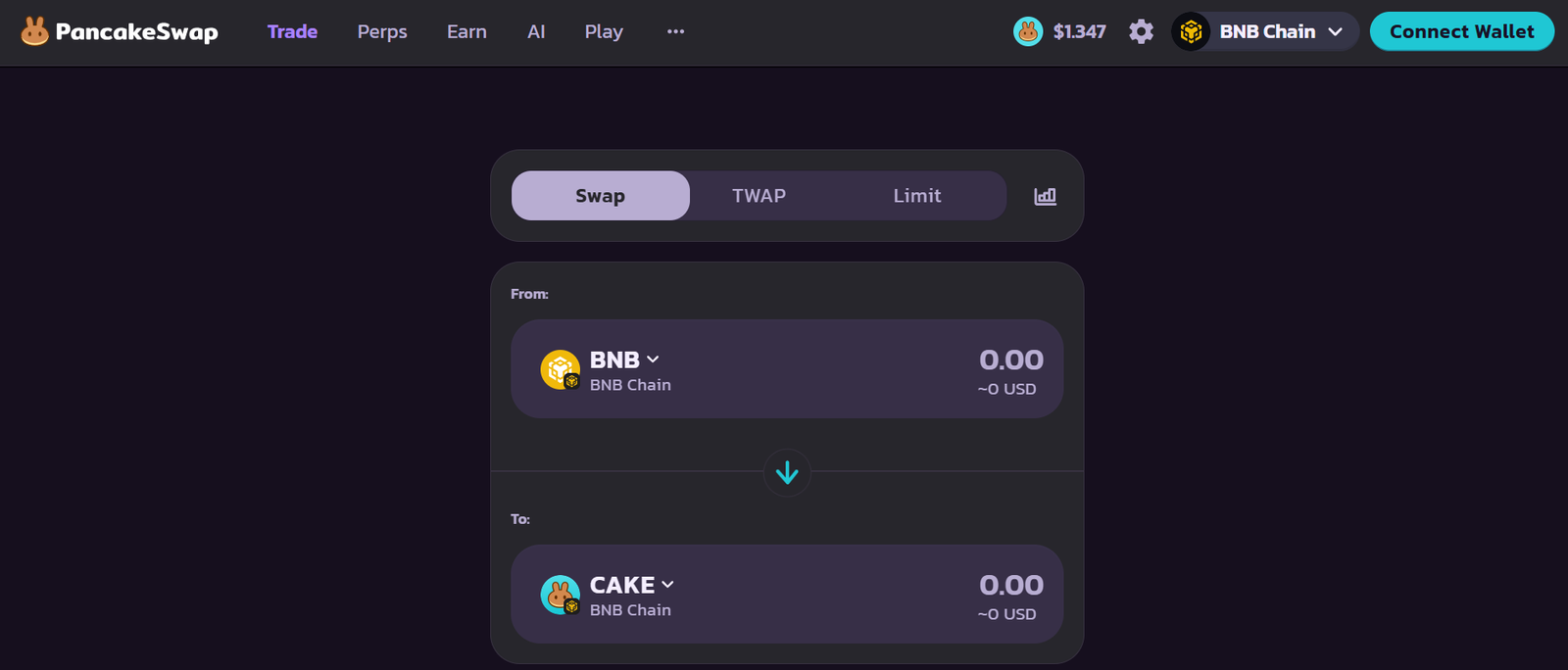
PancakeSwap is one of the most widely used DeFi investment platforms operating on the BNB Chain. It offers decentralised token swaps, liquidity pools, staking, and yield farming opportunities.
Because BNB Chain has lower transaction costs compared with Ethereum, PancakeSwap became popular among retail investors looking for affordable DeFi participation.
Most analysts writing a PancakeSwap review highlight its large user base and strong liquidity across BNB Chain tokens. Investors researching PancakeSwap pricing, PancakeSwap alternatives, or PancakeSwap vs Uniswap often focus on its lower fees and wide range of yield farming pools.
These factors keep PancakeSwap among the most active DeFi investment platforms for both traders and liquidity providers.
Key Features
Decentralised Token Swaps
The core feature of the PancakeSwap investment platform is token trading through automated liquidity pools. Users can exchange tokens directly from their wallets without central exchanges. Many PancakeSwap review reports highlight how quickly transactions execute due to BNB Chain’s faster block times.
Yield Farming Pools
Liquidity providers can deposit token pairs into farming pools and earn rewards in CAKE tokens. These farms often produce higher returns compared with basic liquidity pools. Investors researching PancakeSwap pricing frequently analyse farming rewards before entering pools.
Staking With Syrup Pools
CAKE token holders can stake their tokens in Syrup Pools to earn additional cryptocurrency rewards. These pools sometimes distribute tokens from new blockchain projects. Analysts writing a PancakeSwap review often mention Syrup Pools as a popular passive income feature.
Lottery and Gamified Features
Unlike many other DeFi investment platforms, PancakeSwap includes a crypto lottery system and prediction markets. These features add extra engagement for traders. Investors comparing PancakeSwap vs Uniswap often notice these additional interactive elements.
Multi Chain Expansion
Although PancakeSwap started on BNB Chain, the platform has expanded to support networks like Polygon and Arbitrum. This allows traders to access liquidity across multiple ecosystems.
Pros and Cons
| Pros | Cons |
| Low transaction fees | BNB Chain ecosystem risk |
| Strong retail adoption | Impermanent loss risk |
| Many farming pools | Token reward volatility |
| Fast transaction speed | Complex farming options |
Pricing
The PancakeSwap pricing model is built around trading and liquidity fees.
Typical costs include:
- Trading fee around 0.25% per swap
- Network transaction fees on BNB Chain
- Optional liquidity participation costs
Liquidity providers earn part of the trading fees and CAKE token incentives depending on the pool.Many investors begin using the platform with $20 to $50 worth of crypto due to low network fees.
Best For Retail Investors Seeking Low Fee DeFi Yield
PancakeSwap works well for investors who want low cost entry into DeFi investment platforms.
Ideal Users
- New DeFi investors — access low fee trading and staking
- Yield farmers — earn CAKE rewards through farming pools
- Crypto traders — swap tokens on BNB Chain
- Token holders — earn passive income through staking pools
Pro Tip
Investors comparing PancakeSwap vs Uniswap often overlook the benefit of smaller transaction costs. This allows investors to rebalance liquidity positions more frequently without losing profits to gas fees.
Strategy Used by Experienced Yield Farmers
Many experienced users of DeFi investment platforms track farming pool reward rates carefully.
A common strategy includes:
- Identify high liquidity token pairs
- Provide liquidity to the pool
- Stake LP tokens in farming contracts
- Reinvest CAKE rewards into additional pools
This reinvestment approach can gradually increase farming returns over time.
Best Alternate Tool
Investors researching PancakeSwap alternatives frequently compare it with Uniswap, which remains the largest decentralised exchange on Ethereum.
Yearn Finance

Yearn Finance is one of the most recognised DeFi investment platforms built to automate yield farming strategies. Instead of manually moving funds between protocols, Yearn automatically allocates user deposits to the most profitable DeFi strategies.
The protocol operates primarily on Ethereum and integrates with multiple DeFi systems such as Curve Finance and Aave. Most analysts writing a Yearn Finance review highlight its vault system, which allows investors to earn yield while the protocol manages capital allocation automatically.
When investors analyse Yearn Finance pricing, Yearn Finance alternatives, or Yearn Finance vs Aave, they often focus on how the platform simplifies yield farming across different DeFi investment platforms.
Key Features
Automated Yield Vaults
The main feature of the Yearn Finance investment platform is its vault system. Investors deposit crypto assets into vaults, and automated strategies allocate those funds across DeFi protocols to generate yield. Many Yearn Finance review discussions highlight how these vaults remove the need for manual yield farming management.
Strategy Optimisation
Yearn uses strategy developers who design smart contract systems that shift funds between lending markets, liquidity pools, and yield farms. These strategies adapt based on market conditions. Investors researching Yearn Finance pricing often analyse vault performance before depositing funds.
Multi Protocol Integration
Yearn interacts with several major DeFi protocols such as Compound and Curve Finance. This allows vault strategies to combine rewards from multiple sources across DeFi investment platforms.
Passive Income Management
One reason many investors prefer Yearn is that vault strategies automatically compound earnings. This means profits are reinvested without manual action. Analysts writing a Yearn Finance review frequently highlight this passive investment model.
Governance Through YFI Token
The platform operates through the YFI governance token. Token holders participate in protocol decisions including strategy updates and fee structures. Investors comparing Yearn Finance alternatives often evaluate governance participation before choosing platforms.
Pros and Cons
| Pros | Cons |
| Automated yield strategies | Strategy risks |
| Passive income management | Vault fees apply |
| Integrated with major DeFi protocols | Ethereum gas costs |
| Compounding returns | Limited beginner guidance |
Pricing
The Yearn Finance pricing model includes performance and management fees.
Typical costs include:
- Performance fee on vault profits
- Management fee on deposited funds
- Ethereum network transaction fees
Many investors begin using Yearn vaults with $100 or more in crypto, depending on gas costs.Returns vary based on vault strategies and DeFi market conditions.
Best For Investors Seeking Automated Yield Farming
Yearn Finance is well suited for investors who want exposure to yield farming without actively managing multiple protocols.
Ideal Users
- Passive crypto investors — earn yield without manual trading
- DeFi investors — access automated yield strategies
- Stablecoin holders — generate returns through vault deposits
- Portfolio managers — allocate funds across multiple DeFi protocols
Pro Tip
Investors comparing Yearn Finance vs Aave often overlook a useful tactic. Depositing stablecoins into Yearn vaults connected to Curve Finance pools can generate yield from multiple reward streams simultaneously.
Strategy Used by Experienced DeFi Investors
Many experienced users of DeFi investment platforms rely on Yearn vaults for automated capital allocation.
A common process includes:
- Deposit stablecoins or ETH into a Yearn vault
- Allow the vault strategy to allocate funds across DeFi protocols
- Earn compounded rewards automatically
- Withdraw profits when vault yield rates peak
Monitoring vault strategy performance is important because returns depend on changing DeFi market conditions.
Best Alternate Tool
Investors researching Yearn Finance alternatives frequently compare it with Beefy Finance, another protocol that provides automated yield farming strategies across multiple blockchains.
Balancer

Balancer is one of the more advanced DeFi investment platforms designed for flexible liquidity pools and portfolio style asset management. Unlike traditional decentralised exchanges that require equal token pairs, Balancer allows pools with multiple tokens and custom weight ratios.
Many analysts writing a Balancer review highlight that liquidity pools can contain up to eight different tokens, effectively acting as decentralised portfolio funds. Investors researching Balancer pricing, Balancer alternatives, or Balancer vs Uniswap often focus on its flexibility for portfolio diversification.
This design makes Balancer attractive for investors seeking structured portfolio exposure through DeFi investment platforms.
Key Features
Multi Token Liquidity Pools
The main feature of the Balancer investment platform is its ability to create liquidity pools with several tokens rather than simple two token pairs. These pools can contain up to eight assets with customised allocation ratios. Many Balancer review reports describe these pools as decentralised index funds.
Custom Weight Allocation
Pool creators can define token weight percentages such as 80 percent ETH and 20 percent stablecoins. This allows investors to maintain preferred portfolio allocations automatically. Investors analysing Balancer pricing often examine pool weight structures before providing liquidity.
Automated Portfolio Rebalancing
Balancer pools automatically rebalance based on trading activity. When traders swap assets in the pool, token allocations adjust back toward their original weight ratios. Analysts comparing Balancer vs Uniswap frequently highlight this portfolio management capability.
Liquidity Provider Fee Earnings
Users who supply assets to pools earn trading fees whenever swaps occur. These fees vary depending on the pool configuration. Many Balancer review discussions highlight this feature as a way to earn passive income from diversified token portfolios.
Governance With BAL Token
The protocol operates through the BAL governance token. Token holders vote on network upgrades, incentive distributions, and pool structures. Investors researching Balancer alternatives often evaluate governance systems across DeFi protocols.
Pros and Cons
| Pros | Cons |
| Flexible liquidity pools | Advanced interface |
| Multi token portfolio pools | Impermanent loss risk |
| Automatic rebalancing | Ethereum gas costs |
| Passive trading fee income | Learning curve |
Pricing
The Balancer pricing model is based on trading fees within liquidity pools.
Typical costs include:
- Pool trading fees set by pool creators
- Network transaction fees
- Optional staking or governance participation
Liquidity providers earn a share of pool trading fees based on the amount of capital they supply.Investors generally start with $100 or more in crypto assets, especially when joining multi token pools.
Best For Investors Wanting Diversified Liquidity Pools
Balancer works well for investors who want diversified exposure across multiple assets within DeFi investment platforms.
Ideal Users
- Portfolio investors — maintain multi asset liquidity pools
- DeFi traders — earn trading fees from diversified pools
- Token funds — create custom crypto index style pools
- Liquidity providers — earn income from portfolio based trading activity
Pro Tip
Investors comparing Balancer vs Uniswap often miss the advantage of weighted pools. Allocating higher percentages to stablecoins can reduce volatility exposure while still collecting liquidity fees.
Strategy Used by Experienced DeFi Investors
Many experienced users of DeFi investment platforms create long term liquidity pools using Balancer.
A common approach includes:
- Create a pool with ETH and stablecoins
- Set custom weight ratios such as 70 percent ETH and 30 percent stablecoins
- Allow traders to rebalance the portfolio through swaps
- Earn trading fees from ongoing pool activity
This strategy allows investors to maintain a portfolio allocation while generating liquidity income.
Best Alternate Tool
Investors researching Balancer alternatives frequently compare it with Uniswap, which focuses on simpler liquidity pools but has larger trading volume.
Lido

Lido is one of the most widely used DeFi investment platforms for staking cryptocurrencies while maintaining liquidity. It allows investors to stake assets such as Ethereum without locking them permanently.
When users stake ETH through Lido, they receive a token called stETH which represents the staked position. This token can still be used across other DeFi investment platforms for lending, liquidity pools, or yield farming.
Most analysts writing a Lido review highlight its role in making staking accessible to everyday investors. According to data from DeFiLlama, Lido frequently ranks among the largest DeFi protocols by total value locked.
Key Features
Liquid Ethereum Staking
The primary feature of the Lido investment platform is liquid staking. Investors can stake ETH without locking funds in validator nodes. In return, they receive stETH tokens that represent their staking balance. Many Lido review reports highlight this feature as a major improvement compared with traditional staking models.
stETH Token Utility
The stETH token received from staking can be used across other DeFi investment platforms. Investors can supply it to lending platforms or liquidity pools while still earning staking rewards. Analysts researching Lido pricing often consider this dual earning potential.
Validator Network
Lido uses a distributed validator network to secure the blockchain. Multiple professional validators manage staked assets rather than a single operator. Many Lido review discussions point out that this system reduces centralisation risk within the staking infrastructure.
Integration Across DeFi
The stETH token is widely supported across major DeFi protocols such as Aave and Curve Finance. This interoperability allows investors to use staked assets for additional yield strategies.
Governance Through LDO Token
The protocol operates through its governance token called LDO. Token holders vote on protocol changes including validator selection and network upgrades. Investors researching Lido alternatives frequently compare governance models across staking protocols.
Pros and Cons
| Pros | Cons |
| Liquid staking flexibility | Smart contract risks |
| Widely adopted protocol | Ethereum network dependency |
| stETH usable in DeFi | Staking reward fluctuations |
| No minimum staking requirement | Governance centralisation concerns |
Pricing
The Lido pricing model includes a small fee deducted from staking rewards.
Typical costs include:
- 10 percent fee on staking rewards
- Network transaction fees for staking transactions
There is no fixed minimum deposit, although network gas fees may influence entry amounts.Investors can start staking with small amounts of ETH depending on network costs.
Best For Investors Wanting Staking Rewards With Liquidity
Lido works best for investors who want staking income without locking their crypto assets.
Ideal Users
- Long term ETH holders — earn staking rewards
- DeFi investors — use stETH across multiple protocols
- Passive income investors — collect staking yield
- Crypto portfolio managers — maintain liquid staking exposure
Pro Tip
Investors comparing Lido vs Rocket Pool often overlook one opportunity. Using stETH in lending protocols such as Aave allows investors to earn lending interest on top of staking rewards.
Strategy Used by Experienced DeFi Investors
Some advanced users of DeFi investment platforms combine staking and lending.
Typical workflow:
- Stake ETH using Lido
- Receive stETH tokens
- Supply stETH to lending protocols
- Earn both staking rewards and lending interest
This layered yield strategy is frequently discussed in advanced Lido review analysis.
Best Alternate Tool
Investors researching Lido alternatives often compare it with Rocket Pool, another liquid staking protocol focused on decentralised validator participation.
Convex Finance
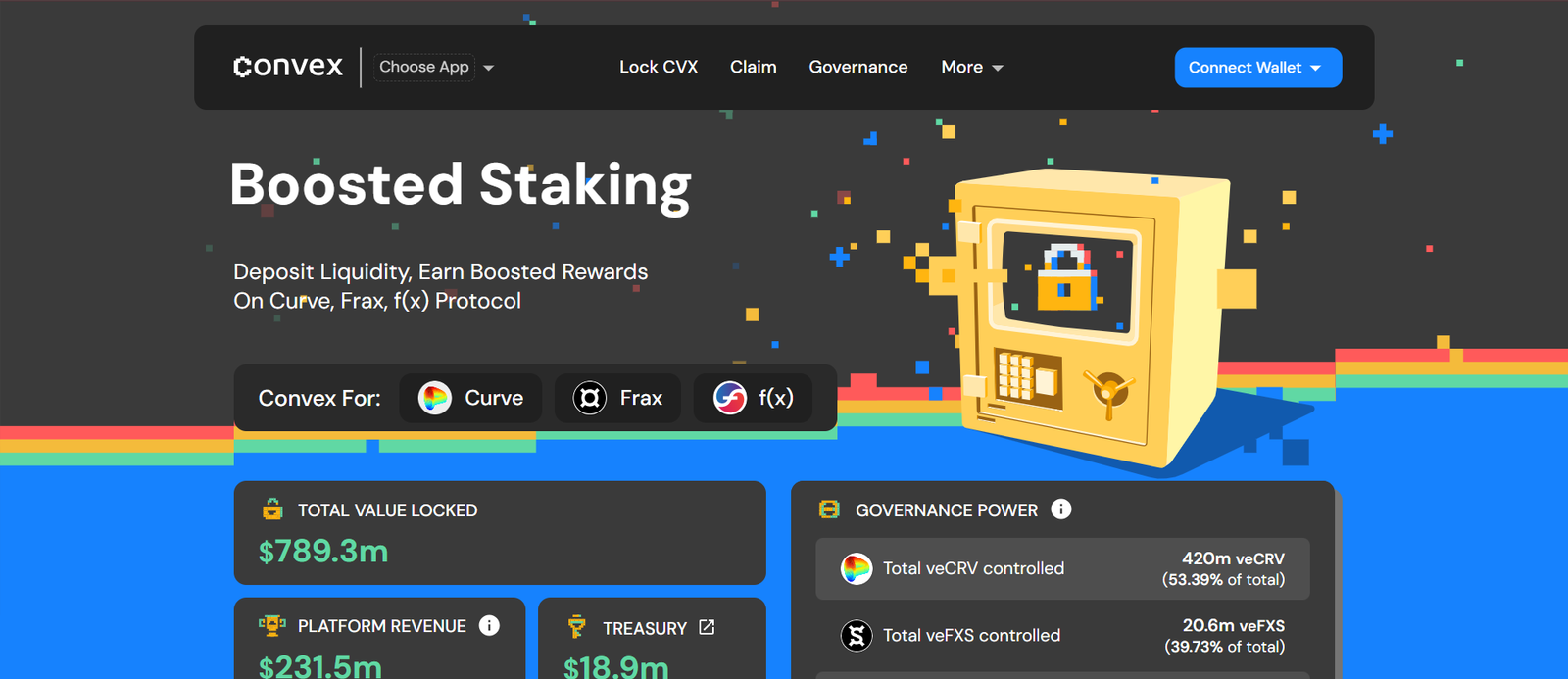
Convex Finance is a specialised protocol among DeFi investment platforms designed to increase rewards for liquidity providers using Curve Finance.Instead of interacting with Curve directly, investors can deposit Curve liquidity tokens into Convex to earn additional rewards.
This allows liquidity providers to receive both trading fees and extra token incentives.Many analysts writing a Convex Finance review highlight its role in improving returns for stablecoin liquidity pools. Because Curve pools are widely used across the DeFi ecosystem, Convex became an important yield layer within the DeFi infrastructure.
Investors researching Convex Finance pricing, Convex Finance alternatives, or Convex Finance vs Yearn Finance typically focus on how the protocol increases yield for Curve liquidity positions.
Key Features
Curve Reward Boosting
The core feature of the Convex Finance investment platform is reward boosting for Curve liquidity providers. When users deposit Curve LP tokens into Convex, the protocol increases the CRV token rewards generated by those positions. Many Convex Finance review discussions highlight this reward amplification system.
Passive Yield Management
Convex simplifies yield management by automatically claiming and distributing rewards. Investors who supply liquidity through the platform receive CRV tokens and additional CVX rewards without manually claiming them. Investors researching Convex Finance pricing often note this passive reward structure.
CVX Governance Token
The protocol operates using the CVX token, which represents governance participation and reward incentives. Token holders can vote on reward distribution within Curve pools. Analysts writing a Convex Finance review often highlight this influence within the wider DeFi ecosystem.
Integration With Curve Ecosystem
Convex works closely with Curve Finance pools, making it an important tool for stablecoin liquidity investors. This integration is a common discussion point in Convex Finance vs Yearn Finance comparisons.
Simplified CRV Staking
Curve’s native CRV token normally requires locking periods for higher rewards. Convex allows investors to earn boosted CRV rewards without locking tokens for long periods. Many Convex Finance review articles highlight this convenience.
Pros and Cons
| Pros | Cons |
| Higher Curve rewards | Depends on Curve ecosystem |
| Passive reward distribution | Complex for beginners |
| No CRV lock requirement | Smart contract risks |
| Strong DeFi integrations | Yield varies by pool |
Pricing
The Convex Finance pricing structure mainly involves reward distribution rather than subscription fees.
Typical costs include:
- Performance fees deducted from rewards
- Network transaction fees on Ethereum
Investors typically start using Convex with Curve LP tokens, which means they must first provide liquidity within Curve pools.Returns depend on the liquidity pool and market reward incentives.
Best For Curve Liquidity Providers Seeking Higher Yield
Convex Finance is best suited for investors who already use Curve liquidity pools and want additional rewards.
Ideal Users
- Stablecoin liquidity providers — earn additional CRV rewards
- DeFi yield farmers — stack multiple reward streams
- Curve investors — increase pool incentives
- Crypto portfolio managers — optimise stablecoin liquidity positions
Pro Tip
Investors comparing Convex Finance vs Yearn Finance often miss an important detail. Convex typically produces higher returns for Curve liquidity providers because it focuses exclusively on boosting Curve rewards.
Strategy Used by Experienced DeFi Investors
Advanced users of DeFi investment platforms often combine Curve pools with Convex.
A typical strategy includes:
- Provide stablecoin liquidity in Curve pools
- Receive LP tokens from Curve
- Deposit LP tokens into Convex Finance
- Earn CRV and CVX token rewards simultaneously
This multi layer reward structure is one reason Convex remains popular among stablecoin yield farmers.
Best Alternate Tool
Investors researching Convex Finance alternatives often compare it with Yearn Finance, which also automates yield strategies across multiple DeFi protocols.
Rocket Pool
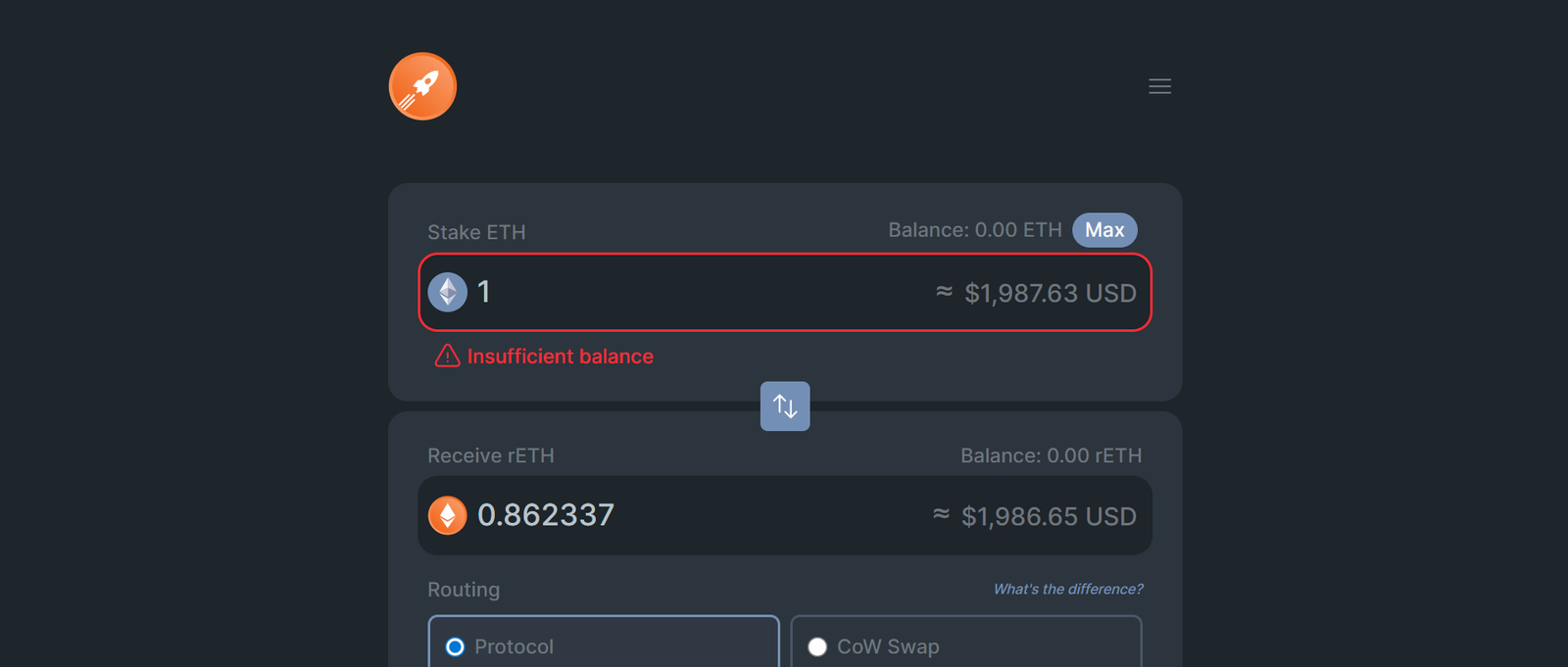
Rocket Pool is one of the most decentralised staking focused DeFi investment platforms in the crypto ecosystem. It allows users to stake Ethereum while supporting a distributed network of independent node operators.
Unlike traditional staking systems that require large deposits, Rocket Pool allows investors to stake smaller amounts of ETH through a pooled system. In return, users receive a liquid staking token called rETH that represents their staked assets.
Most analysts writing a Rocket Pool review highlight the protocol’s focus on decentralisation and community participation. Investors researching Rocket Pool pricing, Rocket Pool alternatives, or Rocket Pool vs Lido often evaluate validator distribution and reward structures..
Key Features
Liquid ETH Staking
The core feature of the Rocket Pool investment platform is liquid staking. Users can stake ETH and receive rETH tokens representing their staked position. These tokens can be used across other DeFi investment platforms while still earning staking rewards. Many Rocket Pool review discussions highlight this flexibility.
Decentralised Node Operators
Rocket Pool allows independent node operators to run validators with lower ETH requirements compared with traditional Ethereum staking. This creates a more distributed validator network. Analysts writing a Rocket Pool review often highlight this as a key difference when comparing Rocket Pool vs Lido.
rETH Token Utility
The rETH token acts as proof of staking participation. Investors can use rETH in lending platforms or liquidity pools across DeFi ecosystems. Investors researching Rocket Pool pricing often consider the additional yield opportunities available through rETH usage.
Permissionless Staking Nodes
Unlike some staking platforms that rely on selected validators, Rocket Pool allows anyone meeting technical requirements to operate nodes. This permissionless approach is frequently discussed in Rocket Pool review comparisons with other staking platforms.
Governance Through RPL Token
The protocol uses the RPL token for governance and staking incentives. Node operators stake RPL as collateral to participate in the network. Investors researching Rocket Pool alternatives often analyse token incentives before selecting staking platforms.
Pros and Cons
| Pros | Cons |
| Highly decentralised validator network | Smaller liquidity than Lido |
| Liquid staking with rETH | Technical complexity for node operators |
| Lower ETH staking requirement | Ethereum gas costs |
| Strong security model | Yield slightly lower than some pools |
Pricing
The Rocket Pool pricing model is based on staking rewards rather than subscription fees.
Typical costs include:
- Small commission fee taken from staking rewards
- Network transaction fees on Ethereum
Users can stake as little as 0.01 ETH, depending on network conditions.
Returns depend on Ethereum staking reward rates and network participation.
Best For Investors Who Prefer Decentralised Staking Infrastructure
Rocket Pool works well for investors who prioritise decentralisation within DeFi investment platforms.
Ideal Users
- Ethereum holders — earn staking rewards with liquidity
- DeFi investors — use rETH across multiple protocols
- Node operators — run validators with lower capital requirements
- Crypto portfolio managers — maintain decentralised staking exposure
Pro Tip
Investors comparing Rocket Pool vs Lido often overlook a useful tactic. rETH tokens sometimes trade at a premium because of their staking rewards. Holding rETH during high demand periods can add additional value beyond staking yield.
Strategy Used by Experienced DeFi Investors
Many advanced users of DeFi investment platforms combine staking with liquidity strategies.
Typical approach:
- Stake ETH through Rocket Pool
- Receive rETH tokens
- Supply rETH to DeFi lending platforms
- Earn both staking rewards and lending interest
This layered strategy can increase total yield across DeFi protocols.
Best Alternate Tool
Investors researching Rocket Pool alternatives frequently compare it with Lido, which has larger liquidity pools but relies on a more centralised validator structure.
Venus Protocol

Venus Protocol is a major lending system among DeFi investment platforms operating on the BNB Chain. It allows users to supply crypto assets into lending pools and earn interest while borrowers access funds by providing collateral.The protocol also supports the creation of a decentralised stablecoin called VAI, which is generated against deposited collateral.
Many analysts writing a Venus Protocol review highlight its role in the BNB Chain DeFi ecosystem. Investors researching Venus Protocol pricing, Venus Protocol alternatives, or Venus Protocol vs Aave often focus on its lower transaction costs and accessibility compared with Ethereum based lending platforms.
Because BNB Chain has relatively low network fees, Venus remains attractive for investors seeking lending opportunities through DeFi investment platforms without large transaction costs.
Key Features
Decentralised Lending Markets
The core feature of the Venus Protocol investment platform is its lending pool system. Users deposit assets such as BNB or stablecoins into liquidity markets and earn interest from borrowers. Most Venus Protocol review discussions highlight how this system allows passive income through lending.
Stablecoin Minting
Venus enables users to generate the stablecoin VAI by locking crypto assets as collateral. This allows investors to access liquidity while keeping their digital assets in the protocol. Analysts writing a Venus Protocol review often compare this feature with stablecoin systems in other DeFi protocols.
Collateralised Borrowing
Borrowers must deposit collateral before accessing loans. This overcollateralised model protects lenders and maintains stability across the protocol. Investors researching Venus Protocol pricing usually evaluate collateral ratios before borrowing assets.
Low Transaction Fees
Since the protocol runs on BNB Chain, transaction costs are typically lower than many Ethereum based DeFi investment platforms. This allows investors to adjust lending positions more frequently.
Governance With XVS Token
The platform operates through the XVS governance token. Token holders vote on protocol upgrades, interest models, and collateral parameters. Investors analysing Venus Protocol alternatives often compare governance participation among lending protocols.
Pros and Cons
| Pros | Cons |
| Low transaction costs | BNB Chain ecosystem risks |
| Simple lending system | Smaller liquidity than Ethereum |
| Stablecoin minting feature | Yield fluctuates |
| Easy entry for beginners | Market competition rising |
Pricing
The Venus Protocol pricing model is based on lending and borrowing interest rates.
Typical costs include:
- Borrowing interest depending on asset demand
- Network transaction fees on BNB Chain
- Liquidation penalties if collateral value drops
Investors can start lending with $20 to $50 worth of crypto depending on network conditions.Returns vary depending on lending demand and asset volatility.
Best For Investors Seeking Low Cost Lending Platforms
Venus Protocol works well for investors who want exposure to lending markets within the BNB Chain ecosystem.
Ideal Users
- Retail crypto investors — access low cost lending pools
- Stablecoin holders — earn interest on idle assets
- DeFi traders — borrow funds against crypto collateral
- Portfolio managers — allocate funds within BNB Chain DeFi markets
Pro Tip
Investors comparing Venus Protocol vs Aave often overlook transaction costs. Smaller investors frequently prefer Venus because repeated lending adjustments are affordable due to low BNB Chain gas fees.
Strategy Used by Experienced DeFi Investors
Some experienced users of DeFi investment platforms combine lending with stablecoin generation.
Typical approach:
- Deposit BNB or stablecoins into Venus lending pools
- Generate VAI stablecoins using collateral
- Deploy VAI into liquidity pools or yield farms
- Earn additional yield while maintaining collateral exposure
This strategy allows investors to earn returns from multiple DeFi mechanisms.
Best Alternate Tool
Investors researching Venus Protocol alternatives frequently compare it with Aave, which offers deeper liquidity but usually comes with higher transaction costs.
Trader Joe

Trader Joe is one of the leading DeFi investment platforms operating on the Avalanche blockchain. The platform provides decentralised token swaps, liquidity pools, lending markets, and yield farming tools.
Because Avalanche offers faster transactions and lower costs compared with many other networks, Trader Joe gained strong adoption among DeFi traders and liquidity providers.
Many analysts writing a Trader Joe review highlight its role as the main liquidity hub for Avalanche based tokens. Investors researching Trader Joe pricing, Trader Joe alternatives, or Trader Joe vs Uniswap often focus on its efficient trading engine and yield farming incentives.
These features make Trader Joe a popular option for investors seeking exposure to Avalanche based DeFi investment platforms.
Key Features
Decentralised Token Trading
The core feature of the Trader Joe investment platform is its decentralised exchange where users can swap tokens directly from their wallets. The platform uses liquidity pools rather than order books. Many Trader Joe review discussions highlight the speed of trading due to Avalanche’s fast block confirmations.
Liquidity Provider Rewards
Investors can supply token pairs into liquidity pools and earn a share of trading fees generated by swaps. This is one of the main income opportunities within DeFi investment platforms like Trader Joe. Analysts reviewing Trader Joe pricing often evaluate pool volume before providing liquidity.
Yield Farming Incentives
Liquidity providers can stake their LP tokens in farming pools to earn additional rewards in JOE tokens. Many investors researching Trader Joe alternatives compare reward rates across different farms before choosing a platform.
Lending Through Banker Joe
Trader Joe also includes a lending system called Banker Joe. Users can supply crypto assets and earn interest or borrow assets by providing collateral. Analysts writing a Trader Joe review frequently mention this feature as an added DeFi utility.
Avalanche Ecosystem Integration
Because Trader Joe operates within the Avalanche ecosystem, it connects with several Avalanche based tokens and DeFi protocols. Investors comparing Trader Joe vs Uniswap often note that Avalanche offers lower transaction fees.
Pros and Cons
| Pros | Cons |
| Fast Avalanche transactions | Smaller liquidity than Ethereum |
| Low trading fees | Ecosystem limited to Avalanche |
| Yield farming opportunities | Token reward volatility |
| Lending and trading tools | Impermanent loss risk |
Pricing
The Trader Joe pricing structure is based on trading and liquidity fees.
Typical costs include:
- Trading fee around 0.3 percent per swap
- Network transaction fees on Avalanche
- Optional liquidity participation costs
Liquidity providers earn a portion of the trading fees along with farming rewards depending on the selected pool.Investors can begin using the platform with $20 to $50 worth of crypto, depending on pool requirements.
Best For Investors Interested in Avalanche DeFi Markets
Trader Joe is suitable for investors who want to participate in the Avalanche ecosystem through DeFi investment platforms.
Ideal Users
- Avalanche token traders — swap assets within the ecosystem
- Yield farmers — earn rewards through farming pools
- Liquidity providers — collect trading fees from token swaps
- DeFi investors — access lending and trading services
Pro Tip
Investors comparing Trader Joe vs Uniswap often overlook the benefit of Avalanche transaction speed. Frequent traders prefer Trader Joe because swaps and liquidity adjustments complete faster than many Ethereum based protocols.
Strategy Used by Experienced DeFi Investors
Some experienced users of DeFi investment platforms combine liquidity provision with farming incentives.
Typical workflow:
- Provide liquidity to a high volume Avalanche token pair
- Receive LP tokens from the pool
- Stake LP tokens in JOE farming pools
- Reinvest token rewards into additional liquidity positions
This reinvestment approach can gradually increase yield from trading fees and farming rewards.
Best Alternate Tool
Investors researching Trader Joe alternatives often compare it with PancakeSwap, which offers similar liquidity pools but operates on the BNB Chain ecosystem.
GMX

GMX is a derivatives focused protocol among modern DeFi investment platforms. It allows traders to open leveraged positions on cryptocurrencies without relying on centralised exchanges.
The platform operates mainly on Arbitrum and Avalanche, providing faster transactions and lower fees compared with many Ethereum based systems.
Most analysts writing a GMX review highlight its unique liquidity model. Instead of traditional liquidity pools, GMX uses a multi asset pool called GLP that supports leveraged trading while rewarding liquidity providers.
Investors researching GMX pricing, GMX alternatives, or GMX vs dYdX often focus on its revenue sharing model where liquidity providers receive a portion of trading fees.Because of this structure, GMX remains one of the more advanced DeFi investment platforms for traders and passive income investors.
Key Features
Decentralised Perpetual Trading
The core feature of the GMX investment platform is perpetual futures trading. Traders can take long or short positions on major cryptocurrencies without expiration dates. Many GMX review discussions highlight how the protocol removes reliance on centralised derivatives exchanges.
GLP Liquidity Pool
Liquidity providers supply assets to a multi token pool called GLP. This pool acts as the counterparty to traders’ positions. Investors researching GMX pricing often evaluate GLP performance because it determines liquidity provider earnings.
Fee Sharing Rewards
A portion of trading fees generated by the platform is distributed to liquidity providers and token stakers. Analysts writing a GMX review frequently mention this revenue sharing system as a key attraction for passive investors.
Multi Chain Deployment
GMX operates across networks such as Arbitrum and Avalanche. These blockchains offer lower fees and faster execution compared with traditional Ethereum trading systems.
Transparent On Chain Trading
All positions and trading activity occur through smart contracts. This transparency is one reason traders researching GMX alternatives consider decentralised derivatives platforms safer than centralised exchanges.
Pros and Cons
| Pros | Cons |
| Decentralised derivatives trading | Complex for beginners |
| Fee sharing model | Liquidity provider risk |
| Multi chain support | Limited asset selection |
| No central exchange custody | Leveraged trading risk |
Pricing
The GMX pricing structure includes trading fees and spread costs.
Typical costs include:
- Trading fees around 0.1 percent per trade
- Network transaction fees
- Liquidity provider performance exposure
Liquidity providers earn a share of trading fees generated by the platform.Many investors start with $100 or more in crypto assets when supplying liquidity to the GLP pool.
Best For Investors Interested in DeFi Derivatives Markets
GMX is suitable for investors who want exposure to derivatives trading through DeFi investment platforms.
Ideal Users
- Crypto traders — open leveraged long and short positions
- Liquidity providers — earn trading fee revenue
- DeFi investors — participate in derivatives markets
- Portfolio managers — hedge crypto exposure through perpetual trading
Pro Tip
Investors comparing GMX vs dYdX often overlook the GLP liquidity model. Providing liquidity to GLP allows investors to earn trading fees even if they are not actively trading derivatives.
Strategy Used by Experienced DeFi Investors
Some advanced users of DeFi investment platforms focus on GLP liquidity rewards.
Typical strategy:
- Deposit assets into the GLP liquidity pool
- Earn a share of trading fees generated by derivatives traders
- Monitor pool composition and market volatility
- Adjust liquidity positions based on market conditions
This strategy allows investors to earn passive income from trading activity across the GMX platform.
Best Alternate Tool
Investors researching GMX alternatives frequently compare it with dYdX, another major decentralised derivatives trading platform.
dYdX
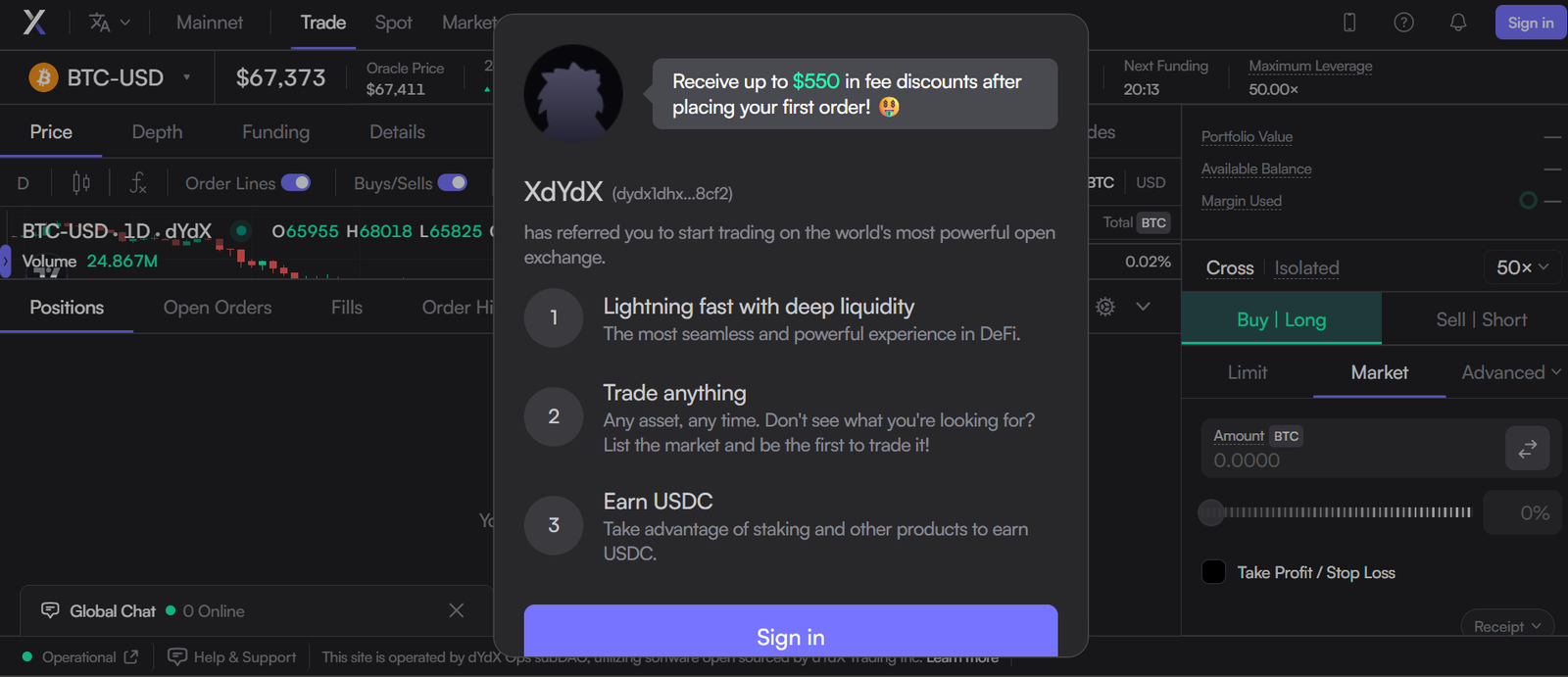
dYdX is widely recognised among the most advanced DeFi investment platforms focused on derivatives trading. It allows users to trade perpetual futures contracts directly from their wallets without relying on centralised exchanges.
The platform initially launched on Ethereum but later introduced its own chain built using Cosmos infrastructure. This architecture improves transaction speed while reducing gas fees.
Among modern DeFi investment platforms, dYdX is often used by experienced traders who want decentralised control while maintaining features normally seen on professional derivatives exchanges.
Key Features
Perpetual Futures Trading
The primary function of the dYdX investment platform is decentralised perpetual futures trading. Traders can open leveraged positions on multiple cryptocurrencies without expiry dates. Many articles in a dYdX review highlight this as the platform’s central offering.
Order Book Trading Model
Unlike many automated market maker protocols, dYdX uses an order book system. This structure allows traders to place limit orders, market orders, and stop orders similar to centralised exchanges.
Non Custodial Trading
Traders retain control of their assets while trading through smart contracts. This model removes the need to deposit funds into a centralised exchange wallet.
Layer 2 and App Chain Architecture
The platform moved away from standard Ethereum infrastructure to a dedicated blockchain built on Cosmos. This architecture allows faster trade execution and improved scalability.
Liquidity Incentive Programmes
Liquidity providers and traders can earn rewards through the platform’s token incentive system. These incentives attract traders researching dYdX alternatives and comparing dYdX vs GMX.
Pros and Cons
| Pros | Cons |
| Advanced trading tools | Not beginner friendly |
| Decentralised derivatives | Requires trading knowledge |
| Order book system | Limited spot assets |
| Non custodial trading | Regulatory uncertainty |
Pricing
The dYdX pricing structure mainly includes trading fees based on volume tiers.
Typical costs include:
- Maker fees starting around 0.02 percent
- Taker fees around 0.05 percent
- Network transaction fees depending on blockchain usage
Many traders start with $100 to $500 in crypto when testing derivatives strategies on the platform.Investors comparing dYdX vs GMX often focus on trading fee differences and liquidity depth.
Best For Experienced Crypto Derivatives Traders
dYdX is suited for investors who want professional trading features within DeFi investment platforms.
Ideal Users
- Professional crypto traders — advanced order types
- Derivatives specialists — leveraged futures trading
- Active market participants — frequent trading strategies
- Crypto hedge traders — manage volatility risk
Pro Tip
Many traders researching dYdX review focus on derivatives trading. However, one strategy involves monitoring funding rates to generate trading opportunities during volatile market periods.
Strategy Used by DeFi Traders
Experienced users of DeFi investment platforms sometimes use funding rate strategies.
Typical approach:
- Monitor funding rates on perpetual contracts
- Open long or short positions based on funding imbalance
- Hedge exposure using spot holdings
- Close positions once funding shifts
This strategy can create trading opportunities when market sentiment changes rapidly.
Best Alternate Tool
Traders researching dYdX alternatives frequently compare it with GMX, another derivatives focused protocol in the DeFi sector.
Yearn Finance

Yearn Finance is one of the earliest DeFi investment platforms focused on automated yield strategies. The protocol was launched in 2020 and quickly gained attention for simplifying yield farming across multiple decentralised finance protocols.
The platform operates primarily on Ethereum and allows investors to deposit crypto assets into automated vaults that generate returns through various DeFi strategies.
Many investors researching a Yearn Finance review want to understand how these vault strategies work. Instead of manually moving funds between lending and liquidity protocols, the platform automatically allocates assets to generate returns.
.Among leading DeFi investment platforms, Yearn Finance is widely used by investors who want passive income from decentralised finance strategies without constant monitoring.
Key Features
Automated Yield Vaults
The most important feature of the Yearn Finance investment platform is its automated vault system. Users deposit assets into a vault and the protocol allocates those funds across various yield generating strategies.
Many discussions in a Yearn Finance review highlight how vault strategies move funds between lending, liquidity pools, and other protocols automatically.
Strategy Based Yield Farming
Each vault uses strategies developed by the community and approved by governance. These strategies seek returns from multiple DeFi protocols, reducing the need for investors to manage funds manually.
Community Governance
The platform is governed by holders of the YFI token. Governance participants vote on upgrades, strategies, and fee structures.This governance structure is often discussed when comparing Yearn Finance alternatives.
Multi Protocol Integration
Yearn interacts with several DeFi services across the ecosystem. These integrations allow vault strategies to allocate funds where returns are higher.Investors analysing Yearn Finance vs Aave often note that Yearn acts as an aggregator rather than a direct lending protocol.
Passive Income Opportunities
For investors who want hands off exposure to DeFi investment platforms, Yearn vaults provide automated income strategies without constant manual management.
Pros and Cons
| Pros | Cons |
| Automated yield strategies | Smart contract risk |
| Passive income system | Strategy complexity |
| Multiple protocol integration | Ethereum gas fees |
| Community governance | Market dependent returns |
Pricing
The Yearn Finance pricing structure typically includes vault management and performance fees.
Typical costs include:
- Management fee around 2 percent annually
- Performance fee around 20 percent of yield
- Network gas fees depending on transactions
Investors usually begin with $100 to $1,000 in crypto assets when testing vault strategies.Users comparing Yearn Finance vs Aave often focus on the difference between automated yield farming and simple lending interest.
Best For Passive Yield Farming Investors
Yearn Finance is ideal for investors who want passive income through DeFi investment platforms.
Ideal Users
- Passive crypto investors — automated yield strategies
- DeFi portfolio holders — earn returns without constant management
- Long term crypto investors — compound DeFi income
- Crypto funds — diversified yield exposure
Pro Tip
Investors reading a Yearn Finance review often focus only on vault returns. However, experienced users monitor vault strategy updates because these changes can affect yield performance.
Strategy Used by Long Term DeFi Investors
Some users of DeFi investment platforms build diversified vault portfolios.
Typical approach:
- Allocate funds across multiple vaults
- Diversify between stablecoins and volatile assets
- Monitor vault performance monthly
- Rebalance capital between vault strategies
This method allows investors to reduce exposure to a single DeFi strategy.
Best Alternate Tool
Investors researching Yearn Finance alternatives frequently compare it with Convex Finance, another platform focused on yield optimization.
PancakeSwap

PancakeSwap is one of the largest DeFi investment platforms operating on the BNB Chain. It allows investors to trade cryptocurrencies, provide liquidity, stake tokens, and participate in yield farming.
The platform launched in 2020 and quickly gained adoption due to its lower transaction fees compared with many Ethereum based protocols.Investors searching for a PancakeSwap review often focus on its wide range of DeFi services. These include token swaps, liquidity pools, staking pools, and farming opportunities.
When analysing PancakeSwap pricing, PancakeSwap alternatives, or PancakeSwap vs Uniswap, many investors note that the platform is especially popular among users who want lower transaction costs.
Because of its broad functionality, PancakeSwap continues to rank among the most widely used DeFi investment platforms for retail crypto investors.
Key Features
Token Swapping
The primary feature of the PancakeSwap investment platform is decentralised token swapping. Users can exchange cryptocurrencies directly from their wallets without relying on centralised exchanges.Many discussions in a PancakeSwap review highlight how the automated market maker system enables instant trades using liquidity pools.
Liquidity Pool Rewards
Users can supply assets to liquidity pools and earn a share of trading fees generated by the platform. Liquidity providers are rewarded based on the amount of assets they contribute.
This is one of the main reasons investors comparing PancakeSwap alternatives consider the platform for passive crypto income.
Yield Farming Opportunities
PancakeSwap offers farming pools where users stake liquidity provider tokens to earn additional rewards.These farms allow investors using DeFi investment platforms to generate yield beyond basic trading fees.
Staking Pools
Investors can stake the platform’s native token CAKE in staking pools to earn additional tokens.
Many PancakeSwap review articles highlight staking pools as a simple entry point for users who want passive crypto rewards.
Low Transaction Fees
Because the protocol runs on BNB Chain, transaction fees are usually significantly lower than Ethereum based DeFi platforms.
This pricing difference is frequently discussed in comparisons such as PancakeSwap vs Uniswap.
Pros and Cons
| Pros | Cons |
| Low transaction fees | Smart contract risk |
| Multiple earning methods | Impermanent loss risk |
| Large user base | Token volatility |
| Easy token swaps | Complex farming strategies |
Pricing
The PancakeSwap pricing model includes small trading and liquidity fees.
Typical costs include:
- Trading fee around 0.25 percent per swap
- Network transaction fees on BNB Chain
- Liquidity provider exposure to market changes
Many investors begin using the platform with $50 to $500 in crypto assets.
When comparing PancakeSwap vs Uniswap, investors often highlight the lower transaction fees on BNB Chain.
Best For Retail Crypto Investors Seeking Passive Income
PancakeSwap is well suited for users who want multiple income strategies through DeFi investment platforms.
Ideal Users
- Retail crypto investors — low transaction cost trading
- Liquidity providers — earn swap fees
- Yield farmers — participate in reward pools
- Long term token holders — stake CAKE for passive rewards
Pro Tip
Many investors reading a PancakeSwap review focus only on token swaps. However, combining liquidity pools with farming pools can generate higher total returns compared with using a single strategy.
Strategy Used by DeFi Yield Farmers
Experienced users of DeFi investment platforms often combine liquidity provision with yield farming.
Typical approach:
- Deposit tokens into a liquidity pool
- Receive liquidity provider tokens
- Stake those tokens in farming pools
- Earn both trading fees and farming rewards
This layered strategy is commonly used on PancakeSwap to increase total returns.
Best Alternate Tool
Investors researching PancakeSwap alternatives frequently compare it with Uniswap, another major decentralised exchange.
SushiSwap
SushiSwap is one of the well known DeFi investment platforms offering decentralised token trading, liquidity pools, staking, and yield farming opportunities.Originally launched as a fork of Uniswap, the platform expanded into a broader DeFi ecosystem with additional tools.
The protocol operates across several blockchain networks including Ethereum, Polygon, and Arbitrum.Many investors searching for a SushiSwap review focus on its multi chain capabilities and community governance structure.
Users comparing SushiSwap pricing, SushiSwap alternatives, or SushiSwap vs Uniswap often evaluate trading fees, liquidity rewards, and cross chain functionality.Because of its wide range of features, SushiSwap continues to appear in many lists of leading DeFi investment platforms.
Key Features
Decentralised Token Trading
The core function of the SushiSwap investment platform is decentralised token swapping. Users trade tokens directly from their crypto wallets without transferring assets to a centralised exchange.
Many discussions in a SushiSwap review highlight how this non custodial trading model improves control over assets.
Liquidity Pool Rewards
Investors can provide liquidity by depositing token pairs into pools. In return, they receive liquidity tokens and a share of trading fees generated by the pool.This system is a major reason investors researching SushiSwap alternatives consider the protocol.
Yield Farming Opportunities
The platform offers farming pools where liquidity provider tokens can be staked to earn additional rewards.Yield farmers using DeFi investment platforms often combine liquidity pools with farming incentives to increase potential returns.
Multi Chain Support
SushiSwap operates across multiple blockchain networks including Ethereum, Polygon, and Arbitrum.This multi chain structure allows investors to access the platform while selecting networks with lower transaction fees.
Community Governance
Token holders participate in governance decisions affecting the protocol. Governance votes may influence upgrades, token distribution, and protocol development.
This governance model is often mentioned in comparisons such as SushiSwap vs Uniswap.
Pros and Cons
| Pros | Cons |
| Multi chain availability | Smart contract risk |
| Liquidity rewards | Impermanent loss risk |
| Community governance | Token price volatility |
| DeFi ecosystem tools | Complex farming systems |
Pricing
The SushiSwap pricing model mainly consists of trading and liquidity fees.
Typical costs include:
- Trading fee around 0.3 percent per swap
- Network transaction fees depending on the blockchain used
- Liquidity pool exposure to market price changes
Many investors begin testing the platform with $50 to $300 in crypto assets.Users comparing SushiSwap vs Uniswap frequently analyse fee structures and liquidity availability across networks.
Best For Investors Seeking Multi Chain DeFi Opportunities
SushiSwap is a good option for investors who want flexible access to DeFi investment platforms across several blockchains.
Ideal Users
- Crypto traders — decentralised token swaps
- Liquidity providers — earn trading fee rewards
- Yield farmers — participate in staking pools
- Multi chain investors — access DeFi across networks
Pro Tip
Many investors researching a SushiSwap review focus only on token swaps. However, combining liquidity pools with farming pools across different blockchains may increase reward opportunities.
Strategy Used by DeFi Liquidity Providers
Some users of DeFi investment platforms build multi chain liquidity strategies.
Typical approach:
- Provide liquidity on multiple blockchain networks
- Monitor trading volume across pools
- Allocate funds to higher volume pools
- Combine liquidity rewards with farming pools
This strategy allows investors to spread risk across several DeFi environments.
Best Alternate Tool
Investors researching SushiSwap alternatives frequently compare it with PancakeSwap, another large decentralised exchange with yield farming features.
Curve Finance
Curve Finance is one of the most specialised DeFi investment platforms, focusing primarily on stablecoin trading and liquidity pools.
The protocol launched in 2020 and quickly became a major part of the decentralised finance ecosystem. Unlike many decentralised exchanges that support volatile tokens, Curve focuses on assets with similar prices such as stablecoins.The platform operates primarily on Ethereum and several other blockchain networks.
Investors researching a Curve Finance review often focus on its deep liquidity pools and low slippage trading system. These features make it suitable for large transactions involving stablecoins.
Users comparing Curve Finance pricing, Curve Finance alternatives, or Curve Finance vs Uniswap often highlight its efficiency when trading assets with similar values.
Because of its stablecoin focus, Curve remains a core protocol among many DeFi investment platforms used by yield farmers and liquidity providers.
Key Features
Stablecoin Liquidity Pools
The primary feature of the Curve Finance investment platform is stablecoin liquidity pools. These pools allow users to swap stablecoins such as USDC, USDT, and DAI with minimal price slippage.
Many articles in a Curve Finance review highlight how the protocol’s algorithm is designed specifically for assets with similar values.
Low Slippage Trading
Curve’s automated market maker model reduces price slippage during large trades. This design makes the platform popular among traders moving large stablecoin positions.
Investors researching Curve Finance alternatives often compare slippage rates across different decentralised exchanges.
Liquidity Provider Rewards
Users who provide liquidity to pools earn a share of trading fees and additional token incentives.This reward structure is one reason yield farmers include Curve among their preferred DeFi investment platforms.
Multi Chain Deployment
Curve operates on several blockchain networks including Ethereum and layer two networks.This multi chain structure allows investors to select networks with lower transaction costs.
Governance System
The protocol is governed by the CRV token. Token holders can vote on proposals affecting pool parameters and reward structures.Governance participation is often discussed in Curve Finance review discussions.
Pros and Cons
| Pros | Cons |
| Low slippage stablecoin trades | Limited volatile assets |
| Strong liquidity pools | Smart contract risk |
| Liquidity rewards | Complex governance |
| Multi chain availability | Impermanent loss risk |
Pricing
The Curve Finance pricing structure mainly includes trading fees and liquidity pool participation costs.
Typical costs include:
- Trading fee around 0.04 percent per swap
- Network transaction fees depending on blockchain
- Liquidity pool exposure to market changes
Many investors begin using Curve with $100 to $500 in stablecoins.When comparing Curve Finance vs Uniswap, users often highlight lower slippage for stablecoin trading.
Best For Stablecoin Liquidity Investors
Curve Finance is well suited for investors focused on stablecoin yield strategies within DeFi investment platforms.
Ideal Users
- Stablecoin traders — low slippage swaps
- Liquidity providers — earn trading fees
- Yield farmers — stablecoin farming pools
- DeFi portfolio managers — diversify income streams
Pro Tip
Many investors reading a Curve Finance review focus only on stablecoin swaps. However, combining liquidity pools with external yield protocols can create additional income opportunities.
Strategy Used by Stablecoin Yield Farmers
Some investors using DeFi investment platforms build stablecoin yield strategies through Curve.
Typical approach:
- Deposit stablecoins into liquidity pools
- Earn trading fee rewards
- Stake liquidity tokens in yield protocols
- Reinvest rewards into additional pools
This strategy allows investors to generate returns from stablecoin holdings.
Best Alternate Tool
Investors researching Curve Finance alternatives often compare it with Balancer, another protocol used for liquidity pools and decentralised trading.
Final Thoughts on the Best DeFi Investment Platforms in 2026
The growth of decentralised finance has created many opportunities for investors seeking alternatives to traditional financial services. The best DeFi investment platforms listed in this guide offer different ways to earn from crypto assets including staking, liquidity provision, derivatives trading, lending, and yield farming.
Some platforms focus on decentralised exchanges, while others specialise in lending or automated yield strategies. Investors often select platforms based on their preferred strategy. Beginners frequently start with staking or lending platforms, while experienced users may use derivatives protocols or liquidity pools.
Before using any DeFi investment platforms, investors should review transaction fees, security audits, liquidity depth, and governance structures. Market volatility and smart contract risk are also important factors when allocating capital.
Book a call or schedule a consultation.
FAQs
1. What are DeFi investment platforms?
DeFi investment platforms are decentralised applications that allow users to lend, borrow, trade, or stake cryptocurrencies without traditional financial institutions.
2. Are DeFi investment platforms safe?
Security depends on the platform’s smart contracts, audits, and community reputation. Users should review risk factors before depositing assets.
3. How do investors earn money from DeFi platforms?
Common income methods include staking rewards, lending interest, liquidity pool fees, and yield farming incentives.
4. What is the minimum investment for DeFi platforms?
Many platforms allow users to start with small amounts of cryptocurrency, sometimes as low as $50 depending on transaction fees.
5. Which blockchains are commonly used by DeFi platforms?
Major networks include Ethereum, BNB Chain, Polygon, Avalanche, and other blockchain ecosystems.
6. What risks exist when using DeFi investment platforms?
Common risks include smart contract vulnerabilities, token price volatility, impermanent loss, and liquidity risks.
7. Do DeFi platforms require identity verification?
Most decentralised platforms operate without traditional identity verification because users interact directly through crypto wallets.
8. What is liquidity providing in DeFi?
Liquidity providers deposit tokens into pools that allow traders to exchange assets. Providers receive a share of trading fees.
9. What is yield farming?
Yield farming involves moving crypto assets between DeFi protocols to generate higher returns through rewards and interest.
10. Can beginners use DeFi investment platforms?
Yes, although beginners often start with simple staking or lending platforms before using advanced strategies such as derivatives trading.
How Pearllemon Catering Supports Businesses in the Crypto and Fintech Space
Businesses operating in cryptocurrency and blockchain sectors require strong digital visibility to attract investors and clients. Pearllemon Catering works with fintech companies, blockchain startups, and crypto platforms looking for structured digital marketing and content strategies.
The team provides services designed for online visibility and customer acquisition. These include technical website audits, search engine marketing strategies, and content production for finance and technology topics.
Companies building platforms such as decentralised exchanges, blockchain services, or fintech applications often require targeted SEO campaigns and technical content writing. Pearllemon Catering supports these projects through structured keyword planning, industry-focused content creation, and ongoing website performance monitoring.