

Build investor confidence, manage fundraising pipelines, and stay in control of shareholder communications with the right investor relations stack. This list of Investor Relations Tools for Startups is built for founders, CFOs, and finance leads who need structure, visibility, and credibility when dealing with angels, VCs, and institutional backers.
Raising capital is not just about pitching. It is about follow-ups, reporting, transparency, and timing. Most startups lose investor interest because updates are inconsistent, data is scattered, or relationships are not tracked properly.
We reviewed dozens of Investor Relations Tools for Startups used across seed, Series A, and growth-stage companies in the UK and Europe. From cap table software to investor update platforms and IR CRMs, this list covers tools that serious founders rely on to manage
The Investor Relations Tools for Startups featured here are widely used by venture-backed companies and backed by strong adoption across the startup ecosystem.
What Are Investor Relations Tools for Startups?
Investor relations tools are software platforms that help startups manage relationships with current and potential investors. They replace spreadsheets, email threads, and disconnected documents with structured systems.
For startups, investor relations tools typically support:
- Investor contact management and CRM
- Fundraising pipeline tracking
- Cap table and equity management
- Secure data rooms for due diligence
- Investor updates and reporting
- Market and investor intelligence
Using dedicated Investor Relations Tools for Startups improves clarity, reduces manual work, and ensures investors receive timely, consistent information.
Quick Comparison Table
The columns below focus on the decision factors founders care about most when choosing investor relations software: use case, pricing entry point, and core strength. This allows fast comparison without reading every review.
| Tool | Best For | Starting Price | Free Trial | Core Strength |
| Carta | Cap table management | Paid | No | Equity compliance |
| PitchBook | Investor intelligence | Custom | No | Market data |
| Crunchbase | Investor discovery | Free | Yes | Lead sourcing |
| Visible.vc | Investor updates | Paid | Yes | Reporting |
| Foundersuite | Fundraising CRM | Paid | Yes | Deal tracking |
| Gust | Early-stage fundraising | Free | Yes | Investor network |
| Q4 | IR communications | Custom | No | Public-ready IR |
| Nasdaq IR | Market visibility | Custom | No | Shareholder comms |
| IR Insight | Investor targeting | Paid | No | IR CRM |
| Affinity | Relationship CRM | Paid | Yes | Network analysis |
| Dealum | Fundraising pipeline | Paid | Yes | Dealflow |
| CapLinked | Data rooms | Paid | Yes | Secure sharing |
| HubSpot CRM | Contact management | Free | Yes | CRM flexibility |
| PitchDeck.io | Pitch creation | Paid | No | Deck design |
| DocSend | Deck analytics | Paid | Yes | Engagement tracking |
| Salesforce | Enterprise CRM | Paid | Yes | Custom workflows |
| Visible Capital | Investor feedback | Paid | No | Update analytics |
| Navatar | Investment ops | Custom | No | Fund operations |
| Streak | Gmail CRM | Paid | Yes | Inbox tracking |
| Affinity Insights | Investor signals | Paid | No | Predictive insights |
Best 20 Investor Relations Tools for Startups
Each tool below is broken down by key features, pricing, and who it’s best suited for.
Carta – Comprehensive Cap Table and Investor Relations Platform

Carta is a platform designed for startups to manage equity, ownership, and investor communications all in one place. Widely used by seed and growth-stage companies in the UK and Europe, Carta simplifies compliance and ensures accurate, up-to-date cap tables. Founders, CFOs, and finance leads rely on Carta to maintain investor trust, track fundraising rounds, and avoid manual errors common in spreadsheets.
Key Features
Cap Table Management
Carta provides real-time, digital cap tables that replace manual spreadsheets. Startups can track ownership, stock options, and convertible notes with precision, reducing errors and providing transparency to investors.
Equity Compliance
The platform ensures all equity transactions comply with local regulations, including UK Companies House filings and international standards. This reduces legal risks and gives investors confidence in reporting accuracy.
Fundraising Management
Carta allows founders to manage multiple fundraising rounds in one system. You can track investor commitments, monitor milestones, and generate reports for VCs, angels, and institutional investors.
Investor Portal
Investors get a secure portal where they can access ownership details, updates, and documents. This improves transparency and reduces the back-and-forth communication that often slows deal progress.
Reporting & Analytics
Carta provides automated reports on ownership, dilution, and equity distribution. Founders can generate insights quickly to guide decision-making and keep investors informed.
Pros & Cons
| Pros | Cons |
| Real-time cap table updates | Paid platform with no free trial |
| Compliance support for multiple regions | Can be complex for very early-stage startups |
| Investor portal for transparency | Some advanced features require training |
| Fundraising tracking included | Pricing can scale with company size |
| Detailed reporting & analytics | Limited customisation outside equity management |
Pricing
- Paid plans: Custom pricing based on company size and equity complexity
- Free trial: Not available
- Carta’s pricing model is tailored to accommodate early-stage to growth-stage startups, but it scales with additional shares and investors.
Best For Startups That Need Accurate Cap Tables and Compliance
Ideal Users:
- Seed-stage founders — Ensure compliance while issuing equity
- CFOs managing multiple fundraising rounds — Keep all investor data centralized
- Growth-stage companies — Track dilution and equity distribution in real time
Pro Tip:
Use Carta to maintain a clean, investor-ready cap table from day one. For startups preparing for Series A or growth-stage funding, Carta’s automated reporting saves hours of manual work and avoids costly errors.
Maximising Carta for Effective Investor Relations”Maximising Carta for Effective Investor Relations
By combining Carta’s investor portal with regular updates, founders can reduce email back-and-forth and ensure investors have access to key information exactly when they need it. Consider integrating Carta with your CRM to link investor communications with equity changes.
Best Alternate Tool
CapLinked – If your startup prioritizes secure data rooms and sharing alongside equity management, CapLinked provides strong alternatives to Carta’s compliance and reporting features.
PitchBook – Investor Intelligence for Serious Fundraising
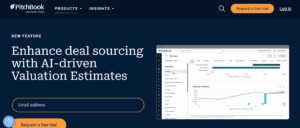
PitchBook is a go-to investor intelligence platform used by venture funds, corporate development teams, and growth-stage startups across the UK and Europe. For founders and CFOs, PitchBook provides deep visibility into investors, recent deals, valuations, and market activity. It is widely used once startups move beyond casual outreach and need precision when building fundraising pipelines.
Key Features
Investor Database Access
Search thousands of angels, VCs, and institutional investors with filters by sector, stage, geography, and cheque size. This helps founders avoid poorly matched outreach and focus only on investors who actively back similar startups.
Deal & Valuation Data
Review recent funding rounds, valuation benchmarks, and comparable company activity. PitchBook allows finance teams to sanity-check expectations before entering negotiations.
Firm & Partner Profiles
See who actually makes investment decisions inside each fund. Partner-level visibility reduces wasted conversations and shortens fundraising cycles.
Market & Sector Research
Access reports covering emerging sectors, funding trends, and capital flows across Europe. These insights support board discussions and investor Q&A.
CRM Export & Workflow Support
Export investor lists into internal CRMs or spreadsheets. While not a full IR CRM, PitchBook integrates well into existing fundraising workflows.
Pros & Cons
| Pros | Cons |
| Deep investor coverage | High pricing barrier |
| Accurate deal tracking | Not built for updates |
| Strong European data | Limited startup CRM tools |
| Trusted by VCs | No self-serve pricing |
Pricing
- Starting price: Custom pricing only
- Free trial: No
Best For Startups Running Targeted Fundraises
Ideal Users:
- Series A and beyond founders — Need verified investor data, not cold lists.
- CFOs — Want valuation context before negotiations.
- Strategy teams — Track competitors and funding signals.
Pro Tip:
Use PitchBook to build a short investor list before outreach. PitchBook vs Crunchbase often comes down to depth versus accessibility. PitchBook wins when accuracy matters more than speed.
How to use PitchBook with Investor Relations Tools for Startups:
Export investor data into tools like Foundersuite or HubSpot, then manage follow-ups and updates elsewhere. PitchBook works best as the research layer, not the communication hub.
Best Alternate Tool: Crunchbase (for lighter investor discovery with a lower cost).
Crunchbase – Investor Discovery and Market Tracking
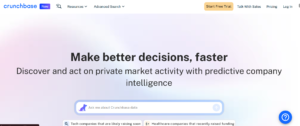
Crunchbase is one of the most widely used Investor Relations Tools for Startups when the goal is investor discovery and market awareness. UK and European founders use Crunchbase to identify active angels, VC firms, and corporate investors while tracking competitor funding and growth signals. It is often the first platform founders adopt before moving into deeper fundraising workflows.
Key Features
Investor & Company Search
Search investors by stage, sector, geography, and recent activity. This allows founders to build an outreach list based on actual investment behaviour rather than assumptions.
Funding & Growth Signals
Track funding rounds, headcount changes, acquisitions, and expansion activity. These signals help startups time outreach when investors are actively deploying capital.
Saved Lists & Alerts
Create investor shortlists and receive alerts when firms make new investments. This keeps fundraising pipelines fresh without manual monitoring.
Basic CRM Export
Export investor data into spreadsheets or fundraising CRMs. While Crunchbase is not a full IR CRM, it fits neatly into early-stage investor tracking workflows.
Market Visibility
Maintain a public company profile that investors regularly reference during due diligence, improving credibility during inbound conversations.
Pros & Cons
| Pros | Cons |
| Easy to use | Less depth than PitchBook |
| Free entry plan | Data accuracy varies |
| Strong discovery tools | Limited reporting |
| Fast investor searches | Not built for updates |
Pricing
- Free plan: Available
- Paid plans start: £29/month
- Free trial: Yes
Best For Early-Stage Investor Research
Ideal Users:
- Pre-seed and seed founders — Need quick investor discovery.
- Solo founders — Want simple tools without long onboarding.
- Startup operators — Monitor competitor funding activity.
Pro Tip:
Crunchbase review feedback often highlights speed over depth. Crunchbase vs PitchBook is a common comparison, and many startups use both at different stages.
Hidden Tip
How to use Crunchbase with Investor Relations Tools for Startups:
Use Crunchbase to identify investors, then move conversations into tools like Foundersuite or Visible.vc for structured follow-ups and reporting.
Best Alternate Tool: PitchBook (for deeper investor and valuation data).
Visible.vc – Investor Updates and Reporting Control
Visible.vc is built specifically for startups that need consistent, structured investor updates. It is widely used by UK and European venture-backed companies to centralise metrics, shareholder communications, and reporting without relying on long email threads. For founders, CFOs, and finance leads, Visible.vc acts as the reporting layer of their investor relations stack.
Key Features
Investor Update Automation
Create recurring monthly or quarterly updates using standardised templates. This keeps investors informed without founders rebuilding reports from scratch each cycle.
KPI & Metric Dashboards
Pull data from tools like Stripe, QuickBooks, and Google Analytics into investor-ready dashboards. This gives stakeholders a clear view of financial and operational progress.
Secure Investor Portal
Share updates, files, and historical reports in one private space. Investors can self-serve past updates, reducing follow-up questions.
Engagement Tracking
See which investors open updates and click links. This visibility helps founders prioritise follow-ups during fundraising or bridge rounds.
Board & Stakeholder Reporting
Use the same reporting structure for boards, advisors, and major shareholders, reducing duplication across internal and external reporting.
Pros & Cons
| Pros | Cons |
| Purpose-built for updates | Not a fundraising CRM |
| Strong metric integrations | Limited investor discovery |
| Clean reporting format | Pricing adds up at scale |
| Engagement visibility | No cap table features |
Pricing
- Paid plans start: £125/month
- Free trial: Yes
Best For Startups Sending Regular Investor Updates
Ideal Users:
- Post-seed founders — Need discipline around monthly reporting.
- CFOs — Want consistent metrics across investors and board members.
- Finance teams — Reduce manual reporting work.
Pro Tip:
Visible.vc review feedback often points to improved investor trust through consistency. Visible.vc vs Foundersuite comes down to reporting depth versus deal tracking. Many startups pair both.
Hidden Tip
How to use Visible.vc during fundraising:
Use engagement data to identify warm investors before opening a new round. Investors who consistently read updates are more likely to re-engage quickly.
Best Alternate Tool: Foundersuite (for combined fundraising CRM and updates).
Foundersuite – Fundraising CRM Built for Startups
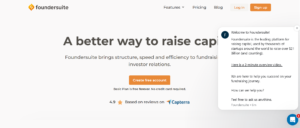
Foundersuite is a dedicated fundraising CRM used by thousands of startups across the UK and Europe to manage investor pipelines, outreach, and follow-ups. It replaces ad hoc spreadsheets with a structured system designed around how founders actually raise capital. For teams juggling warm intros, cold outreach, and active rounds, Foundersuite brings order to the process.
Key Features
Investor CRM & Pipeline Tracking
Track every investor interaction from first contact to close. Foundersuite shows where each conversation sits, reducing missed follow-ups and stalled deals.
Investor Database & Intros
Access a large investor database and request warm introductions. This shortens time spent sourcing investors and increases response rates.
Email Tracking & Templates
Send and track outreach emails directly from the platform. See opens and replies so founders know when to follow up.
Update & Reporting Tools
Send structured investor updates to existing shareholders, keeping relationships active between rounds.
Fundraising Analytics
Monitor funnel metrics such as meetings booked, conversion rates, and capital committed. This helps founders course-correct mid-raise.
Pros & Cons
| Pros | Cons |
| Built for fundraising | UI feels dated |
| Strong pipeline clarity | Limited custom fields |
| Investor intro access | No cap table |
| Update support | Basic reporting |
Pricing
- Paid plans start: £95/month
- Free trial: Yes
Best For Founders Actively Raising Capital
Ideal Users:
- Seed and Series A founders — Managing dozens of investor conversations.
- Solo founders — Need reminders and pipeline discipline.
- Startup teams — Coordinating outreach across partners.
Pro Tip:
Foundersuite review feedback often mentions improved follow-up consistency. Foundersuite vs Visible.vc usually depends on whether fundraising or reporting is the priority.
Hidden Tip
How to use Foundersuite with other Investor Relations Tools for Startups:
Pair Foundersuite with Carta for equity tracking and Visible.vc for updates. This creates a complete investor relations workflow without enterprise software.
Best Alternate Tool: Visible.vc (for reporting-first teams).
Gust – Early-Stage Fundraising and Investor Access

Gust is a well-known platform for early-stage startups raising capital from angels and micro-VCs. It is widely adopted across the UK and Europe by accelerators, angel groups, and first-time founders. Gust combines investor access, application workflows, and basic investor management in one place, making it a common entry point for pre-seed and seed fundraising.
Key Features
Angel Network Access
Apply directly to angel groups and early-stage investors that actively review deals on Gust. This reduces reliance on cold email and personal networks early on.
Startup Profiles & Applications
Create a structured startup profile that investors can review asynchronously. This keeps messaging consistent across multiple investor conversations.
Document Sharing
Upload pitch decks, financials, and supporting documents securely. Investors can review materials without long email threads.
Basic Investor Tracking
Track which investors viewed your profile and documents. While not a full CRM, it offers early visibility into investor interest.
Accelerator & Syndicate Support
Many accelerators and syndicates use Gust as their primary application platform, making it hard to avoid for early-stage founders.
Pros & Cons
| Pros | Cons |
| Strong angel access | Limited CRM depth |
| Free entry option | Weak reporting tools |
| Widely recognised | Not built for later stages |
| Simple onboarding | Basic analytics |
Pricing
- Free plan: Available
- Paid plans: From £25/month
- Free trial: Yes
Best For Pre-Seed and Seed Founders
Ideal Users:
- First-time founders — Need access to angel investors quickly.
- Accelerator-backed startups — Required by many programmes.
- Lean teams — Want a low-cost fundraising entry point.
Pro Tip:
Gust review discussions often highlight access over control. Gust vs Foundersuite comes down to network versus pipeline discipline. Many founders start with Gust and graduate to a dedicated fundraising CRM.
Hidden Tip
How to use Gust with Investor Relations Tools for Startups:
Use Gust for initial investor access, then move serious conversations into Foundersuite or HubSpot to manage follow-ups and reporting more effectively.
Best Alternate Tool: Foundersuite (for structured fundraising pipelines).
Q4 – Investor Communications for Scaling Companies
Q4 is an investor relations platform originally built for public companies, but increasingly used by late-stage startups and pre-IPO firms across the UK and Europe. For finance leads managing a growing shareholder base, Q4 centralises communications, reporting, and investor engagement in a controlled environment. It is most relevant once investor expectations shift toward formal IR processes.
Key Features
Investor Communication Hub
Manage announcements, updates, and disclosures from one platform. Q4 ensures messaging stays consistent as the investor base grows.
Shareholder Analytics
Track investor engagement with reports and communications. This visibility helps finance teams understand which stakeholders are paying attention ahead of funding events or liquidity discussions.
IR Website Management
Host and manage investor-facing pages, documents, and updates. This is useful for startups preparing for public market standards.
Compliance & Governance Support
Q4 supports structured disclosures and record-keeping, reducing risk as reporting requirements increase.
Integration with Financial Data
Sync financial reporting data into investor materials, reducing manual preparation work for quarterly updates.
Pros & Cons
| Pros | Cons |
| Built for formal IR | Overkill for early startups |
| Strong compliance focus | High cost |
| Shareholder analytics | Limited fundraising tools |
| Professional reporting | Longer setup time |
Pricing
- Starting price: Custom pricing
- Free trial: No
Best For Late-Stage and Pre-IPO Startups
Ideal Users:
- Series C+ founders — Managing large investor groups.
- CFOs — Need formal reporting and compliance workflows.
- Finance teams — Preparing for public-market expectations.
Pro Tip:
Q4 review feedback often notes its depth for investor communications. Q4 vs Nasdaq IR usually comes down to ecosystem fit rather than features.
Hidden Tip
How to use Q4 before an IPO:
Adopting Q4 early helps teams practise public-company style reporting, reducing internal friction when expectations rise.
Best Alternate Tool: Nasdaq IR (for market visibility and shareholder communications).
Nasdaq IR – Shareholder Communications at Scale
Nasdaq IR is designed for companies that need structured shareholder communications and market visibility. While traditionally used by listed firms, it is increasingly adopted by late-stage startups and growth companies in the UK and Europe preparing for public markets or managing complex investor groups. For finance leaders, Nasdaq IR brings order to disclosure, reporting, and investor access.
Key Features
Shareholder Communication Tools
Manage announcements, reports, and updates in a controlled environment. Nasdaq IR supports consistent messaging as investor numbers increase.
Investor Targeting & Tracking
Identify and monitor institutional investors and shareholder activity. This helps finance teams understand ownership changes and engagement trends.
IR Website & Content Hosting
Host investor materials, financial reports, and disclosures in one secure location. This reduces reliance on ad hoc document sharing.
Compliance & Disclosure Support
Maintain accurate records of communications and filings, which becomes critical as regulatory scrutiny increases.
Market Data Integration
Access market activity and shareholder insights directly connected to Nasdaq’s ecosystem.
Pros & Cons
| Pros | Cons |
| Strong market credibility | Not built for fundraising |
| Institutional-grade tools | High cost |
| Compliance-focused | Heavy setup |
| Shareholder visibility | Overkill for early stages |
Pricing
- Starting price: Custom pricing
- Free trial: No
Best For Growth and Pre-IPO Companies
Ideal Users:
- Late-stage founders — Preparing for public market standards.
- CFOs — Managing complex shareholder communications.
- Finance teams — Need formal disclosure workflows.
Pro Tip:
Nasdaq IR review discussions often focus on credibility with institutional investors. Nasdaq IR vs Q4 usually comes down to preferred market infrastructure rather than feature depth.
Hidden Tip
How to prepare for public reporting using Nasdaq IR:
Start using Nasdaq IR during late private rounds to familiarise teams with structured disclosures before regulatory requirements increase.
Best Alternate Tool: Q4 (for communication-led investor relations).
IR Insight – Investor Targeting and Relationship Tracking

IR Insight is an investor relations platform focused on investor targeting, contact management, and relationship tracking. It is used by growth-stage companies across the UK and Europe that need a clearer view of who their investors are, how relationships evolve, and where follow-ups fall through. For finance leads, IR Insight functions as an IR CRM rather than a fundraising or reporting tool.
Key Features
Investor Targeting Database
Build targeted investor lists based on sector focus, fund size, and investment behaviour. This reduces time spent chasing misaligned investors.
Relationship History Tracking
Log meetings, calls, emails, and outcomes in one place. This creates continuity even when internal team members change.
Ownership & Shareholder Views
Maintain structured records of current shareholders and priority investor relationships. This supports ongoing communication planning.
Engagement Monitoring
Track how investors respond to outreach and updates, helping teams focus on active relationships.
Team Collaboration
Share investor notes and activity logs across finance and leadership teams to avoid duplicated outreach.
Pros & Cons
| Pros | Cons |
| Clear relationship tracking | Smaller investor database |
| Purpose-built IR CRM | Limited reporting visuals |
| Useful for targeting | Not suited for early-stage |
| Team collaboration | Fewer integrations |
Pricing
- Paid plans start: £150/month
- Free trial: No
Best For Growth-Stage Investor Management
Ideal Users:
- Series B+ startups — Managing long-term investor relationships.
- CFOs — Need continuity across investor communications.
- Finance teams — Tracking engagement without public-market tools.
Pro Tip:
IR Insight review feedback often highlights clarity in relationship history. IR Insight vs Affinity usually depends on whether investor-specific features matter more than general relationship intelligence.
Hidden Tip
How to use IR Insight with other Investor Relations Tools for Startups:
Pair IR Insight with Visible.vc for reporting and Carta for equity records. This keeps targeting, updates, and ownership separate but aligned.
Best Alternate Tool: Affinity (for broader relationship intelligence across networks).
Affinity – Relationship Intelligence for Investor Networks

Affinity is a relationship intelligence CRM used by venture funds, corporate development teams, and increasingly by startups managing complex investor networks. In the UK and Europe, Affinity is often adopted once investor relationships span multiple team members and long timelines. It focuses on showing who knows whom, how strong relationships are, and where warm paths exist.
Key Features
Automated Relationship Mapping
Affinity analyses email and calendar data to map relationship strength automatically. This gives founders and CFOs visibility into warm connections without manual logging.
Investor & Contact Profiles
View interaction history, relationship strength, and shared connections in one place. This is useful when planning follow-ups or board-level outreach.
Team-Wide Visibility
Share relationship data across leadership and finance teams. This prevents duplicated outreach and missed opportunities.
Deal & Pipeline Tracking
Track fundraising conversations alongside relationship data. While not built only for startups, it adapts well to fundraising workflows.
Reporting & Signals
Identify dormant relationships and high-engagement investors using activity signals.
Pros & Cons
| Pros | Cons |
| Strong relationship clarity | Expensive for small teams |
| Automatic data capture | Setup requires permissions |
| Reduces manual logging | Limited investor updates |
| Scales with teams | Not startup-specific |
Pricing
- Starting price: From £120/month per user
- Free trial: Yes
Best For Teams Managing Warm Investor Networks
Ideal Users:
- Founding teams — With overlapping investor relationships.
- CFOs — Need continuity across long fundraising cycles.
- Later-stage startups — Managing institutional and strategic investors.
Pro Tip:
Affinity review discussions often mention clarity around warm paths. Affinity vs IR Insight usually comes down to relationship intelligence versus investor-specific workflows.
Hidden Tip
How to use Affinity during fundraising:
Before opening a round, sort investors by relationship strength and prioritise warm intros. This often shortens time to the first meeting.
Best Alternate Tool: IR Insight (for investor-first CRM workflows).
Dealum – Fundraising Pipeline and Dealflow Control
Dealum is a fundraising and dealflow management platform originally built for investors but increasingly used by startups that want clean visibility into fundraising pipelines. Across the UK and Europe, founders and finance leads use Dealum to track investor outreach, meeting status, and deal progress without cluttered spreadsheets or inbox-based tracking.
Key Features
Fundraising Pipeline Tracking
Visualise every investor conversation from first outreach to commitment. Dealum makes it easy to see where momentum is building and where deals stall.
Investor CRM
Store structured investor profiles, notes, and interaction history. This ensures continuity across long fundraising cycles.
Meeting & Activity Logging
Track meetings, follow-ups, and outcomes in one place. This reduces missed actions during busy raises.
Deal Stage Reporting
Monitor how many investors sit at each stage of the funnel. This helps founders adjust outreach volume and timing mid-round.
Team Collaboration
Share deal status across co-founders and finance teams to keep fundraising aligned.
Pros & Cons
| Pros | Cons |
| Clear pipeline visibility | Limited investor discovery |
| Simple deal tracking | UI feels investor-focused |
| Good collaboration | No reporting dashboards |
| Reduces follow-up gaps | No update automation |
Pricing
- Paid plans start: £80/month
- Free trial: Yes
Best For Founders Running Structured Fundraises
Ideal Users:
- Seed and Series A founders — Managing many parallel investor conversations.
- Finance leads — Want clean deal-stage visibility.
- Small teams — Need shared fundraising clarity.
Pro Tip:
Dealum review feedback often points to pipeline clarity. Dealum vs Foundersuite usually comes down to simplicity versus investor database access.
Hidden Tip
How to use Dealum with Investor Relations Tools for Startups:
Use Dealum strictly for pipeline tracking, then send updates through Visible.vc or email. Keeping roles separate avoids clutter.
Best Alternate Tool: Foundersuite (for combined CRM and investor sourcing).
CapLinked – Secure Data Rooms and Document Sharing

Purpose: Secure document storage and collaboration for fundraising and due diligence
Overview:
CapLinked provides startups with a secure, investor-ready platform to share sensitive documents during fundraising, mergers, or other corporate transactions. It replaces insecure email attachments and public file-sharing with a controlled, auditable environment. Across the UK and Europe, founders use CapLinked to streamline due diligence, protect confidential information, and maintain professional communications with investors.
Key Features:
Secure Data Rooms:
Store and organise sensitive documents for investors, legal teams, or partners.
Granular Access Controls:
Set permissions by user or document, ensuring only the right people see the right information.
Audit Logs & Activity Tracking:
Monitor who accessed documents and when, providing full transparency.
Collaboration Tools:
Commenting, approvals, and notifications to streamline investor interactions.
Custom Branding:
Maintain a professional, company-branded experience for external users.
Pros & Cons:
Pros:
- Strong security and encryption
- Professional investor-ready interface
- Detailed activity tracking
- Supports multiple stakeholders
Cons:
- Can be expensive for smaller startups
- Limited integration with CRMs or fundraising platforms
- Steeper learning curve than simple cloud storage
Pricing: Paid — starts around £199/month, scaling with data room size and user count
Free Trial: Yes — limited trial available
Best For: Startups needing secure and professional document sharing during fundraising or due diligence
Ideal Users:
- Seed and Series A founders sharing investor documents
- Finance leads managing due diligence packages
- Legal or operations teams handling sensitive files
Pro Tip:
CapLinked is ideal for maintaining investor confidence by providing a secure, transparent document-sharing environment. Compared with generic cloud storage, it adds professionalism and auditability.
Usage Advice:
Use CapLinked for all sensitive documents but link it with Visible.vc or email for investor updates. Separating document sharing from communications keeps investor interactions clean and organised.
Best Alternate Tool: DocSend – for startups prioritising engagement tracking on pitch decks and documents.
Understood. Here it is in the exact same structured pattern and formatting as the previous tools.
CapLinked
Tagline: Secure Virtual Data Rooms for Fundraising and Due Diligence
When investors enter due diligence, the tone changes. Casual email threads are replaced with document requests, compliance checks and access controls. CapLinked provides UK startups with a secure, structured environment to share sensitive information without risking confidentiality.
In most CapLinked review discussions, security and audit visibility are the main talking points. Compared with CapLinked vs DocSend, the key difference is depth of data room functionality. CapLinked is built for full due diligence workflows, not just document tracking.
If you are raising capital, planning a merger, or preparing for acquisition talks, having a proper virtual data room signals professionalism.
Key Features
Secure Data Rooms
CapLinked allows startups to create encrypted virtual data rooms where financial statements, shareholder agreements, board minutes and legal contracts can be organised systematically. This replaces unsecured email attachments and open cloud folders with a structured, investor-ready environment.
Granular Access Controls
You can assign permissions at both user and document level. Investors may see financial summaries but not employee contracts. Legal advisors can access governance files while others cannot. This level of control reduces risk and ensures confidentiality during sensitive transactions.
Audit Logs and Activity Tracking
CapLinked records who accessed which documents and when. This transparency provides insight into investor engagement during due diligence. If a potential investor repeatedly reviews financial projections, you know interest levels are serious.
Collaboration Tools
The platform includes commenting, approval workflows and notification systems. Instead of long email chains, document-specific communication stays inside the data room. This keeps conversations organised and traceable.
Custom Branding
Startups can brand their data room with company logos and messaging. This presents a structured and credible impression during investor interactions, reinforcing confidence during funding discussions.
Book a call if you want your next funding round supported by a structured data room.
Pros & Cons
| Pros | Cons |
| Strong encryption and security | Higher cost for early-stage startups |
| Professional investor-ready interface | Limited CRM integrations |
| Detailed activity tracking | Learning curve for new users |
| Suitable for complex transactions | Overkill for very small raises |
Pricing
CapLinked pricing typically starts at approximately £199 per month, depending on storage requirements and user access levels. Larger data rooms with multiple stakeholders will incur higher fees. A limited free trial is available for evaluation.
Best For Startups Preparing for Formal Due Diligence
CapLinked is ideal for:
- Seed and Series A founders sharing structured investor documentation
- Finance leads assembling due diligence packages
- Legal and operations teams managing confidential files
- Startups entering acquisition or merger discussions
If your funding round involves institutional investors, a structured data room is often expected. In CapLinked vs DocSend comparisons, CapLinked is stronger for full transaction management rather than simple pitch deck sharing.
Verdict: CapLinked adds discipline and security to high-stakes transactions. If you are entering serious fundraising or M&A discussions, it signals operational maturity.
Unique Tip: Structuring Your Data Room Before Investor Access
Organise documents into logical folders before granting access. Typical sections include Corporate Structure, Financials, Legal, HR, Product and Commercial Agreements. Preparing this structure in advance reduces last-minute pressure once investors request documentation.
Best Alternate Tool
DocSend is a strong alternative if your priority is tracking pitch deck engagement rather than managing a full virtual data room.
PitchDeck.io – Deck Creation and Investor Presentation Design

Purpose: Professional pitch deck creation for fundraising
Overview:
PitchDeck.io is a platform that helps startups design, structure, and deliver investor-ready pitch decks. It is aimed at founders who want to present their business clearly, professionally, and persuasively without hiring external designers. Across the UK and Europe, early-stage startups use PitchDeck.io to save time, maintain brand consistency, and focus on storytelling that resonates with investors.
Key Features:
- Template Library: Pre-built templates for investor presentations, tailored to fundraising stages.
- Customisable Slides: Adjust layouts, colours, and visuals to match your brand identity.
- Content Guidance: Tips on structuring decks for maximum impact and clarity.
- Export & Sharing Options: Download as PDF or share securely with investors.
- Collaboration Tools: Multiple team members can contribute to and review the deck.
Pros & Cons:
Pros:
- Fast and easy deck creation
- Professional, investor-ready templates
- Supports team collaboration
- Saves design costs
Cons:
- Paid platform with no free tier
- Limited analytics on investor engagement
- No CRM or follow-up functionality
Pricing: Paid — plans start at around £49/month
Free Trial: No
Best For: Startups that need polished, professional pitch decks quickly
Ideal Users:
- Seed and Series A founders preparing for investor meetings
- Marketing or founder teams needing branded pitch materials
- Small teams without in-house designers
Pro Tip:
PitchDeck.io is perfect for founders who want to focus on content and storytelling rather than design. Compared with Canva or PowerPoint, it’s tailored for investor expectations.
Usage Advice:
Use PitchDeck.io alongside DocSend or Visible.vc to track investor engagement with your deck and automate follow-ups.
Best Alternate Tool: DocSend – if tracking investor interactions with decks is your priority.
DocSend – Deck Analytics and Secure Document Sharing

Purpose: Track investor engagement and share fundraising documents securely
Overview:
DocSend enables startups to share pitch decks, financials, and other sensitive documents while tracking exactly how investors interact with them. Founders can see which slides capture attention, how long investors spend on each page, and who opens the documents. This level of insight helps optimise fundraising strategies and follow-ups.
Key Features:
- Secure Document Sharing: Protect PDFs and decks with access controls and password protection.
- Engagement Analytics: See which slides investors view, for how long, and in what order.
- Custom Links & Permissions: Control who can view, download, or forward documents.
- Integration with CRMs: Connect with HubSpot, Salesforce, or other CRMs for tracking interactions.
- Notifications: Receive alerts when investors open or interact with shared documents.
Pros & Cons:
Pros:
- Detailed engagement tracking
- Secure and professional document sharing
- Supports multiple rounds of fundraising
- Helps optimise investor follow-ups
Cons:
- Paid only; no free tier
- Limited document editing capabilities
- Can be expensive for early-stage startups
Pricing: Paid — starts at around £10–£15/user/month
Free Trial: Yes
Best For: Startups that want to monitor investor engagement and protect sensitive fundraising materials
Ideal Users:
- Seed and Series A founders sharing pitch decks
- Finance teams tracking investor document interaction
- Teams managing multiple investor follow-ups
Pro Tip:
DocSend is best for founders who want data-driven insights on investor engagement. It’s complementary to HubSpot CRM or Visible.vc for pipeline tracking and updates.
Usage Advice:
Combine DocSend with Visible.vc: use DocSend for document engagement analytics, and Visible.vc for structured investor updates.
Best Alternate Tool: CapLinked – for broader secure document storage and due diligence.
Salesforce – Enterprise CRM and Custom Workflows

Purpose: Full-featured CRM with automation and custom workflows
Overview:
Salesforce is a highly customisable enterprise CRM used by startups and scale-ups to manage investor relationships, deal pipelines, and internal workflows. While more complex than lightweight CRMs, it is ideal for growth-stage companies that need automation, reporting, and scalability.
Key Features:
- Contact & Account Management: Track all investor and stakeholder interactions.
- Custom Pipelines: Build fundraising, investor relations, or operational workflows.
- Automated Tasks & Reminders: Automate follow-ups and notifications to reduce missed actions.
- Advanced Reporting & Dashboards: Monitor pipeline metrics, investor engagement, and team performance.
- Integration Ecosystem: Connect with HubSpot, DocSend, PitchBook, and other tools.
Pros & Cons:
Pros:
- Highly customisable
- Supports complex workflows
- Advanced analytics and reporting
- Scales with team and company growth
Cons:
- Expensive for small teams
- Steep learning curve
- Overkill for early-stage startups
Pricing: Paid — plans start at around £25/user/month; higher tiers for enterprise features
Free Trial: Yes
Best For: Growth-stage startups needing full CRM capabilities and automation
Ideal Users:
- Finance and operations leads managing large investor networks
- Founders running multiple concurrent funding rounds
- Teams needing complex reporting and integrations
Pro Tip:
Salesforce is best when investor relations are part of broader operations and sales workflows. Early-stage founders may prefer simpler CRMs.
Usage Advice:
Use Salesforce alongside DocSend or Visible.vc for engagement tracking and structured investor updates.
Best Alternate Tool: HubSpot CRM – lighter, more user-friendly alternative for smaller teams.
Visible Capital – Investor Feedback and Update Analytics
Purpose: Collect and analyse investor feedback for structured updates
Overview:
Visible Capital is designed for founders to send investor updates, gather feedback, and measure engagement. It helps maintain transparency, keep investors informed, and identify areas where interest may be lagging.
Key Features:
- Investor Update Templates: Easily create and send professional updates.
- Feedback Collection: Investors can provide structured feedback directly through the platform.
- Analytics & Insights: Track who opened updates, how often, and investor responses.
- Team Collaboration: Share investor insights internally to adjust strategy.
- Custom Branding: Maintain a consistent, professional presentation for updates.
Pros & Cons:
Pros:
- Streamlined investor communication
- Feedback loops improve fundraising strategy
- Simple, professional interface
- Analytics help identify engagement trends
Cons:
- Paid only; no free tier
- Limited CRM functionality
- Not a fundraising pipeline tool
Pricing: Paid — starting at around £49/month
Free Trial: No
Best For: Startups needing structured investor updates and feedback collection
Ideal Users:
- Seed and Series A founders sending regular updates
- Finance leads monitoring investor engagement
- Teams tracking feedback during fundraising rounds
Pro Tip:
Visible Capital ensures investors stay informed and reduces follow-up gaps. It works best when paired with a CRM or pipeline tracker like HubSpot or Dealum.
Usage Advice:
Use Visible Capital for updates, HubSpot or Dealum for CRM/pipeline, and DocSend for document engagement to cover all investor touchpoints.
Best Alternate Tool: Visible.vc – for combined update management and reporting features.
Navatar – Investment Operations and Deal Management
Purpose: Streamlined investment operations and fund management
Overview:
Navatar is a platform for startups, venture funds, and private equity teams to manage deals, investor relations, and reporting. It provides a centralised system to track fundraising rounds, investor commitments, and operational tasks.
Key Features:
- Deal Tracking: Monitor the status of investor commitments and deal progression.
- Investor Relationship Management: Track interactions, documents, and communications.
- Reporting & Analytics: Generate investor reports, track portfolio performance, and monitor KPIs.
- Workflow Automation: Automate repetitive tasks and investor notifications.
- Integration: Connects with email, document sharing, and analytics tools.
Pros & Cons:
Pros:
- Comprehensive deal and investor tracking
- Strong reporting and analytics
- Supports operational workflows
- Scales for multiple investors or funds
Cons:
- Paid and expensive for small startups
- Complex setup
- May be overkill for early-stage founders
Pricing: Custom pricing — typically enterprise-level
Free Trial: No
Best For: Startups and funds managing multiple investors and operational tasks
Ideal Users:
- Growth-stage startups with multiple funding rounds
- Finance leads handling fund operations
- Teams requiring detailed reporting and workflow automation
Pro Tip:
Navatar is ideal for scaling operations and investor communications. Early-stage founders should consider simpler alternatives.
Usage Advice:
Pair with DocSend or Visible Capital for investor document sharing and updates.
Best Alternate Tool: Salesforce – for enterprise CRM with workflow automation.
Streak – Gmail-Based CRM and Inbox Tracking

Purpose: CRM directly inside Gmail for managing investor communications
Overview:
Streak turns Gmail into a lightweight CRM, allowing startups to track investor conversations, email threads, and deal progress without leaving the inbox. It’s ideal for founders who want minimal setup and integrated email management.
Key Features:
- Email Tracking: See when investors open emails and links.
- Pipeline Management: Visualise fundraising stages directly in Gmail.
- Custom Fields & Notes: Add context and track interactions for each investor.
- Shared Pipelines: Collaborate with co-founders or team members.
- Integration: Works with Google Workspace and other apps.
Pros & Cons:
Pros:
- Simple and lightweight
- Native Gmail integration
- Free plan available
- Easy to adopt for small teams
Cons:
- Limited reporting and analytics
- Not suitable for large-scale fundraising operations
- Lacks dedicated investor intelligence
Pricing: Free basic plan; paid plans start at around £12/user/month
Free Trial: Yes
Best For: Founders who want CRM functionality without leaving Gmail
Ideal Users:
- Seed-stage founders managing a small investor list
- Teams preferring email-based workflows
- Startups testing early fundraising processes
Pro Tip:
Streak is perfect for lightweight tracking and follow-ups but should be complemented with a dedicated update platform for reporting and engagement.
Usage Advice:
Combine Streak with Visible.vc or DocSend for updates and deck analytics while using Streak for day-to-day email tracking.
Best Alternate Tool: HubSpot CRM – for more robust CRM capabilities.
Affinity Insights – Predictive Investor Signals and Relationship Intelligence

Purpose: Predictive analytics and relationship intelligence for investor engagement
Overview:
Affinity Insights uses AI-driven analytics to surface signals about investors, relationships, and fundraising trends. Startups use it to prioritise outreach, identify high-potential leads, and understand network dynamics.
Key Features:
- Predictive Analytics: Identify investors most likely to engage or respond.
- Relationship Mapping: Visualise connections and network influence.
- Deal Scoring: Prioritise outreach based on engagement signals.
- CRM Integration: Works alongside existing CRMs to enrich contact data.
- Alerts & Notifications: Stay updated on key investor activity.
Pros & Cons:
Pros:
- Data-driven insights for smarter outreach
- Strong relationship mapping
- Integrates with existing CRM workflows
- Helps prioritise high-value investors
Cons:
- Paid only
- Can be complex to interpret for beginners
- Limited direct investor communications features
Pricing: Paid — custom pricing depending on features
Free Trial: No
Best For: Startups looking to optimise investor engagement using predictive analytics
Ideal Users:
- Seed and Series A founders managing large investor networks
- Finance leads wanting network insights
- Teams seeking prioritised outreach strategies
Pro Tip:
Affinity Insights is most valuable when paired with a CRM and update platform to act on insights efficiently.
Usage Advice:
Use Affinity Insights to identify high-potential investors, then manage communications through HubSpot CRM or Visible.vc.
Best Alternate Tool: Affinity – the core CRM platform for relationship management without predictive analytics.
Choosing the Right Investor Relations Tools for Startups
Selecting the right Investor Relations Tools is about more than software .It’s about creating clarity, building investor confidence, and streamlining fundraising and shareholder communications. Every interaction with an investor matters, and the right tools ensure your data is organised, updates are consistent, and relationships are nurtured effectively.
Startups that rely on spreadsheets, scattered emails, or disconnected systems risk missed follow-ups, incomplete reporting, and lost investor interest. The platforms highlighted in this guide from Carta for cap table management to Affinity Insights for predictive analytics help founders gain control, save time, and maintain transparency throughout the fundraising process.
Key Takeaways:
- Cap table & equity management: Tools like Carta ensure compliance and transparency.
- Investor CRM & pipeline tracking: Platforms like Dealum, Foundersuite, and HubSpot CRM provide clear visibility into fundraising stages.
- Pitching & engagement: Tools like PitchDeck.io and DocSend create professional, trackable presentations.
- Updates & reporting: Platforms such as Visible.vc and Visible Capital maintain consistent, structured investor communications.
- Advanced analytics & intelligence: Solutions like PitchBook and Affinity Insights give actionable insights for smarter outreach.
Pearl Lemon Invest Perspective
At Pearl Lemon Invest, we understand that successful fundraising is built on process, clarity, and strong investor relationships. Startups that adopt the right Investor Relations tools can focus on growth and strategy rather than chasing spreadsheets or missed emails.
Whether you’re an early-stage founder sending your first investor updates or a growth-stage startup managing multiple funding rounds, the right toolset ensures every interaction is professional, measurable, and effective.
Stop Chasing Investors and Start Controlling the Narrative
The right Investor Relations stack transforms how your startup communicates with investors. By combining tools for equity management, pipeline tracking, investor updates, and engagement analytics, founders can reduce manual work, maintain transparency, and build long-term credibility with investors.
Startups that invest in the right IR tools not only save time—they build trust, maintain momentum, and position themselves for successful fundraising rounds.
Schedule a consultation with our investment team today.