

The NFT market is not a hobbyist playground anymore. It is a high-risk, high-volatility environment where one wrong mint, one mistimed flip, or one overlooked wallet cluster can cost you five figures.
That is exactly why NFT marketplace analytics platforms have become essential infrastructure for traders, collectors, NFT project founders, and Web3 funds.
We analysed dozens of NFT marketplace analytics platforms, reviewed their dashboards, tested their on-chain data accuracy, compared pricing tiers, and filtered out the noise. What you see below are the 20 platforms that matter in 2026.
What Are NFT Marketplace Analytics Platforms?
NFT marketplace analytics platforms are tools that aggregate and visualise blockchain data related to NFT collections, wallets, trades, floor prices, liquidity, rarity traits, and volume trends.
In simple terms, they tell you:
- Which NFT collections are gaining traction
- Where smart money wallets are buying
- How floor price volatility is evolving
- Which traits command a premium
- Whether volume is organic or wash trading
Without NFT analytics, you are relying on surface-level marketplace data. With the right NFT marketplace analytics platform, you get:
- Wallet tracking
- NFT price history
- Rarity scoring
- Market depth analysis
- NFT portfolio tracking
- Cross-chain analytics
- Real-time alerts
If you are serious about flipping, long-term holding, NFT investing, or launching a collection, NFT marketplace analytics platforms are not optional.
Quick Comparison Table: Top NFT Marketplace Analytics Platforms
When comparing NFT marketplace analytics platforms, the key decision factors are:
- Depth of on-chain data
- Wallet tracking capabilities
- Rarity and trait analytics
- Cross-chain support
- Pricing and free access
- Real-time alert systems
Here is a fast comparison of the top 20 NFT marketplace analytics platforms in 2026:
| Tool | Best For | Starting Price | Free Plan | Key Feature |
| Nansen | Smart money tracking | £0 | Yes | Wallet labels |
| Dune | Custom dashboards | £0 | Yes | SQL queries |
| CryptoSlam | Sales tracking | £0 | Yes | Multi-chain stats |
| NFTGo | Collection analytics | £0 | Yes | Whale tracking |
| Icy Tools | Real-time NFT data | £39/mo | No | Live mint feed |
| Rarity Sniper | Rarity ranking | £0 | Yes | Trait scoring |
| Trait Sniper | Mint sniping | £0 | Yes | Instant rarity |
| DappRadar | dApp rankings | £0 | Yes | NFT rankings |
| Token Terminal | Revenue metrics | £0 | Yes | Protocol revenue |
| Footprint Analytics | On-chain dashboards | £0 | Yes | Visual builder |
| IntoTheBlock | Market signals | Custom | No | AI indicators |
| BitsCrunch | Fraud detection | Custom | No | Wash trade alerts |
| Flips Finance | NFT lending data | £0 | Yes | Loan tracking |
| NFTBank | NFT valuation | £0 | Yes | AI pricing |
| CoinStats | Portfolio tracking | £0 | Yes | Multi-wallet sync |
| Blur Analytics | Pro trader stats | £0 | Yes | Order book view |
| OpenSea Stats | Marketplace metrics | £0 | Yes | Volume trends |
| Magic Eden Stats | Solana analytics | £0 | Yes | Solana data |
| Gem Analytics | Aggregator stats | £0 | Yes | Multi-market |
| Zapper | DeFi + NFT tracking | £0 | Yes | Portfolio overview |
Now let us break down the first five NFT marketplace analytics platforms in detail.
Nansen — Smart Money On-Chain Intelligence
Nansen is one of the most recognised NFT marketplace analytics platforms for wallet tracking and smart money analysis. It labels millions of wallets and allows users to monitor high-value traders, NFT funds, and whales across Ethereum and other chains.
If you are researching a Nansen review, comparing Nansen pricing, or analysing Nansen vs Dune, here is what matters.
Key Features
Wallet Labelling
Nansen tags wallets belonging to funds, influencers, DAOs, and high-frequency traders. This allows you to see who is buying into a collection before floor price momentum kicks in.
NFT Paradise Dashboard
A dedicated NFT dashboard showing trending collections, mint activity, and wallet flows. Ideal for short-term traders.
Smart Alerts
Set alerts for wallet activity, new mints, or large NFT purchases. Essential for time-sensitive flips.
Cross-Chain Coverage
Supports Ethereum, Polygon, BNB Chain and more, giving broader NFT analytics coverage.
Profit and Loss Tracking
Track realised and unrealised gains across NFT trades.
Pros & Cons
| Pros | Cons |
| Deep wallet tracking | Premium pricing tiers |
| Trusted by funds | Learning curve |
| Multi-chain | Limited free data |
Pricing
- Free tier with limited access
- Paid plans from approximately £99 per month
- Institutional pricing available
When comparing Nansen pricing vs alternatives like NFTGo or Dune, Nansen is positioned for serious traders.
Best For High-Volume NFT Traders and Web3 Funds
Nansen is ideal if you:
- Trade blue-chip NFT collections regularly
- Follow whale wallets
- Manage NFT portfolios at scale
- Need smart money tracking
Verdict: If wallet intelligence is your edge, Nansen remains one of the strongest NFT marketplace analytics platforms available.
Unique Tip
Use wallet tracking to identify repeat buyers in early-stage mints. When the same smart money wallet appears across multiple successful collections, that pattern matters more than Twitter hype.
Best Alternative Tool
NFTGo offers similar whale tracking with a friendlier interface for newer traders.
Dune — Build Custom NFT Analytics with SQL
Dune is a blockchain analytics platform that allows users to build custom dashboards using SQL queries. While it is not limited to NFTs, many professional traders rely on it as one of the most flexible NFT marketplace analytics platforms available.
If you are reading a Dune review, comparing Dune pricing, or researching Dune vs Nansen, the main difference is clear. Nansen gives you pre-built intelligence. Dune gives you raw access and lets you build your own dashboards.For technical users, that is powerful.
Key Features
Custom SQL Queries
Dune allows you to write SQL queries directly against blockchain data. You can track NFT mint events, wallet activity, floor price changes, and marketplace fees with precision.
Public Dashboards
Thousands of community-built NFT dashboards already exist. You can clone and modify them to suit your strategy.
Cross-Chain Data Access
Supports Ethereum, Polygon, Optimism, Arbitrum and other networks. Useful for cross-chain NFT analytics.
Team Workspaces
Paid plans allow private dashboards and team collaboration. Ideal for NFT funds and analytics teams.
API Access
Developers can pull NFT marketplace analytics data into their own systems.
Pros & Cons
| Pros | Cons |
| Fully custom dashboards | Requires SQL
knowledge |
| Free public access | No built-in wallet labels |
| Community analytics | Manual setup needed |
Pricing
- Free tier with public dashboards
- Plus plans from approximately £349 per month
- Enterprise pricing for advanced use
Compared to Nansen pricing, Dune can be more expensive for private workspaces but offers more flexibility.
Best For Data Analysts and NFT Funds
Dune is ideal if you:
- Have SQL skills
- Want granular NFT marketplace analytics
- Build proprietary trading models
- Analyse mint patterns across collections
Verdict: If you want control over your NFT analytics stack rather than pre-packaged insights, Dune is one of the most flexible NFT marketplace analytics platforms on the market.
Unique Tip
Create a custom dashboard tracking first-time minters in successful collections. Many profitable projects show repeat behavioural patterns in early wallet clusters.
Best Alternative Tool
For users who want wallet labelling without writing SQL, Nansen is the more accessible alternative.
CryptoSlam -– Multi-Chain NFT Sales Intelligence
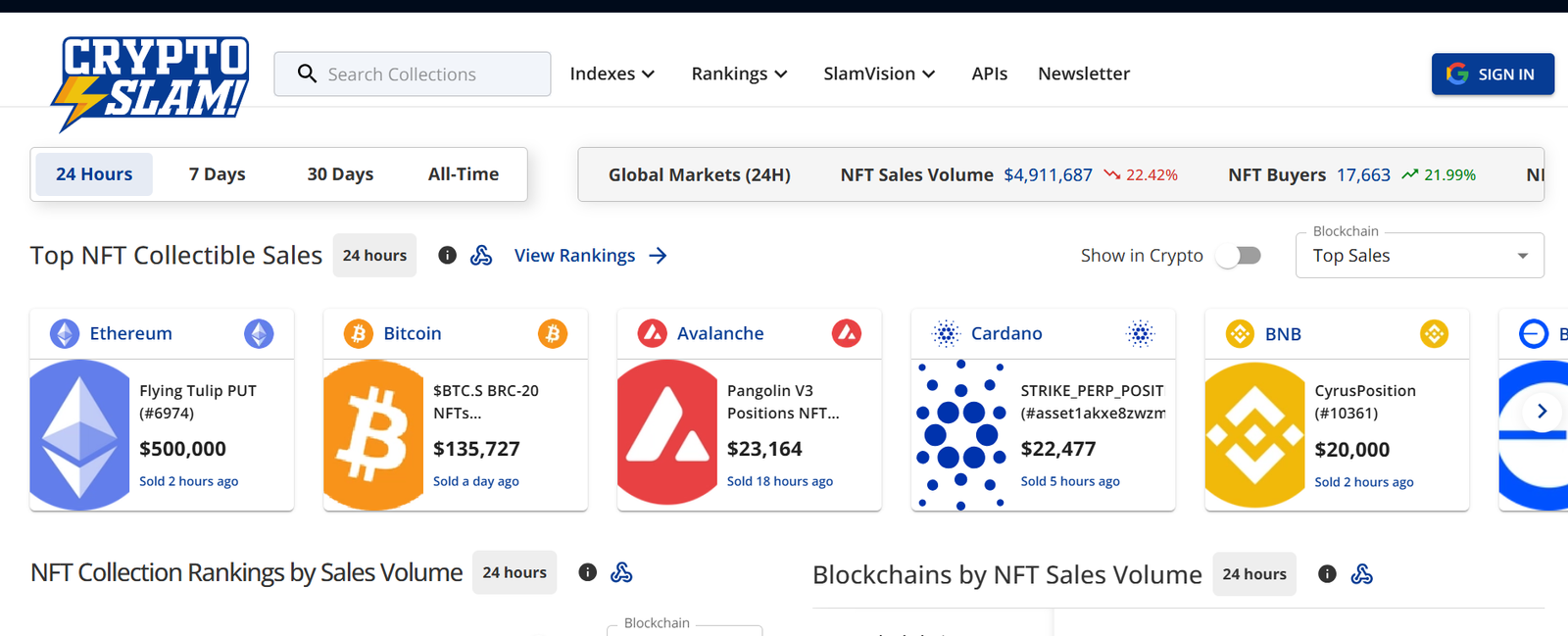
CryptoSlam is one of the most recognised NFT marketplace analytics platforms for tracking NFT sales volume across multiple blockchains. If your priority is understanding which collections are actually selling and where liquidity is flowing, CryptoSlam provides clear visibility.
When researching a CryptoSlam review or comparing CryptoSlam vs DappRadar, the major strength here is its cross-chain sales aggregation. It focuses heavily on verified transaction data rather than social sentiment.
For traders monitoring NFT marketplace analytics across Ethereum, Solana, Polygon and Bitcoin Ordinals, this matters.
Key Features
Multi-Chain Sales Tracking
CryptoSlam aggregates NFT sales data across more than 20 blockchains. This includes Ethereum, Solana, Polygon and newer ecosystems. Ideal for comparing total NFT volume between chains.
Collection Rankings
Collections are ranked by 24-hour, 7-day and 30-day volume. You can quickly identify which NFT marketplace analytics trends are accelerating.
Historical Sales Data
Access historical NFT price history and cumulative sales totals. This helps identify long-term performers rather than short-lived spikes.
Wallet Activity Overview
View buyer and seller counts to assess liquidity strength within a collection.
Verified Sales Filtering
Filters reduce suspicious or inflated trades, offering cleaner NFT market data.
Pros & Cons
| Pros | Cons |
| Strong multi-chain coverage | Limited wallet intelligence |
| Easy to read dashboards | Few advanced alerts |
| Historical volume tracking | Basic portfolio tools |
Pricing
- Free access to most NFT marketplace analytics features
- Premium enterprise plans available upon request
Compared to Dune pricing or Nansen pricing, CryptoSlam remains accessible for most traders without heavy subscription costs.
Best For Multi-Chain NFT Traders
CryptoSlam is ideal if you:
- Trade NFTs across Ethereum and Solana
- Monitor total NFT sales volume
- Compare blockchain performance
- Analyse liquidity trends before entering a position
Verdict: If your strategy revolves around volume confirmation rather than wallet tracking, CryptoSlam is one of the more straightforward NFT marketplace analytics platforms to keep open daily.
Unique Tip
Monitor buyer count alongside volume. If volume rises but unique buyers drop, you may be looking at concentrated trading rather than organic demand.
Best Alternative Tool
DappRadar offers similar NFT rankings with added dApp metrics.
NFTGo –- All-in-One NFT Market Intelligence
NFTGo positions itself as a complete NFT marketplace analytics platform covering collection analytics, whale tracking, rarity tools, and NFT portfolio management.
If you are reading an NFTGo review or comparing NFTGo vs Nansen, the distinction is clear. Nansen focuses heavily on wallet labelling and smart money intelligence. NFTGo combines wallet tracking with collection-level NFT marketplace analytics in a more visual interface.
For active traders and NFT project founders, it strikes a balance between accessibility and depth.
Key Features
Whale Tracking Dashboard
NFTGo highlights large NFT holders and recent whale activity. You can monitor top buyers entering a collection before major price movement.
Collection Analytics
Detailed breakdowns of floor price, volume trends, holder distribution, and market cap. These NFT marketplace analytics metrics help identify whether a project has concentrated ownership risk.
Rarity and Trait Analysis
Built-in rarity ranking and trait scoring across major collections. Useful for sniping undervalued NFTs with premium traits.
NFT Portfolio Tracking
Connect your wallet to monitor profit and loss across multiple NFT marketplaces.
Mint Intelligence
Track new launches and monitor early mint activity for potential high-demand collections.
Pros & Cons
| Pros | Cons |
| Strong visual dashboards | Less granular than Dune |
| Whale monitoring tools | Premium features paywalled |
| Portfolio tracking | Limited institutional tools |
Pricing
- Free plan with limited analytics
- Pro plan from approximately £29 per month
- Higher-tier pricing for advanced features
Compared to Nansen pricing, NFTGo is significantly more accessible for individual traders.
Best For Independent NFT Traders and Project Founders
NFTGo is ideal if you:
- Trade mid-cap NFT collections
- Track whale accumulation
- Analyse holder distribution before buying
- Manage personal NFT portfolios
Verdict: NFTGo offers one of the more balanced NFT marketplace analytics platforms for traders who want strong analytics without enterprise pricing.
Unique Tip
Check holder concentration metrics before entering a position. If the top 10 wallets control a large percentage of supply, volatility risk increases.
Best Alternative Tool
If you require deeper wallet labelling and institutional-grade analytics, Nansen remains the stronger option.
Icy Tools – Real-Time NFT Market Tracking for Active Traders
Icy Tools is built for speed. Among NFT marketplace analytics platforms, it is known for delivering real-time mint tracking, floor price updates, and trending collection data with minimal delay.
If you are researching an Icy Tools review or comparing Icy Tools vs NFTGo, the difference is pace. NFTGo provides broad market coverage. Icy Tools focuses on immediate trading signals and live NFT marketplace analytics.
For short-term NFT traders and mint snipers, timing is everything.
Key Features
Live Mint Tracking
Icy Tools tracks NFT mints as they happen. You can monitor mint volume, transaction count, and early wallet participation before secondary market activity explodes.
Trending Collections Dashboard
Collections are ranked by live volume and momentum indicators. This allows traders to spot rapid shifts in NFT marketplace analytics across Ethereum projects.
Floor Price Alerts
Set alerts for floor price movements. This is particularly useful during volatile trading sessions.
Wallet Activity Monitoring
Track high-volume wallets interacting with new collections. While not as advanced as Nansen wallet labelling, it offers useful behavioural signals.
Portfolio View
Connect your wallet to track NFT holdings and performance metrics across supported marketplaces.
Pros & Cons
| Pros | Cons |
| Real-time data focus | Ethereum-centric |
| Clean trading interface | Fewer historical analytics |
| Strong mint monitoring | No deep SQL customisation |
Pricing
- No permanent free tier
- Plans start from approximately £39 per month
- Higher tiers for expanded alerts and tracking
Compared to NFTGo pricing, Icy Tools is slightly higher for entry-level users but justifiable for active traders relying on live NFT marketplace analytics.
Best For High-Frequency NFT Traders
Icy Tools is ideal if you:
- Flip newly minted NFTs
- Trade based on volume spikes
- Monitor live floor price shifts
- Require real-time NFT marketplace analytics
Verdict: If your trading model depends on speed rather than long-term trend analysis, Icy Tools is one of the most responsive NFT marketplace analytics platforms available.
Unique Tip
Monitor mint-to-listing time. When NFTs are listed immediately after mint in large quantities, it can indicate short-term supply pressure on floor price.
Best Alternative Tool
Trait Sniper offers instant rarity scoring during mint, which pairs well with Icy Tools for early-stage flips.
Rarity Sniper — Fast Rarity Rankings for NFT Traders
Rarity Sniper is widely known for one thing. Speed in rarity scoring. Among NFT marketplace analytics platforms, it focuses almost entirely on ranking NFT traits immediately after mint.
If you are searching for a Rarity Sniper review or comparing Rarity Sniper vs Trait Sniper, the core appeal is clear. It gives traders a quick way to identify rare NFTs before the wider market catches on.
For flippers operating during mint windows, rarity data is often the difference between a 2x and a loss.
Key Features
Instant Rarity Rankings
Rarity Sniper publishes rarity scores shortly after metadata is revealed. Traders can filter by rarity rank and target undervalued listings quickly.
Trait Breakdown Analysis
Each NFT is analysed by trait frequency. You can see how rare specific attributes are within the collection.
Collection Coverage
Covers a wide range of Ethereum-based NFT projects, especially high-profile drops.
Trending Collections Feed
Highlights projects gaining traction across NFT marketplace analytics channels.
Discord and Social Alerts
Many traders use Rarity Sniper alerts inside private communities to react quickly to rare listings.
Pros & Cons
| Pros | Cons |
| Fast rarity updates | Limited wallet tracking |
| Simple interface | Mostly Ethereum focused |
| Free access for many collections | No advanced portfolio tools |
Pricing
- Free access for many collections
- Premium features available through membership tiers
Compared with Icy Tools pricing, Rarity Sniper remains accessible for traders who only need rarity-focused NFT marketplace analytics.
Best For Mint Flippers and Trait Hunters
Rarity Sniper is ideal if you:
- Participate in primary NFT mints
- Flip NFTs immediately after reveal
- Target top 5 percent rarity items
- Need fast trait ranking visibility
Verdict: If your trading strategy revolves around rarity arbitrage, Rarity Sniper remains one of the most useful NFT marketplace analytics platforms for early-stage flips.
Unique Tip
Combine rarity rank with floor price percentage gap. When a top 10 percent NFT is listed near floor, that pricing inefficiency rarely lasts long in active collections.
Best Alternative Tool
Trait Sniper offers similar functionality with automated reveal tracking and may suit traders who need deeper mint integration.
Trait Snipe – Automated Rarity and Mint Sniping
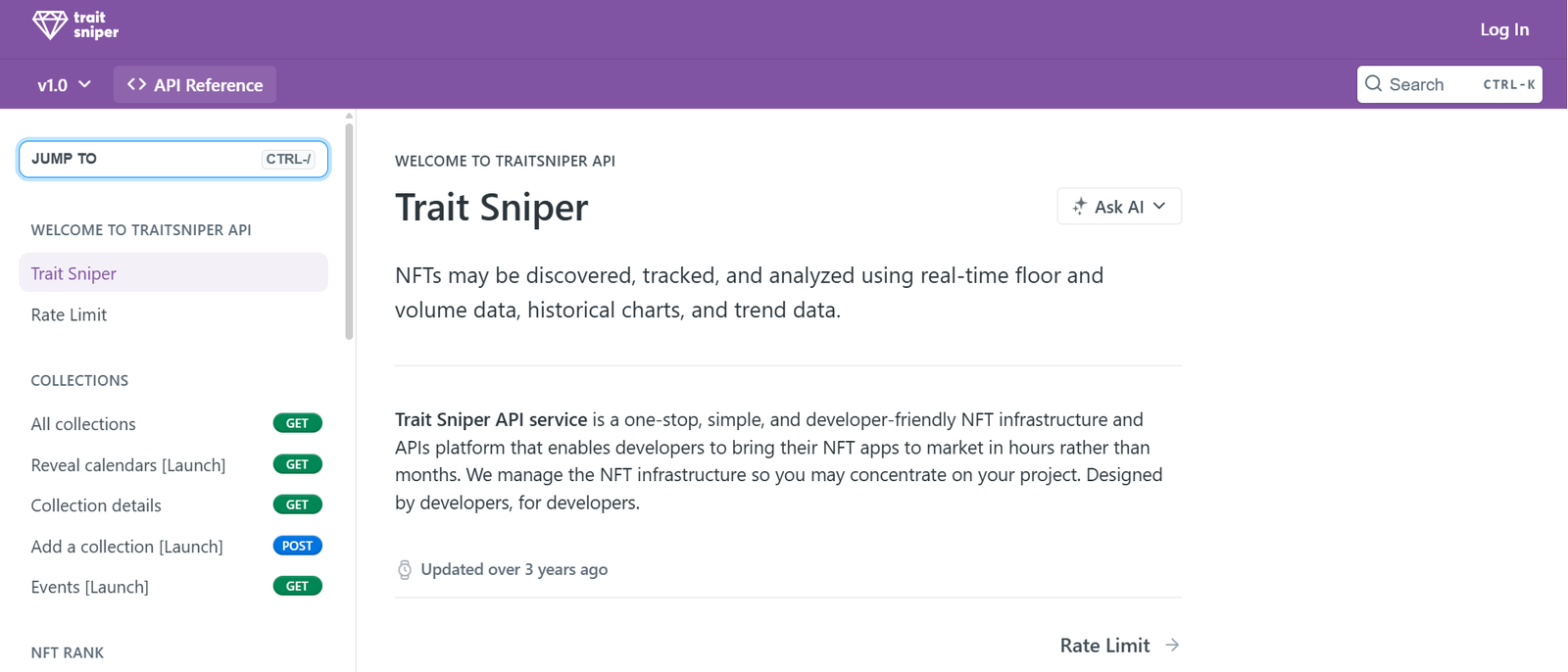
Trait Sniper is built specifically for traders who operate inside tight mint windows. Among NFT marketplace analytics platforms, it stands out for its automation during reveal and its ability to calculate rarity before most manual tools catch up.
If you are reading a Trait Sniper review or comparing Trait Sniper vs Rarity Sniper, the key difference is automation depth. Trait Sniper integrates directly into mint workflows and aims to reduce delay between reveal and resale.
For NFT traders competing in seconds rather than hours, this is critical.
Key Features
Automated Rarity Calculation
Trait Sniper calculates rarity almost instantly after metadata reveal. This reduces the delay between reveal and listing, giving traders an execution advantage.
Mint Integration
Direct integration with supported NFT mint contracts allows users to analyse rarity before the broader market sees rankings.
Trait-Based Filtering
Users can filter NFTs by specific attributes and rarity tiers. This is particularly useful when targeting specific high-demand traits.
Sniping Alerts
Receive notifications when high-rarity NFTs are listed near floor price.
Ethereum Marketplace Compatibility
Works alongside major NFT marketplaces on Ethereum, allowing smoother execution.
Pros & Cons
| Pros | Cons |
| Fast reveal processing | Focused on Ethereum |
| Automated rarity during mint | Subscription required |
| Strong mint workflow support | Limited historical analytics |
Pricing
- Paid subscription required
- Pricing varies based on access tier and demand
Compared to Rarity Sniper pricing, Trait Sniper typically positions itself as a premium tool for highly active mint traders within NFT marketplace analytics.
Best For Competitive Mint Traders
Trait Sniper is ideal if you:
-
- Compete in high-demand NFT mints
- Flip immediately after reveal
- Use trait-based arbitrage strategies
- Need automated NFT marketplace analytics during mint
Verdict: If speed and automation define your NFT trading model, Trait Sniper is one of the most specialised NFT marketplace analytics platforms available.
Unique Tip
Track mint gas spikes alongside rarity output. If high gas fees coincide with rarity reveals, it often signals heavy competition for premium traits.
Best Alternative Tool
Rarity Sniper remains a strong alternative for traders who prefer a simpler interface without deep mint integration.
DappRadar — NFT Rankings and dApp Intelligence in One Dashboard
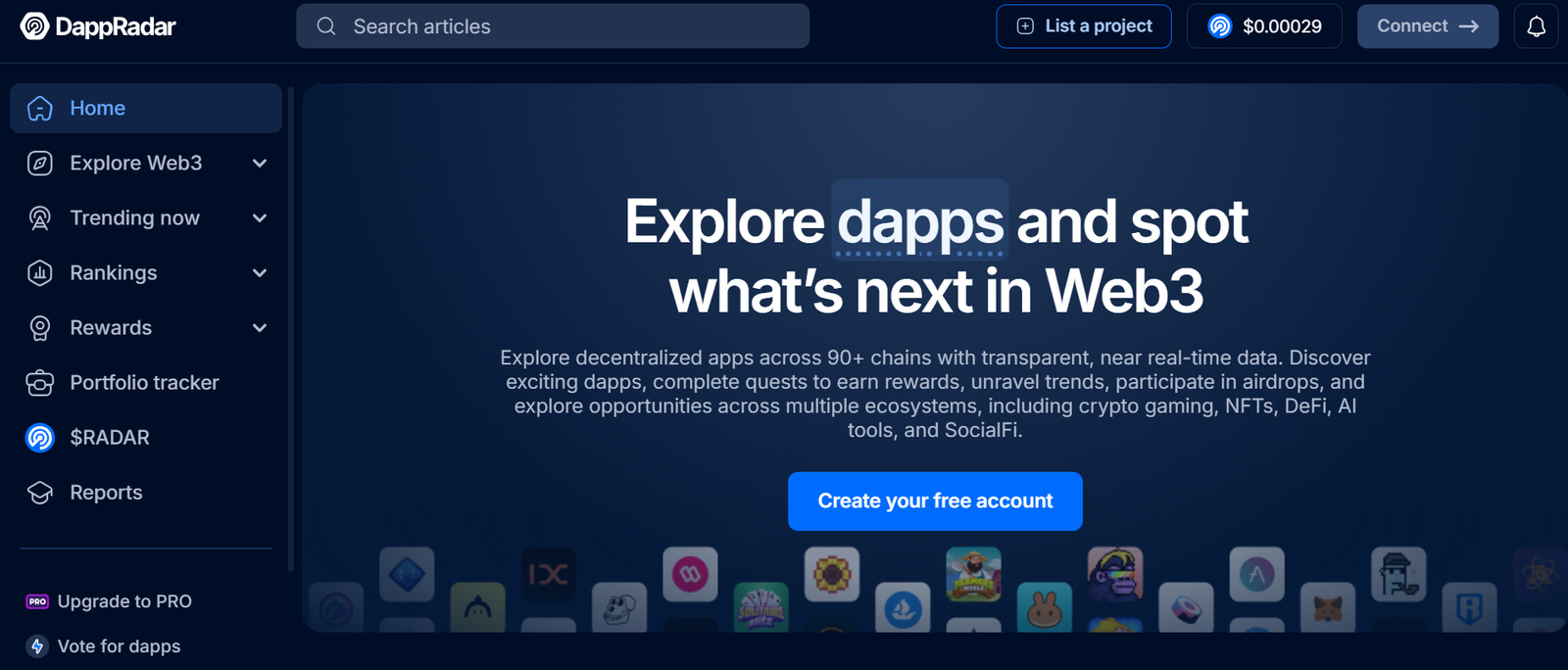
DappRadar is widely recognised for tracking decentralised applications, but it has also become one of the more visible NFT marketplace analytics platforms for monitoring collection rankings and trading volume.
If you are reading a DappRadar review or comparing DappRadar vs CryptoSlam, the distinction is positioning. CryptoSlam focuses heavily on raw NFT sales data. DappRadar blends NFT marketplace analytics with broader dApp metrics including DeFi and gaming activity.
For investors allocating capital across Web3 sectors, that cross-category view matters.
Key Features
NFT Collection Rankings
DappRadar ranks NFT collections based on 24-hour volume, trader count, and sales activity. This gives traders a quick read on which projects are gaining traction.
Multi-Chain Coverage
Supports Ethereum, Polygon, BNB Chain, Solana and other blockchains. This makes it useful for comparing NFT marketplace analytics across ecosystems.
Trader Count Metrics
Displays unique trader counts alongside volume. This helps distinguish between widespread participation and concentrated trading.
Portfolio Tracking
Users can connect wallets to monitor NFT holdings and activity across marketplaces.
Market Overview Reports
DappRadar publishes broader NFT market reports, offering context around sector-wide activity and performance shifts.
Pros & Cons
| Pros | Cons |
| Broad blockchain coverage | Limited wallet labelling |
| Simple ranking interface | Fewer advanced alerts |
| Free access available | Less granular than Dune |
Pricing
- Free access to core NFT marketplace analytics
- Pro features available through subscription
Compared to CryptoSlam pricing, DappRadar offers similar free accessibility but with broader dApp coverage beyond NFTs.
Best For Web3 Investors Monitoring Multiple Sectors
DappRadar is ideal if you:
- Allocate capital across NFTs and DeFi
- Track NFT trader growth trends
- Compare blockchain ecosystems
- Need accessible NFT marketplace analytics without complex dashboards
Verdict: If you want NFT marketplace analytics within a broader Web3 monitoring framework, DappRadar remains a practical option.
Unique Tip
Watch trader count relative to sales volume. When trader growth outpaces volume growth, it can indicate early-stage community expansion before significant price appreciation.
Best Alternative Tool
CryptoSlam is the stronger alternative if your primary focus is verified NFT sales volume across multiple chains.
Token Terminal – NFT Revenue and Protocol Financial Metrics
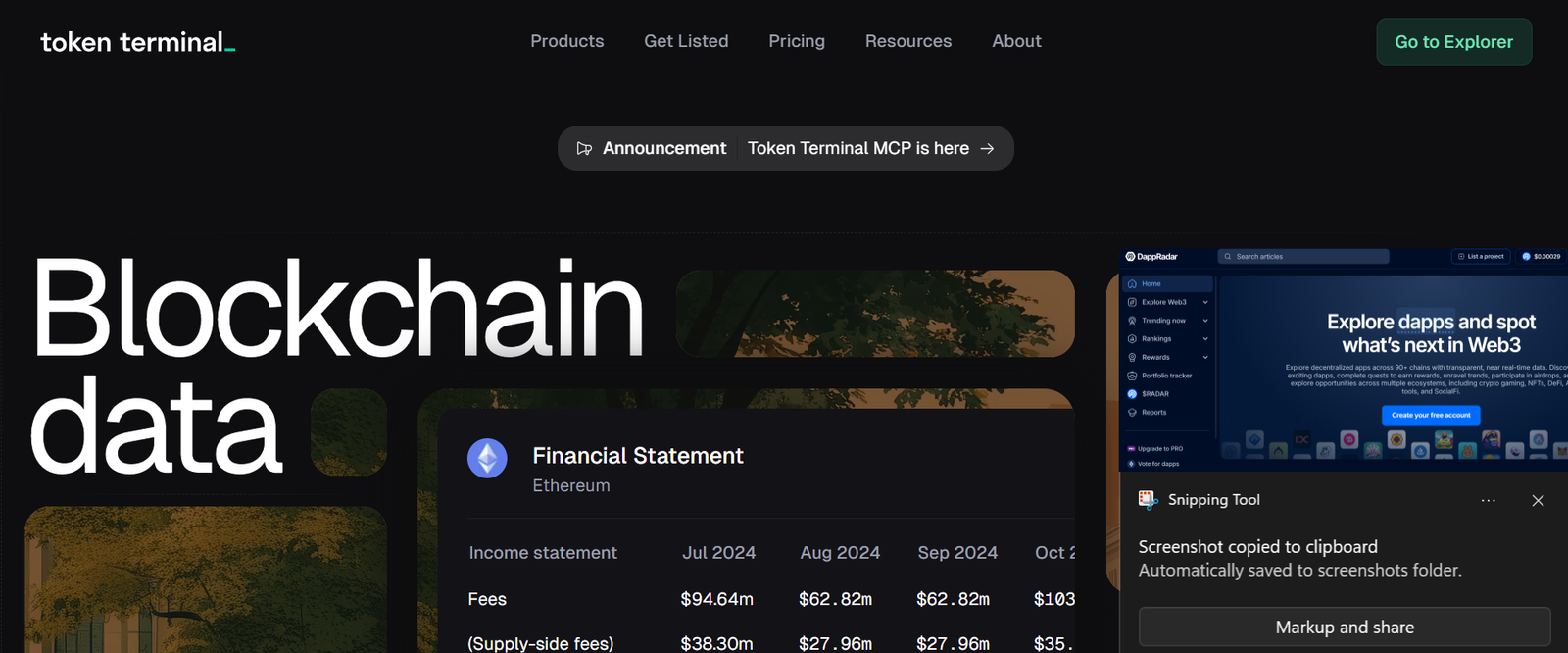
Token Terminal approaches NFT marketplace analytics from a financial performance angle rather than purely trading signals. It focuses on protocol revenue, marketplace fees, and economic metrics behind NFT platforms.
If you are reading a Token Terminal review or comparing Token Terminal vs Dune, the difference lies in intent. Dune allows raw data querying. Token Terminal structures blockchain financial data into investor-friendly dashboards.
For NFT marketplace analytics that focus on marketplace sustainability rather than short-term flips, this platform plays a different role.
Key Features
Marketplace Revenue Tracking
Track revenue generated by NFT marketplaces such as OpenSea and Blur. This helps assess platform-level performance rather than individual collections.
Financial Ratio Metrics
Includes valuation multiples and revenue ratios typically used by crypto funds and analysts.
Historical Performance Data
View revenue trends over time to identify whether an NFT marketplace is growing or declining in fee generation.
Cross-Protocol Comparison
Compare NFT marketplaces alongside DeFi protocols for capital allocation decisions.
Institutional-Grade Data Presentation
Data is structured in a way that mirrors traditional equity research dashboards.
Pros & Cons
| Pros | Cons |
| Strong financial metrics | Limited collection-level analytics |
| Institutional focus | Less useful for mint trading |
| Clear revenue tracking | Subscription required for depth |
Pricing
- Limited free access
- Paid plans starting from approximately £325 per month
- Enterprise-level plans available
Compared to Dune pricing, Token Terminal is more structured and less technical, but aimed at higher-tier users within NFT marketplace analytics.
Best For Crypto Funds and Long-Term NFT Investors
Token Terminal is ideal if you:
- Evaluate NFT marketplaces as businesses
- Allocate capital across Web3 sectors
- Track protocol revenue trends
- Require structured financial reporting
Verdict: If your focus is NFT marketplace economics rather than trait sniping or wallet tracking, Token Terminal fills a specific gap within NFT marketplace analytics platforms.
Unique Tip
Compare marketplace revenue growth with overall NFT trading volume. If volume remains steady but revenue declines, it may signal fee compression or competitive pressure.
Best Alternative Tool
Dune offers more granular transaction-level analysis if you prefer building your own financial dashboards.
Footprint Analytics — Visual On-Chain NFT Dashboards Without Heavy Coding
Footprint Analytics positions itself as a visual blockchain analytics platform that reduces the technical barrier often associated with NFT marketplace analytics platforms.
If you are reviewing Footprint Analytics or comparing Footprint Analytics vs Dune, the key difference is accessibility. Dune requires SQL skills. Footprint uses a visual dashboard builder, making NFT marketplace analytics more approachable for non-technical users.
For NFT founders, analysts, and marketing teams who need structured blockchain data without writing queries from scratch, this platform fills a clear gap.
Key Features
Visual Dashboard Builder
Users can create NFT marketplace analytics dashboards using a drag-and-drop interface. This reduces dependency on SQL knowledge while still allowing access to on-chain metrics.
Pre-Built NFT Templates
Includes ready-made dashboards for NFT volume, holder growth, floor price history, and wallet activity. Useful for quick reporting.
Cross-Chain Data Coverage
Supports Ethereum, BNB Chain, Polygon and other major networks. This is valuable for comparing NFT ecosystem activity across chains.
Data Export and API Access
Allows teams to export NFT market data or integrate it into internal reporting systems.
Team Collaboration
Shared workspaces enable project teams to track NFT marketplace analytics collaboratively.
Pros & Cons
| Pros | Cons |
| No advanced coding required | Less granular than raw SQL |
| Strong visual dashboards | Premium plans needed for full access |
| Cross-chain NFT analytics | Limited smart money labelling |
Pricing
- Free tier with limited dashboards
- Paid plans starting from approximately £79 per month
- Business plans for advanced analytics and API access
Compared to Dune pricing, Footprint Analytics can be more accessible for small NFT teams who do not require heavy customisation.
Best For NFT Project Teams and Non-Technical Analysts
Footprint Analytics is ideal if you:
- Run an NFT project and need investor reporting
- Track holder growth and transaction trends
- Build dashboards for internal decision-making
- Want NFT marketplace analytics without SQL
Verdict: For teams who need structured NFT marketplace analytics without coding complexity, Footprint Analytics offers a practical middle ground between simplicity and depth.
Unique Tip
Use holder retention charts to identify early churn. If new holders exit within days of mint, it may indicate weak community conviction or speculative buying pressure.
Best Alternative Tool
Dune remains the stronger alternative for analysts who require full custom SQL control over NFT marketplace analytics queries.
IntoTheBlock – AI-Powered Crypto and NFT Market Signals

IntoTheBlock is widely known for crypto market analytics, but it has expanded its coverage into NFT marketplace analytics, particularly around behavioural indicators and market sentiment metrics.
If you are reading an IntoTheBlock review or comparing IntoTheBlock vs Token Terminal, the difference is emphasis. Token Terminal focuses on protocol revenue. IntoTheBlock focuses on behavioural signals derived from blockchain data.
For NFT traders who want predictive-style indicators rather than just raw dashboards, this platform adds another layer to NFT marketplace analytics.
Key Features
On-Chain Behavioural Indicators
Tracks large transaction clusters, concentration metrics, and holder distribution patterns across NFT ecosystems.
Whale Activity Signals
Identifies significant wallet movements that may influence NFT collection liquidity or broader market activity.
Market Sentiment Metrics
Analyses network-level signals that may correlate with shifts in NFT trading activity.
Institutional Reporting Tools
Provides structured reports used by funds and research desks monitoring NFT marketplace analytics alongside crypto markets.
Cross-Market Correlation Data
Examines correlations between NFT volume and broader crypto market movements.
Pros & Cons
| Pros | Cons |
| Strong behavioural metrics | Limited trait-level analytics |
| Institutional-grade reporting | Higher pricing tiers |
| Whale concentration analysis | Not mint-focused |
Pricing
- Custom pricing based on use case
- Enterprise-level plans available
Compared to Footprint Analytics pricing, IntoTheBlock targets higher-tier users and research teams.
Best For Institutional Analysts and Research Desks
IntoTheBlock is ideal if you:
- Manage capital across crypto and NFTs
- Monitor whale concentration shifts
- Require behavioural analytics beyond floor price tracking
- Use macro-level NFT marketplace analytics
Verdict: If you are looking at NFTs from a portfolio allocation perspective rather than a short-term flip strategy, IntoTheBlock adds depth to your NFT marketplace analytics stack.
Unique Tip
Monitor concentration metrics across top holders. When concentration declines while volume rises, distribution may be broadening, which can reduce single-wallet risk.
Best Alternative Tool
Token Terminal remains the stronger alternative for users focused specifically on marketplace revenue and financial metrics.
BitsCrunch — NFT Forensics and Fraud Detection Analytics
BitsCrunch focuses on one area most NFT marketplace analytics platforms only touch lightly. Fraud detection and market integrity.
If you are reading a BitsCrunch review or comparing BitsCrunch vs CryptoSlam, the core distinction is fraud monitoring. CryptoSlam tracks sales volume. BitsCrunch analyses whether that volume is legitimate.
For traders, NFT founders, and marketplaces concerned about wash trading and manipulated floor prices, this layer of NFT marketplace analytics is critical.
Key Features
Wash Trading Detection
BitsCrunch analyses suspicious trading patterns and flags potential wash trades that inflate volume.
AI-Based NFT Valuation
Provides valuation models that assess whether an NFT’s price appears consistent with historical data and trait structure.
Risk Scoring
Assigns risk indicators to collections and individual NFTs based on transaction behaviour and liquidity signals.
Market Integrity Reports
Used by NFT marketplaces and institutional investors to monitor ecosystem health.
Cross-Chain Monitoring
Supports multiple blockchains to assess NFT marketplace analytics across ecosystems.
Pros & Cons
| Pros | Cons |
| Strong fraud detection | Less focused on mint tracking |
| Risk scoring tools | Custom pricing |
| Useful for compliance | Limited retail dashboard access |
Pricing
- Custom pricing based on data access
- Enterprise-oriented model
Compared to DappRadar pricing or CryptoSlam pricing, BitsCrunch targets institutional users more than casual traders.
Best For NFT Marketplaces and Risk-Conscious Investors
BitsCrunch is ideal if you:
- Operate an NFT marketplace
- Analyse suspicious trading patterns
- Require compliance-level NFT marketplace analytics
- Evaluate collection legitimacy before investing
Verdict: If you are serious about filtering manipulated volume from genuine demand, BitsCrunch adds a necessary layer of risk assessment within NFT marketplace analytics platforms.
Unique Tip
Before entering a trending collection, check whether volume spikes are accompanied by repeated wallet-to-wallet transfers. Abnormal repetition patterns often indicate artificial activity.
Best Alternative Tool
CryptoSlam is more suitable if your priority is tracking total NFT sales volume rather than detecting fraudulent trades.
Flips Finance — NFT Lending and Liquidation Intelligence
Flips Finance focuses on a segment many NFT marketplace analytics platforms overlook. NFT lending markets.
If you are researching a Flips Finance review or comparing Flips Finance vs NFTBank, the difference lies in focus. NFTBank centres on valuation models. Flips Finance concentrates on NFT-backed loans, liquidation risk, and lending pool activity.
For traders using NFTs as collateral or monitoring distressed assets, this form of NFT marketplace analytics can uncover overlooked opportunities.
Key Features
NFT Loan Tracking
Monitor active NFT-backed loans across supported lending protocols. View loan duration, interest rates, and collateral details.
Liquidation Monitoring
Track loans nearing liquidation thresholds. This can signal forced selling pressure on specific collections.
Collateral Valuation Data
Provides floor price comparison against loan principal, helping assess risk exposure.
Lending Market Overview
Analyse lending volume trends and active borrower counts within NFT ecosystems.
Portfolio Risk Assessment
Connect wallets to view exposure across NFT lending platforms.
Pros & Cons
| Pros | Cons |
| Strong lending visibility | Limited rarity analytics |
| Liquidation tracking | Smaller brand recognition |
| Useful for collateral traders | Focused niche coverage |
Pricing
- Core NFT marketplace analytics features available free
- Advanced analytics and integrations may require subscription
Compared to NFTBank pricing, Flips Finance focuses more heavily on lending metrics rather than predictive valuation modelling.
Best For NFT Traders Using Collateral Strategies
Flips Finance is ideal if you:
- Borrow against NFT holdings
- Monitor liquidation risk
- Trade distressed NFT assets
- Analyse lending volume trends
Verdict: If your NFT strategy includes borrowing or opportunistic buying during forced liquidations, Flips Finance adds a distinct layer to your NFT marketplace analytics toolkit.
Unique Tip
Watch clusters of loans tied to a single collection. When many loans approach liquidation simultaneously, short-term floor price volatility often increases.
Best Alternative Tool
NFTBank is a stronger alternative if your primary focus is valuation modelling rather than loan tracking.
NFTBank – AI-Based NFT Valuation and Portfolio Intelligence
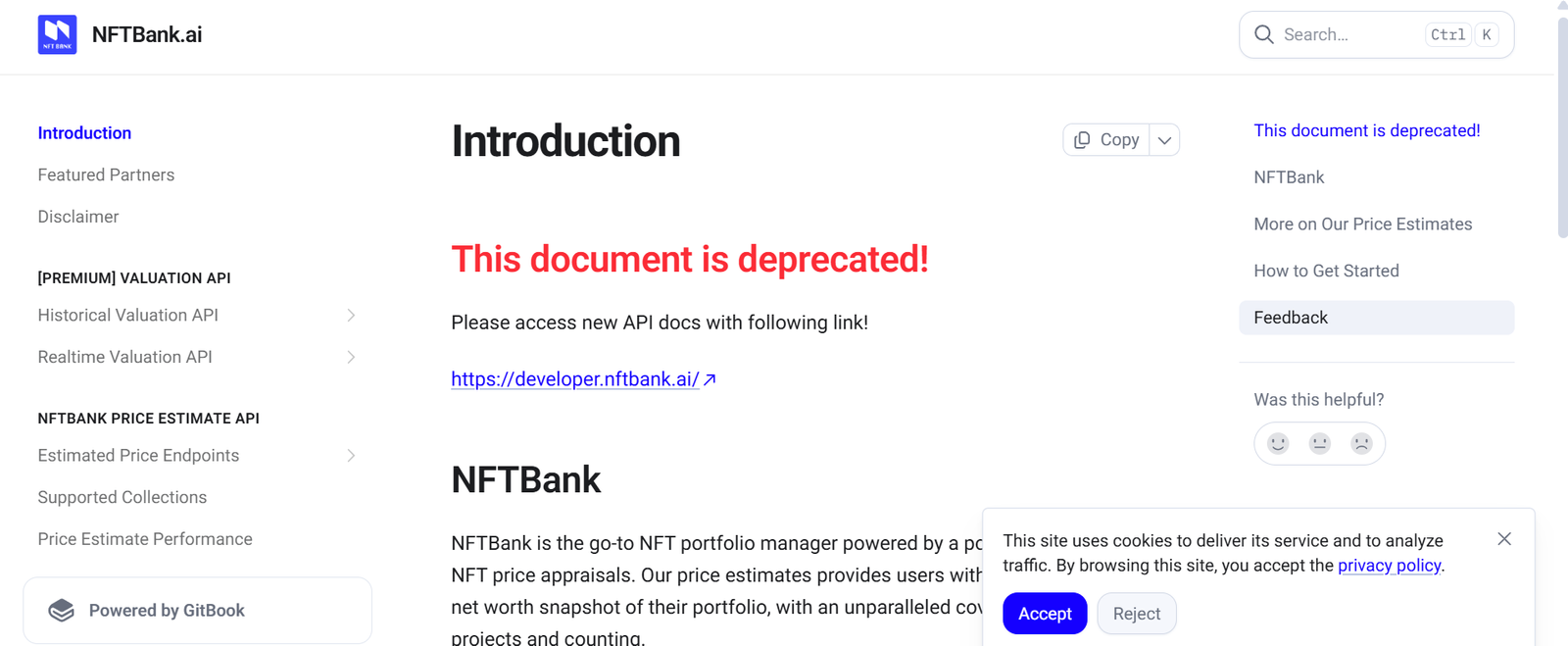
NFTBank is built around one central promise. Pricing clarity in a volatile market.
Among NFT marketplace analytics platforms, NFTBank focuses on valuation modelling powered by machine learning. If you are reading an NFTBank review or comparing NFTBank vs Flips Finance, the distinction is clear. Flips Finance concentrates on lending activity. NFTBank centres on estimating fair value and portfolio performance.
For traders who need structured NFT marketplace analytics around pricing rather than hype, this platform fills an important gap.
Key Features
AI Valuation Model
NFTBank calculates estimated fair value for individual NFTs using historical sales, trait rarity, liquidity and market behaviour patterns. This allows traders to compare listing price against modelled value before buying.
Portfolio Performance Tracking
Connect your wallet and view realised and unrealised gains across collections. This provides a structured overview of NFT performance beyond simple floor comparisons.
Collection-Level Metrics
Analyse holder distribution, volume shifts, and liquidity depth across NFT projects.
Risk Indicators
NFTBank assigns risk scores based on volatility, liquidity concentration and price deviation trends.
API Access
Developers and NFT platforms can integrate NFTBank’s valuation model into external dashboards and systems.
Pros & Cons
| Pros | Cons |
| AI-based pricing model | Valuation models not perfect |
| Strong portfolio tracking | Subscription required for depth |
| Useful risk indicators | Less focused on mint tracking |
Pricing
- Limited free access
- Paid plans starting from approximately £39 per month
- Custom pricing for API access
Compared to Flips Finance pricing, NFTBank focuses more on valuation intelligence rather than collateral analytics within NFT marketplace analytics platforms.
Best For NFT Investors Focused on Fair Value
NFTBank is ideal if you:
- Hold NFTs long term
- Evaluate whether listings are overpriced
- Track portfolio performance over time
- Require structured NFT marketplace analytics around pricing
Verdict: If you want a second opinion before clicking buy on a high-value NFT, NFTBank adds analytical discipline to your decision-making process.
Unique Tip
Compare NFTBank’s estimated value against the current floor price spread. When modelled value significantly exceeds listing price and liquidity is stable, mispricing opportunities may exist.
Best Alternative Tool
Flips Finance is the stronger alternative if your strategy centres on NFT-backed loans and liquidation tracking rather than valuation modelling.
CoinStats – Multi-Chain Portfolio and NFT Tracking in One Place
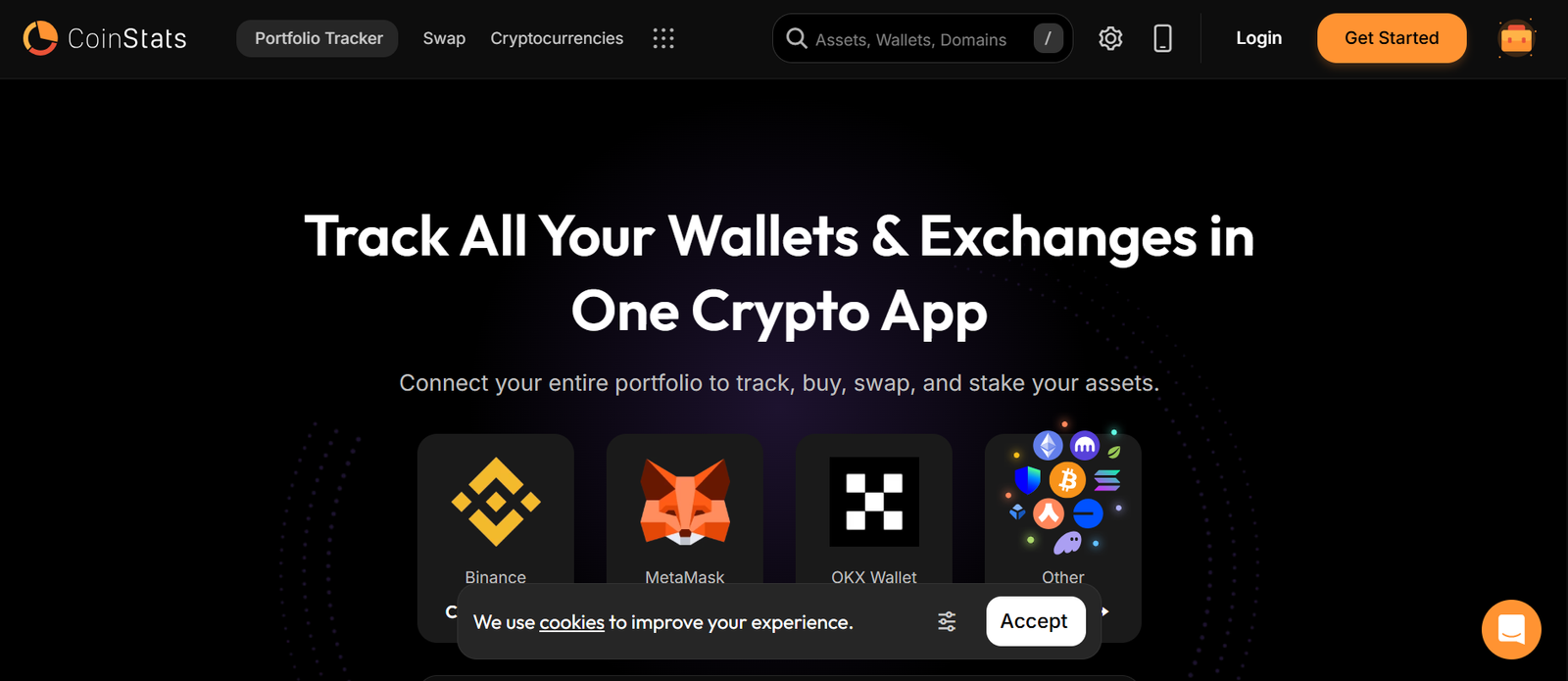
CoinStats is primarily known as a crypto portfolio tracker, but it has expanded its functionality into NFT marketplace analytics by supporting NFT portfolio tracking across multiple chains and wallets.
If you are reading a CoinStats review or comparing CoinStats vs NFTBank, the difference lies in scope. NFTBank focuses heavily on valuation modelling. CoinStats focuses on consolidated portfolio visibility across tokens and NFTs.
For traders operating across Ethereum, Polygon and other ecosystems, having unified NFT marketplace analytics in one dashboard reduces fragmentation.
Key Features
Multi-Wallet NFT Tracking
Connect multiple wallets and track NFT holdings alongside fungible tokens. This provides a broader capital overview.
Cross-Chain Support
Supports Ethereum, Polygon and other major networks, making it useful for diversified NFT portfolios.
Portfolio Performance Metrics
Track profit and loss, historical performance and asset allocation breakdown.
Price Alerts
Set alerts for NFT floor price changes and major asset movements.
Mobile App Access
CoinStats offers mobile access, enabling monitoring of NFT marketplace analytics while away from desktop dashboards.
Pros & Cons
| Pros | Cons |
| Unified crypto and NFT tracking | Limited deep rarity analytics |
| Cross-chain support | Less advanced wallet labelling |
| Mobile-friendly interface | Premium tier needed for full features |
Pricing
- Free tier available
- Premium plans starting from approximately £8 per month
- Higher tiers for expanded portfolio tracking
Compared to NFTBank pricing, CoinStats is generally more affordable but offers less detailed valuation modelling within NFT marketplace analytics platforms.
Best For Multi-Chain NFT Holders
CoinStats is ideal if you:
- Hold NFTs across several blockchains
- Want consolidated portfolio reporting
- Track both tokens and NFTs in one place
- Require accessible NFT marketplace analytics on mobile
Verdict: If your NFT activity spans multiple chains and you want centralised oversight, CoinStats adds practical portfolio management to your NFT marketplace analytics stack.
Unique Tip
Segment your NFT portfolio by chain and collection category. Identifying which ecosystem contributes most to portfolio volatility can improve allocation decisions.
Best Alternative Tool
NFTBank is the stronger alternative if you prioritise AI-based NFT valuation over broad portfolio tracking.
Blur Analytics–Pro-Level NFT Trading Interface with Order Book Depth
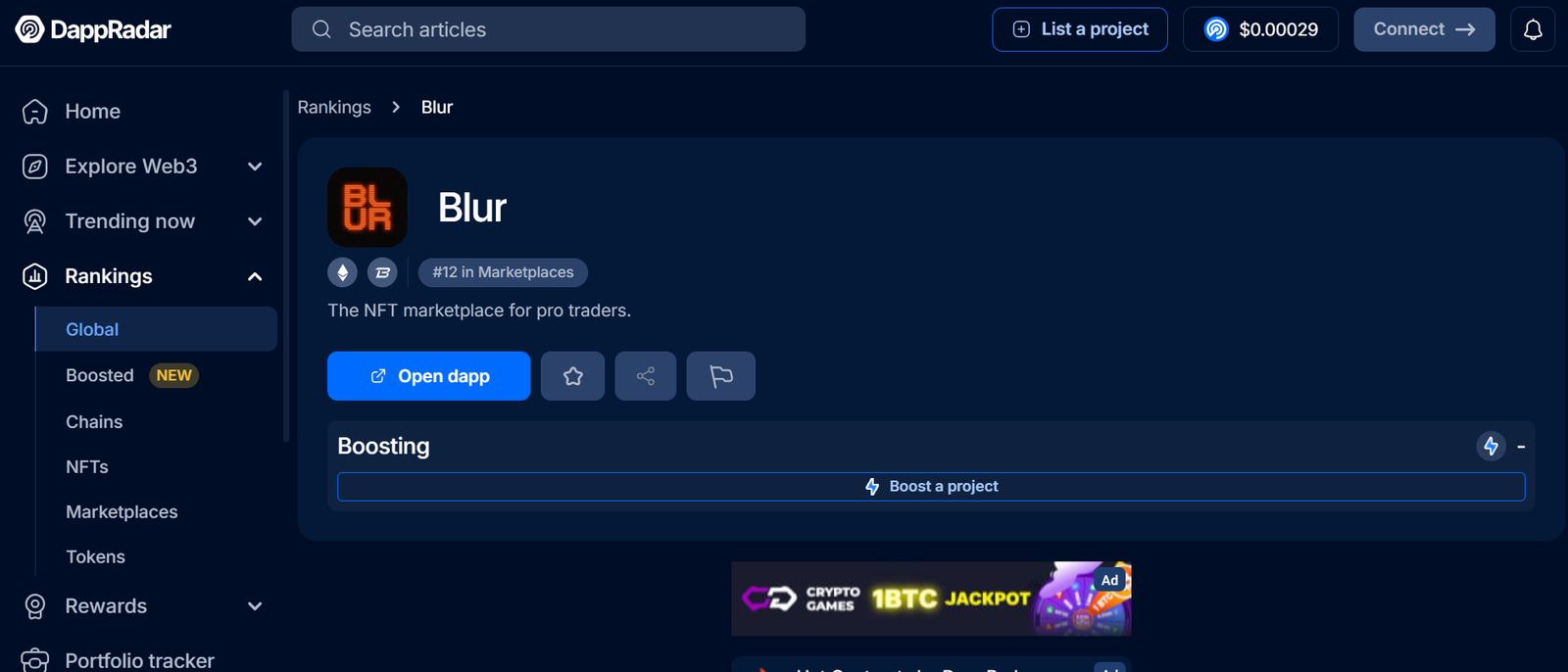
Blur has become a dominant marketplace for professional NFT traders, and its native analytics dashboard is now considered one of the more powerful NFT marketplace analytics platforms for active participants.
If you are reading a Blur review or comparing Blur vs OpenSea, the key distinction is trading structure. Blur offers an order book style interface and advanced execution tools, while OpenSea traditionally operates with a simpler listing format.
For high-volume traders relying on NFT marketplace analytics for rapid execution, Blur’s native data tools are built for performance.
Key Features
Live Order Book View
Blur displays active bids and asks in real time. This gives traders visibility into market depth rather than relying solely on floor price snapshots.
Portfolio Performance Dashboard
Track realised and unrealised profit across NFT collections directly within the trading interface.
Bulk Listing and Sweeping
Professional traders can list multiple NFTs or sweep floors efficiently, backed by live NFT marketplace analytics.
Trait-Based Floor Tracking
View floor price variations across specific traits within a collection.
Loyalty and Rewards Tracking
Blur’s incentive system can be monitored directly through the platform, allowing traders to assess trading volume relative to rewards.
Pros & Cons
| Pros | Cons |
| Order book transparency | Primarily Ethereum focused |
| Designed for active traders | Complex for beginners |
| Integrated trading tools | Less suited for long-term holders |
Pricing
- Free access to core NFT marketplace analytics
- Platform earns through marketplace fee structure
Compared to OpenSea analytics, Blur offers deeper execution-focused NFT marketplace analytics tools aimed at high-frequency users.
Best For High-Volume NFT Traders
Blur Analytics is ideal if you:
- Execute frequent NFT trades
- Monitor bid depth before entering positions
- Sweep multiple listings rapidly
- Require live NFT marketplace analytics within a trading interface
Verdict: If your edge depends on liquidity depth and execution speed, Blur’s integrated NFT marketplace analytics provide a clear advantage over simpler listing-based platforms.
Unique Tip
Watch bid wall formation on the order book. When strong bids cluster below floor price, it can indicate underlying support even during volatility.
Best Alternative Tool
OpenSea Stats is a simpler alternative for traders who prefer basic NFT marketplace analytics without advanced order book mechanics.
OpenSea Stats – Native Marketplace Data for the Largest NFT Platform
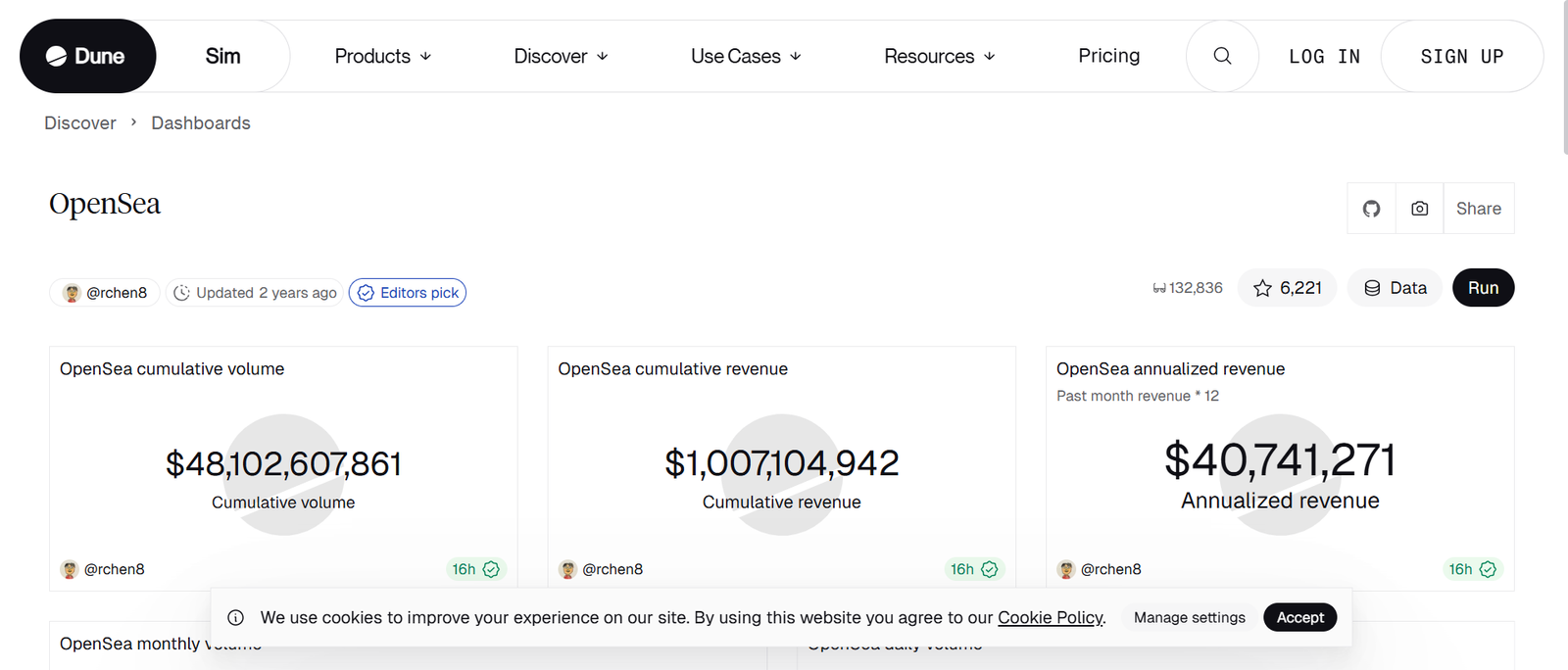
OpenSea remains one of the largest NFT marketplaces by user base, and its built-in analytics dashboard provides direct visibility into collection activity.
If you are researching an OpenSea review or comparing OpenSea vs Blur, the difference is structure. Blur focuses on order book execution. OpenSea provides listing-based NFT marketplace analytics with broad retail participation.
For traders who operate primarily within the OpenSea ecosystem, its native NFT marketplace analytics provide essential baseline data.
Key Features
Collection Activity Overview
View 24-hour volume, total volume, floor price, and item count directly within each collection page.
Historical Floor Charts
Track floor price movement over time to assess volatility patterns.
Top Collections Ranking
OpenSea ranks collections based on trending volume and activity.
Trait Filtering
Filter listings by attributes and compare price differences across traits.
Creator and Royalty Visibility
View creator details and royalty structures tied to collections.
Pros & Cons
| Pros | Cons |
| Direct marketplace data | No advanced wallet labelling |
| Easy to use interface | Limited cross-chain depth |
| Strong retail liquidity | Fewer pro-level tools |
Pricing
- Free access to all native NFT marketplace analytics
- Marketplace fees apply to trades
Compared to Blur analytics, OpenSea provides simpler NFT marketplace analytics suited to broader user participation rather than high-frequency trading strategies.
Best For Retail NFT Traders
OpenSea Stats is ideal if you:
- Trade mid-cap NFT collections
- Monitor basic floor and volume data
- Filter by traits before buying
- Prefer a straightforward marketplace interface
Verdict: If your activity is centred on OpenSea, its native NFT marketplace analytics remain essential for monitoring collection health and pricing behaviour.
Unique Tip
Compare listing count changes over short periods. Rapid increases in listings often signal incoming selling pressure before floor price adjusts.
Best Alternative Tool
Blur Analytics is more suitable if you require order book visibility and deeper execution-focused NFT marketplace analytics.
Magic Eden Stats — Solana-Focused NFT Marketplace Analytics
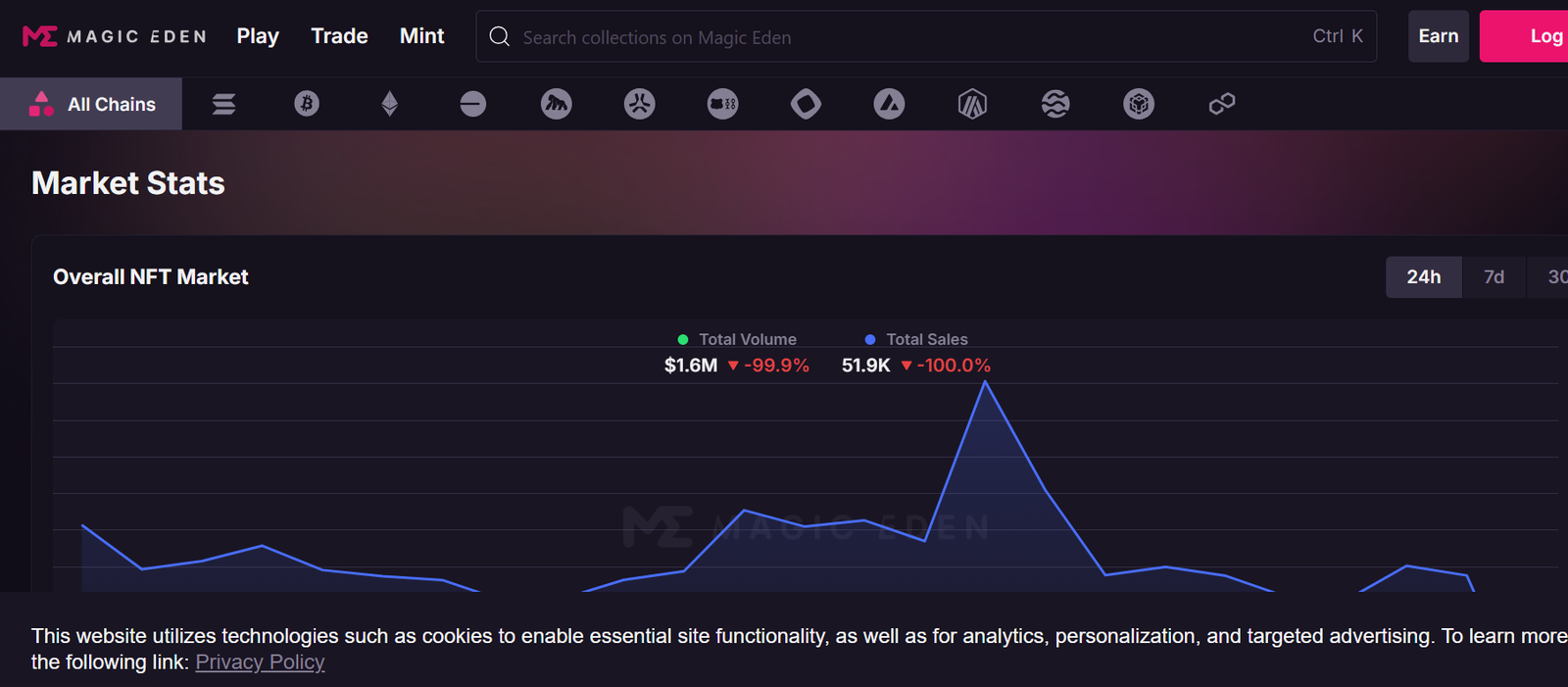
Magic Eden is one of the leading NFT marketplaces on Solana, and its native analytics dashboard provides ecosystem-specific NFT marketplace analytics for traders operating outside Ethereum.
If you are reading a Magic Eden review or comparing Magic Eden vs OpenSea, the difference is blockchain focus. OpenSea has broader multi-chain coverage. Magic Eden delivers deeper Solana-native NFT marketplace analytics.
For traders heavily involved in Solana collections, that focused visibility matters.
Key Features
Solana Collection Rankings
Magic Eden ranks collections based on 24-hour volume, floor price shifts, and transaction count within the Solana ecosystem.
Historical Price Charts
View floor price and volume history for Solana-based NFT collections.
Attribute Filtering
Filter listings by traits and compare pricing within a collection.
Launchpad Analytics
Monitor performance of new drops launched through Magic Eden’s launchpad.
Marketplace Fee Transparency
Clear display of creator royalties and marketplace fees tied to collections.
Pros & Cons
| Pros | Cons |
| Strong Solana focus | Limited Ethereum depth |
| Native marketplace data | Fewer advanced wallet tools |
| Launchpad visibility | Basic analytics compared to Dune |
Pricing
- Free access to core NFT marketplace analytics
- Marketplace trading fees apply
Compared to OpenSea Stats, Magic Eden provides deeper NFT marketplace analytics within Solana but less cross-chain coverage.
Best For Solana NFT Traders
Magic Eden Stats is ideal if you:
- Trade Solana NFT collections
- Monitor launchpad drops
- Analyse floor price shifts within Solana
- Require Solana-specific NFT marketplace analytics
Verdict: If Solana is your primary ecosystem, Magic Eden’s built-in NFT marketplace analytics should be part of your daily workflow.
Unique Tip
Watch post-launch volume decay patterns. Collections that retain steady secondary volume after mint often signal stronger holder conviction.
Best Alternative Tool
OpenSea Stats is more suitable if you trade across Ethereum and other chains rather than focusing solely on Solana.
Gem Analytics — Multi-Marketplace NFT Aggregator Intelligence
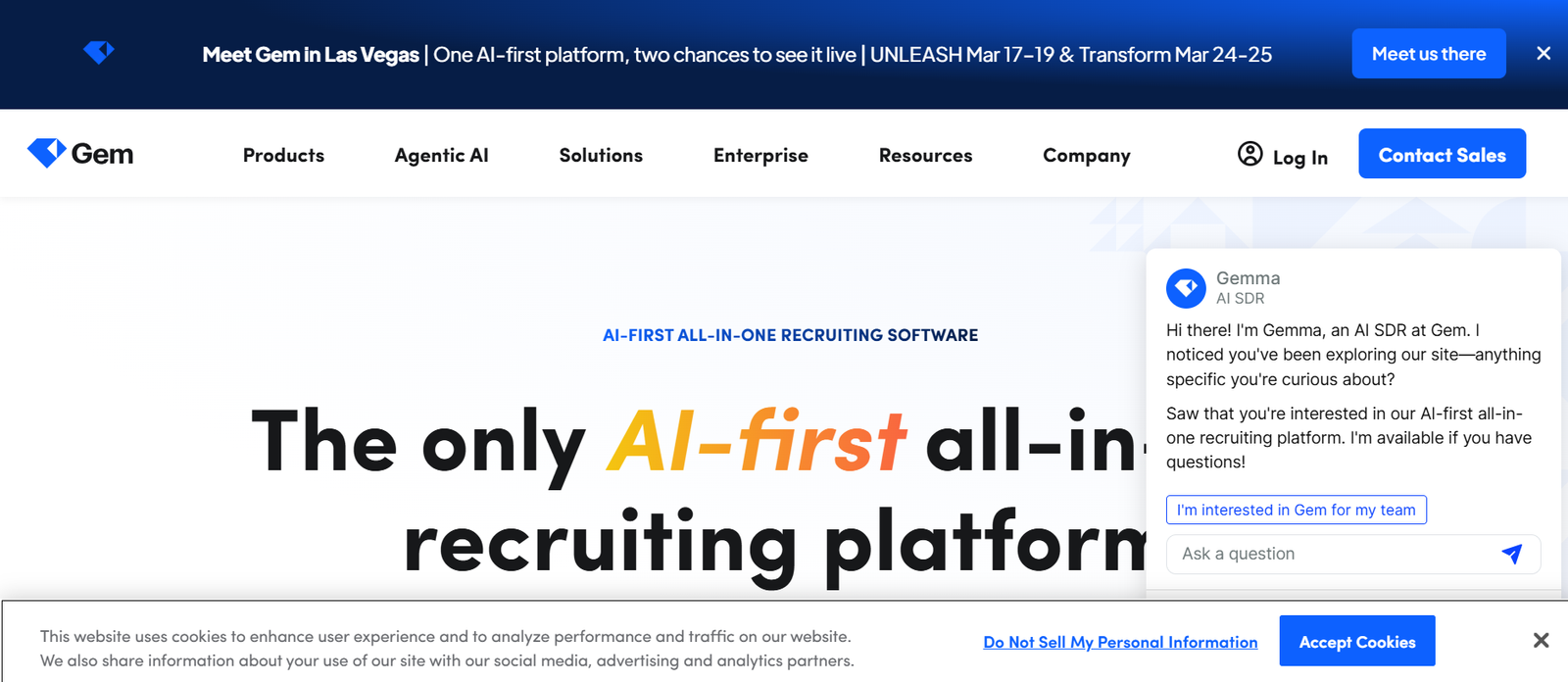
Gem operates as an NFT marketplace aggregator, pulling listings from multiple platforms into one interface. Its analytics layer gives traders consolidated NFT marketplace analytics across marketplaces rather than relying on a single venue.
If you are reading a Gem review or comparing Gem vs Blur, the distinction is aggregation. Blur focuses on its native marketplace order book. Gem aggregates listings from OpenSea, LooksRare, and other venues into one dashboard.
For traders scanning price inefficiencies across platforms, aggregated NFT marketplace analytics create visibility that single-market tools cannot provide.
Key Features
Multi-Marketplace Listings
View NFTs listed across different marketplaces in one interface, reducing fragmentation.
Floor Comparison Tools
Compare floor price discrepancies between marketplaces to identify pricing gaps.
Bulk Purchase Functionality
Sweep listings across multiple venues within a unified workflow.
Trait Filters
Filter NFTs by rarity traits across aggregated listings.
Activity Feed
Monitor collection-level buying and listing activity across supported marketplaces.
Pros & Cons
| Pros | Cons |
| Cross-market visibility | Less advanced wallet intelligence |
| Efficient floor sweeping | Primarily Ethereum focused |
| Aggregated pricing data | Limited deep analytics modelling |
Pricing
- Free access to core NFT marketplace analytics
- Platform may apply transaction routing fees
Compared to Blur analytics, Gem provides broader marketplace coverage but less depth in order book mechanics.
Best For Cross-Market NFT Arbitrage Traders
Gem Analytics is ideal if you:
- Compare prices across marketplaces
- Sweep floors from multiple venues
- Identify cross-platform listing inefficiencies
- Rely on aggregated NFT marketplace analytics
Verdict: If your edge comes from spotting pricing gaps between marketplaces, Gem strengthens your NFT marketplace analytics stack with consolidated visibility.
Unique Tip
Compare listing latency across marketplaces. Sometimes a listing appears on one venue slightly earlier than others, creating short windows of pricing advantage.
Best Alternative Tool
Blur Analytics is more suitable if you prioritise deep order book visibility within a single high-liquidity marketplace.
Zapper — Unified DeFi and NFT Portfolio Analytics
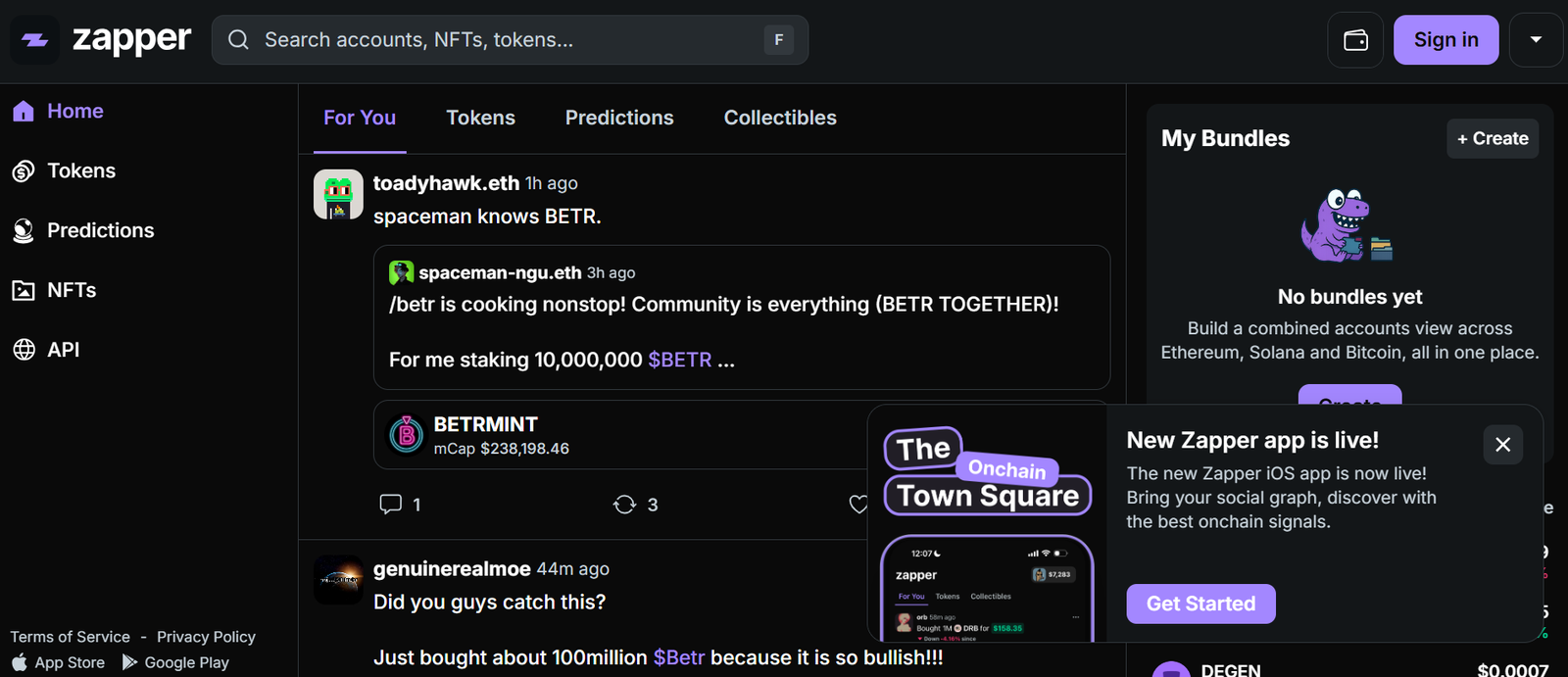
Zapper began as a DeFi portfolio tracker, but it has expanded to include NFT marketplace analytics within its broader Web3 dashboard. It is designed for users who hold tokens, liquidity positions, and NFTs across multiple chains.
If you are reading a Zapper review or comparing Zapper vs CoinStats, the difference lies in scope and DeFi integration. CoinStats focuses heavily on portfolio tracking. Zapper blends DeFi positions with NFT marketplace analytics in a unified interface.
For investors active across NFTs and decentralised finance, consolidated reporting reduces operational friction.
Key Features
Multi-Chain Portfolio Tracking
Track NFTs, tokens, and DeFi positions across Ethereum and other supported networks within one dashboard.
NFT Collection View
View NFT holdings by collection, including floor price references and estimated value metrics.
Wallet Activity Monitoring
Analyse historical wallet interactions across NFTs and DeFi protocols.
Asset Allocation Overview
See how much capital is allocated to NFTs versus tokens and liquidity pools.
Integration with DeFi Protocols
Provides context on how NFT holdings compare to broader crypto exposure.
Pros & Cons
| Pros | Cons |
| Unified NFT and DeFi tracking | Limited rarity analytics |
| Cross-chain support | Less detailed mint analytics |
| Clean portfolio interface | Not designed for high-frequency flips |
Pricing
- Free access to core NFT marketplace analytics
- Optional premium features depending on usage
Compared to CoinStats pricing, Zapper is similarly accessible but offers stronger DeFi integration alongside NFT marketplace analytics.
Best For NFT Investors Active in DeFi
Zapper is ideal if you:
- Hold NFTs and DeFi positions simultaneously
- Track multi-chain wallet activity
- Require high-level NFT marketplace analytics within a broader crypto portfolio view
- Monitor capital allocation between asset classes
Verdict: If NFTs are part of a larger Web3 portfolio rather than your sole focus, Zapper provides a practical overview of NFT marketplace analytics within a consolidated dashboard.
Unique Tip
Monitor NFT allocation percentage relative to total crypto exposure. Sudden shifts in allocation can increase portfolio volatility during NFT market corrections.
Choosing the Right NFT Marketplace Analytics Platform in 2026
There is no single best NFT marketplace analytics platform for everyone. Your strategy determines your stack.The most effective NFT traders rarely rely on one dashboard. They combine multiple NFT marketplace analytics platforms to build conviction before capital deployment.
If you are:
- A high-frequency NFT trader
- A project founder preparing for mint
- A crypto fund allocating into NFT ecosystems
- Or a portfolio investor seeking structured reporting
We build NFT marketplace analytics workflows around your specific objectives.Instead of chasing trends, we focus on measurable decision-making frameworks using wallet tracking, liquidity analysis, trait pricing gaps, and lending risk exposure.
Book a call and let us assess your current NFT marketplace analytics stack.
FAQs
1. What is the main purpose of NFT marketplace analytics platforms?
NFT marketplace analytics platforms aggregate on-chain data such as transaction volume, wallet activity, floor price trends, holder distribution and rarity metrics. Their purpose is to provide structured market intelligence rather than relying on marketplace front-end data alone.
2. How do NFT marketplace analytics platforms detect wash trading?
Platforms such as BitsCrunch analyse repetitive wallet-to-wallet transfers, abnormal transaction loops and concentrated buyer-seller patterns. These behaviours often indicate artificial volume inflation rather than genuine demand.
3. Are NFT marketplace analytics platforms suitable for beginners?
Some platforms such as OpenSea Stats or DappRadar are accessible for beginners. Others like Dune require SQL knowledge and are better suited to analysts or advanced traders.
4. What is the difference between wallet tracking and volume tracking?
Volume tracking measures total NFT sales activity. Wallet tracking monitors specific addresses, particularly high-value traders. Wallet intelligence often provides earlier signals than aggregate volume metrics.
5. Do NFT marketplace analytics platforms cover multiple blockchains?
Many leading NFT marketplace analytics platforms now support Ethereum, Solana, Polygon and other networks. However, depth varies by tool. Always verify chain coverage before subscribing.
6. How accurate are AI-based NFT valuation models?
Valuation models such as those from NFTBank use historical pricing, rarity distribution and liquidity data. They provide probabilistic estimates rather than guaranteed pricing outcomes. They should be used alongside liquidity analysis.
7. Can NFT marketplace analytics platforms improve mint success rates?
Tools like Trait Sniper and Icy Tools assist with reveal timing and rarity detection. While they improve informational advantage, mint outcomes still depend on supply-demand dynamics and capital competition.
8. How important is holder concentration analysis?
Holder concentration indicates distribution risk. If a small number of wallets control a large percentage of supply, price volatility risk increases during market corrections.
9. Should long-term NFT investors use multiple analytics tools?
Yes. Long-term holders benefit from combining valuation modelling, wallet tracking, and liquidity monitoring rather than relying on a single dashboard.
10. What is the biggest mistake traders make when using NFT marketplace analytics platforms?
Overreacting to short-term volume spikes without analysing buyer count, wallet repetition patterns, or listing growth. Context matters more than raw numbers.
Final Thoughts on NFT Marketplace Analytics Platforms
The traders consistently extracting profit are not reacting to Twitter threads. They are analysing wallet clusters, tracking NFT trading volume shifts, reviewing NFT price history, and monitoring liquidity depth before entering a position.That is the role of NFT marketplace analytics platforms.
From smart money tracking with Nansen, to rarity scoring with Trait Sniper, to fraud detection with BitsCrunch, each platform solves a different problem inside the NFT ecosystem.The right move is not choosing one tool. It is choosing the combination that matches your strategy:
- Mint sniper
- Floor sweeper
- Long-term holder
- NFT lender
- Multi-chain portfolio investor
- Institutional allocator
Select the NFT marketplace analytics platform that aligns with your current trading model and test it properly. Track your decision quality before and after implementation. The difference becomes obvious quickly.