

If you’re hunting for the best tools for staking & yield farming in the UK, you’re not here to play small.You want yield. You want compounding. You want to put idle crypto to work.And you want platforms that won’t collapse the moment market volatility hits.
We’ve reviewed dozens of staking platforms, DeFi protocols, liquid staking services and CeFi yield apps available to UK users. What follows are the top 20 tools for staking & yield farming in the UK right now, broken down for serious crypto holders, DeFi users, and portfolio managers.
According to CoinGecko, over $90+ billion remains locked in DeFi protocols globally. Meanwhile, Chainalysis reports the UK ranks among the top crypto adoption markets in Europe. Yield is no longer niche. It is a mainstream capital strategy.
Whether you are:
- A long-term ETH holder
- A DeFi power user
- A UK investor seeking passive crypto income
- A DAO participant
- Or an agency managing client digital assets
This list is built for you.
What Is Staking & Yield Farming?
Staking
Staking involves locking tokens in a proof-of-stake blockchain to validate transactions. In return, you earn staking rewards.Common staking networks include:
- Ethereum
- Solana
- Polkadot
- Cosmos
- Avalanche
Rewards typically range from 3% to 12% APY depending on network inflation, validator fees and lock-up terms.
Yield Farming
Yield farming goes further.You provide liquidity to DeFi protocols. In return, you earn:
- Trading fees
- Incentive tokens
- Governance rewards
- Liquidity mining bonuses
This can include:
- Liquidity pools
- Lending markets
- Leveraged farming
- Restaking
- Stablecoin vaults
Quick Comparison Table: Best Tools for Staking & Yield Farming UK
These columns matter because UK investors care about:
- Custodial vs non-custodial risk
- Supported networks
- Typical APY range
- Liquid staking availability
- Platform type
| Tool | Best For | Type | Typical APY | Liquid Staking | UK Access |
| Lido | ETH staking | DeFi | 3–6% | Yes | Yes |
| Rocket Pool | Decentralised ETH | DeFi | 3–6% | Yes | Yes |
| Binance Earn | Multi-asset yield | CeFi | 2–20% | Some | Yes |
| Kraken Staking | Regulated staking | CeFi | 4–15% | No | Yes |
| Coinbase | Beginner staking | CeFi | 3–8% | No | Yes |
| Aave | Lending yield | DeFi | 2–12% | No | Yes |
| Compound | Lending markets | DeFi | 2–10% | No | Yes |
| Curve | Stablecoin farming | DeFi | 3–15% | No | Yes |
| Yearn Finance | Vault strategies | DeFi | Variable | No | Yes |
| Convex | Curve optimisation | DeFi | Variable | No | Yes |
| PancakeSwap | BSC yield | DeFi | 5–40% | No | Yes |
| Uniswap | Liquidity pools | DeFi | Variable | No | Yes |
| Beefy | Yield aggregator | DeFi | Variable | No | Yes |
| Marinade | Solana staking | DeFi | 6–8% | Yes | Yes |
| Jito | Solana MEV yield | DeFi | Variable | Yes | Yes |
| StakeWise | ETH staking | DeFi | 3–6% | Yes | Yes |
| Frax Ether | LSD strategy | DeFi | Variable | Yes | Yes |
| Ankr | Multi-chain staking | Hybrid | 3–12% | Yes | Yes |
| Nexo | CeFi yield | CeFi | 4–16% | No | Yes |
| OKX Earn | CeFi + DeFi | Hybrid | 3–20% | Some | Yes |
Lido
Lido is a decentralised liquid staking protocol primarily focused on Ethereum staking. Instead of locking ETH and losing liquidity, you receive a tokenised version called stETH. That token accrues staking rewards automatically.
Used by:
- ETH long-term holders
- DeFi liquidity providers
- DAO treasuries
- Yield farming strategists
- UK crypto investors seeking passive crypto income
If you’re comparing Lido vs Rocket Pool, the biggest difference is decentralisation philosophy and validator structure. We’ll cover that when we reach Rocket Pool.
Key Features
Liquid Staking Token stETH
When you stake ETH through Lido, you receive stETH at a 1:1 ratio. stETH represents your deposited ETH plus staking rewards over time.
Why it matters: you can deploy stETH into DeFi protocols like lending markets or liquidity pools while still earning base staking yield. That dual-layer return structure is why Lido dominates the staking & yield farming conversation in the UK.In most Lido review breakdowns, this liquidity angle is the main advantage.
No 32 ETH Minimum Requirement
Running a validator node requires 32 ETH. At current market prices, that is a serious capital barrier for most UK investors.Lido removes that requirement entirely.
You can stake any amount of ETH and begin earning staking rewards immediately. This opens Ethereum staking to retail participants without infrastructure management or validator uptime risk.
Automatic Reward Accrual
Rewards accrue directly within your stETH balance. You do not need to claim manually or restake.
This compounding effect is particularly useful for long-term holders who want passive crypto income without manual intervention. It simplifies yield farming strategies that depend on predictable reward flows.
DeFi Integration Across Protocols
stETH integrates across multiple DeFi protocols including lending markets and liquidity pools.
This allows advanced users to:
- Use stETH as collateral
- Farm additional governance tokens
- Participate in stablecoin pools
- Build leveraged staking strategies
If you are serious about yield farming in the UK, Lido’s composability is where things become interesting.
Institutional-Grade Validator Network
Lido works with a distributed set of professional node operators. This reduces single-validator risk and distributes staking responsibilities.
For UK crypto investors comparing Lido pricing against running a solo validator, the convenience factor alone often outweighs the protocol fee.
Pros & Cons
| Pros | Cons |
| No 32 ETH minimum | Smart contract risk |
| Liquid staking via stETH | Centralisation concerns |
| Strong DeFi integration | Slashing exposure |
| Passive reward accrual | Protocol governance risk |
Pricing
Lido charges a 10% fee on staking rewards. This fee is split between node operators and the Lido DAO treasury.
There are no upfront fees. Gas fees apply when staking or interacting on Ethereum.When comparing Lido pricing vs Rocket Pool, Rocket Pool often has slightly different fee mechanics depending on node type.
Best For UK ETH Holders Seeking Capital Efficiency
Lido is best suited for:
- Retail ETH holders under 32 ETH — Stake without validator setup.
- DeFi users — Deploy stETH into yield farming pools.
- DAO treasuries — Maintain liquidity while earning staking yield.
- Passive investors — Earn staking rewards automatically.
If you want staking without operational burden, Lido remains one of the strongest options available to UK investors.
Verdict: For Ethereum liquid staking in 2026, Lido sets the benchmark.
Advanced Yield Tactic: Layered stETH Farming
Most people stop at staking.
Here’s what advanced UK yield farmers do:
- Stake ETH via Lido
- Use stETH in a lending protocol
- Borrow stablecoins
- Deploy those stablecoins into yield pools
This layered approach increases total APY but also increases liquidation risk.
Best Alternative
If you prefer a more decentralised validator structure and community-driven node participation, Rocket Pool is the closest alternative.
Rocket Pool

Rocket Pool is a decentralised Ethereum liquid staking protocol designed to lower the barrier to running validators while preserving liquidity for stakers.When you stake ETH, you receive rETH, a liquid staking token that appreciates in value relative to ETH as rewards accumulate.
Used by:
- ETH holders seeking decentralised staking exposure
- Technically capable node operators
- DeFi users deploying rETH in yield farming
- UK investors concerned about staking concentration risk
- DAO treasuries diversifying liquid staking providers
Unlike stETH, rETH increases in value instead of rebasing your balance. That difference matters for tax tracking and accounting under UK crypto reporting standards.
Key Features
Liquid Staking Token rETH
When staking through Rocket Pool, you receive rETH. Rather than increasing your token balance, rETH appreciates in value relative to ETH as staking rewards accumulate.
Why it matters: some UK investors prefer this non-rebasing model for cleaner accounting. In many Rocket Pool review comparisons, this structural distinction is highlighted as a key advantage over Lido.
rETH can also be used in DeFi lending and liquidity pools.
8 ETH Minimum for Node Operators
Running a solo Ethereum validator requires 32 ETH. Rocket Pool reduces this to 8 ETH for node operators, with the remaining 24 ETH pooled from other users.
This lowers infrastructure barriers and encourages decentralised validator growth.
For technically inclined UK investors, this creates a hybrid opportunity: earn staking rewards plus additional commission as a node operator.
Decentralised Validator Network
Rocket Pool’s validator model distributes staking power across many independent operators.
In discussions around Rocket Pool alternatives, decentralisation is usually the deciding factor. If validator concentration risk is your concern, Rocket Pool positions itself as the counterbalance to Lido’s scale.
Permissionless Node Participation
Anyone meeting the hardware and collateral requirements can operate a node.This aligns with Ethereum’s broader ethos of distributed validation rather than relying on a limited operator set.
For UK crypto holders active in governance or DAOs, this philosophical alignment often matters as much as APY.
DeFi Integration of rETH
rETH is widely integrated across DeFi protocols. Advanced yield farming strategies include:
- Using rETH as collateral in lending markets
- Pairing rETH in liquidity pools
- Building leveraged staking loops
While these strategies can increase effective yield, they also increase liquidation exposure. Capital efficiency comes with complexity.
Pros & Cons
| Pros | Cons |
| Strong decentralisation model | Slightly lower liquidity than stETH |
| 8 ETH node option | Smart contract risk |
| Non-rebasing token structure | More technical to understand |
| DeFi composability | Slashing exposure |
Pricing
Rocket Pool charges variable commission depending on node operator fees.
There is no flat staking fee like Lido’s 10 percent structure. Instead:
- Node operators set commission rates
- Stakers indirectly pay via reward share
Gas fees apply when staking or interacting with the protocol.When comparing Rocket Pool pricing vs Lido, Lido is simpler. Rocket Pool offers more distributed economics.
Best For UK Investors Prioritising Decentralisation
Rocket Pool is ideal for:
- ETH holders concerned about staking centralisation
- Technical investors wanting to run a validator
- DeFi users deploying rETH into farming strategies
- UK crypto investors seeking liquid staking with alternative mechanics
If your goal is pure simplicity, Lido often wins.If your priority is validator diversity and participation, Rocket Pool becomes compelling.
Verdict: For decentralised Ethereum staking in 2026, Rocket Pool remains the strongest Lido alternative.
Advanced Yield Tactic: rETH Lending Loops
Experienced UK yield farmers often:
- Stake ETH to receive rETH
- Deposit rETH into a lending protocol
- Borrow ETH against rETH
- Restake borrowed ETH
This compounds staking exposure.However, it increases liquidation and interest rate risk. In volatile markets, collateral ratios must be monitored closely.This strategy is not suitable for conservative investors.
Best Alternative
If you want higher liquidity and broader DeFi integrations, Lido remains the primary alternative.If you want a smaller liquid staking provider, StakeWise is another contender we will cover later.
Binance Earn

If you want variety, Binance Earn usually enters the conversation quickly.For UK users seeking access to multiple staking and yield farming products under one account, Binance Earn offers one of the widest selections available.
In most Binance Earn review discussions, the appeal is simple: one dashboard, multiple yield streams, flexible durations.Unlike Lido or Rocket Pool, Binance Earn is custodial. That changes the risk profile entirely.
Binance Earn is the yield arm of Binance, offering:
- Locked staking
- Flexible staking
- Launchpool rewards
- Dual investment products
- DeFi staking access
It supports dozens of assets including ETH, BNB, SOL, stablecoins and smaller-cap tokens.
Used by:
- UK retail investors wanting simple staking
- Traders holding idle exchange balances
- Yield seekers comfortable with custodial platforms
- Portfolio managers allocating across multiple tokens
If you’re comparing Binance Earn vs Kraken Staking, the main difference is asset variety and product complexity.
Key Features
Flexible and Locked Staking Options
Binance Earn offers both flexible staking, where assets can be withdrawn anytime, and locked staking, where funds are committed for a fixed period in exchange for higher APY.
UK investors can balance liquidity needs against yield. In many Binance Earn review comparisons, this flexibility is cited as a major advantage.
Wide Asset Coverage
Few platforms match Binance Earn for token diversity.From large-cap assets like ETH and BNB to smaller DeFi tokens, the platform supports a broad yield menu.
For UK investors building diversified staking & yield farming portfolios, this multi-asset approach reduces the need for multiple accounts.
Launchpool and Token Incentives
Binance Launchpool allows users to stake specific assets to earn newly issued tokens.This introduces additional speculative upside beyond base staking rewards.
However, token price volatility must be considered. High APY does not always mean sustainable yield.
Dual Investment Products
Dual investment products allow users to earn yield based on price targets. These structured products combine yield with conditional buy or sell triggers.
This is more complex than traditional staking.
Advanced UK investors use these tools for structured yield exposure, but beginners should understand settlement conditions fully.
Integrated DeFi Access
Binance Earn provides access to selected DeFi staking products through the exchange interface.While this simplifies onboarding, it introduces counterparty risk since Binance controls custody.
If self-custody is a priority, DeFi-native tools remain preferable.
Pros & Cons
| Pros | Cons |
| Wide token selection | Custodial risk |
| Flexible and locked options | Regulatory exposure |
| Simple interface | Less decentralisation |
| Competitive APY offers | Platform counterparty risk |
Pricing
There are no direct staking fees visible to users.Binance earns through spread, product structuring and commission embedded within yield rates.
APY varies widely:
- Major assets often 2 to 8 percent
- Smaller tokens can exceed 15 percent
- Promotional offers occasionally higher
When comparing Binance Earn pricing vs Kraken Staking, Binance often lists higher headline yields but with more product complexity.
Best For UK Investors Wanting Simplicity and Variety
Binance Earn suits:
- UK retail users wanting one account for trading and yield
- Multi-asset holders seeking diversified staking
- Short-term yield chasers
- Investors comfortable with custodial exposure
If self-custody and protocol-level control matter to you, DeFi tools such as Lido, Aave or Curve may be more appropriate.
Verdict: Binance Earn offers convenience and variety, but introduces centralised counterparty risk.
Advanced Yield Tactic: Rotating Promotional APY
Experienced UK users monitor Binance’s promotional locked staking products.Capital is rotated into:
- Limited-time boosted APY pools
- Launchpool events
- High-demand locked staking slots
This requires active management.Unlike DeFi vaults that compound automatically, Binance Earn rewards frequent repositioning.
Best Alternative
If you want a more regulated exchange staking environment, Kraken Staking is typically compared.If you prefer full self-custody, consider DeFi lending markets like Aave.
Kraken Staking
If security and regulatory positioning matter more to you than experimental DeFi yield, Kraken Staking is often the safer discussion.For UK investors who want staking exposure through an established exchange rather than interacting directly with DeFi smart contracts, Kraken Staking offers a structured route
Kraken Staking allows users to stake supported proof-of-stake assets directly through their exchange account.
Unlike liquid staking protocols such as Lido, Kraken does not issue a liquid staking derivative for most assets. Your tokens are staked within the exchange environment.
Used by:
- UK retail investors seeking straightforward staking
- Institutional allocators needing reporting clarity
- Traders holding idle exchange balances
- Investors preferring regulated exchange environments
If you are comparing Kraken Staking vs Binance Earn, Kraken tends to prioritise structured staking over complex yield products.
Key Features
Exchange-Based Staking Infrastructure
Kraken operates validator infrastructure on behalf of users. You stake directly from your account balance without transferring assets to external wallets.
Why it matters: operational simplicity. For many UK investors, avoiding MetaMask integrations or smart contract approvals reduces friction and technical risk.
Transparent Reward Rates
Kraken publishes estimated reward ranges for each asset.Ethereum staking rewards often range between 4 and 7 percent depending on network conditions.
In most Kraken Staking review discussions, transparency of reward ranges is considered a key strength compared to opaque DeFi APY fluctuations.
No Validator Management Required
Unlike Rocket Pool, there is no node setup or hardware requirement.You delegate and earn.This makes Kraken attractive for investors who want exposure to staking rewards without infrastructure responsibility.
Regulated Exchange Environment
Kraken has historically positioned itself as one of the more compliance-focused exchanges.For UK investors concerned about platform stability and reporting clarity, this factor carries weight when comparing Kraken Staking alternatives.
However, regulatory shifts can impact available staking products, particularly in certain jurisdictions.
Flexible and Bonded Staking Options
Some assets allow flexible unstaking. Others require bonding periods tied to network rules.
Ethereum staking withdrawals follow Ethereum protocol mechanics rather than Kraken-specific lock terms.Understanding bonding periods is critical for liquidity planning.
Pros & Cons
| Pros | Cons |
| Established exchange infrastructure | Custodial risk |
| Clear reward ranges | Limited DeFi composability |
| No technical setup | Lower capital efficiency |
| Multiple supported assets | Regulatory exposure |
Pricing
Kraken takes a percentage of staking rewards as commission.Exact rates vary by asset but are typically built into displayed APY ranges.There are no upfront staking fees beyond exchange custody.
When comparing Kraken Staking pricing vs Binance Earn, Kraken’s structure is generally simpler but may offer slightly lower headline yields.
Best For UK Investors Seeking Structured Exchange Staking
Kraken Staking suits:
- UK investors prioritising exchange security
- Institutions requiring reporting visibility
- Traders with idle exchange balances
- Conservative allocators avoiding DeFi smart contract risk
If your goal is layered yield farming with liquid staking derivatives, Kraken may feel restrictive.If your goal is steady staking rewards without DeFi exposure, it fits.
Verdict: Kraken Staking provides structured exchange staking for UK investors who value simplicity and infrastructure maturity.
Advanced Yield Tactic: Exchange-to-DeFi Rotation
Some experienced UK investors:
- Stake core assets on Kraken for base yield
- Maintain a separate DeFi allocation for higher-risk farming
- Rebalance between the two depending on market volatility
This creates a core-satellite yield structure.It reduces overall smart contract exposure while preserving DeFi upside.
Best Alternative
If you want higher product variety within a centralised exchange, Binance Earn is often compared.If you prefer non-custodial staking with liquid derivatives, Lido or Rocket Pool may be more suitable.
Coinbase
If Kraken is structured and Binance is expansive, Coinbase sits in the middle with a retail-first approach.For UK investors who prioritise brand familiarity and ease of use, Coinbase staking often becomes the default entry point.
In many Coinbase staking review comparisons, the conversation centres on simplicity, custody standards and straightforward reward distribution.
Coinbase allows users to stake supported proof-of-stake assets directly from their exchange.
Unlike liquid staking protocols such as Lido or Rocket Pool, Coinbase generally does not issue a freely transferable liquid staking token for most assets. Your tokens remain within the exchange environment.
Used by:
- UK retail investors entering staking for the first time
- Long-term holders keeping assets on exchange
- Investors prioritising recognisable platforms
- Portfolio managers requiring custodial clarity
If you are comparing Coinbase vs Kraken staking, the difference often comes down to fee structure and supported asset list rather than fundamental mechanics.
Key Features
One-Click Staking Interface
Coinbase offers a simplified staking interface within its dashboard.You select the asset, review the estimated reward rate, and confirm. No wallet connections. No smart contract approvals.
Why it matters: for many UK investors, the frictionless experience reduces operational errors compared to interacting directly with DeFi protocols.
Institutional-Grade Custody
Coinbase has built its reputation around custody and compliance infrastructure.While custodial risk still exists, some investors feel more comfortable staking within an exchange environment than interacting with complex DeFi vaults.
In many Coinbase staking review discussions, custody standards are highlighted as a core strength.
Transparent Reward Estimates
Coinbase displays estimated APY for each supported asset.Ethereum staking typically ranges from 3 to 6 percent depending on network conditions and validator performance.
Rewards are distributed automatically without manual claiming.
No Technical Validator Setup
Like Kraken, Coinbase manages validator infrastructure internally.There is no need for 32 ETH or hardware setup.
For UK investors who do not want infrastructure responsibility, this removes technical barriers.
Regulatory Awareness
Coinbase has adapted staking services in response to regulatory changes across jurisdictions.UK users should monitor product availability and terms, as exchange staking products can shift depending on compliance developments.
When comparing Coinbase alternatives, regulatory positioning is often a deciding factor.
Pros & Cons
| Pros | Cons |
| Extremely simple interface | Custodial exposure |
| Recognised global brand | Lower capital efficiency |
| Automatic reward distribution | Limited DeFi composability |
| No validator setup required | Staking fee deducted from rewards |
Pricing
Coinbase takes a commission from staking rewards.The fee percentage varies by asset and is reflected in the displayed APY.There are no separate staking setup costs.
When comparing Coinbase pricing vs Kraken, Coinbase’s effective commission can sometimes be higher, reducing net yield slightly.
Best For UK Beginners and Passive Holders
Coinbase staking suits:
- First-time UK staking participants
- Long-term holders not interacting with DeFi
- Investors prioritising brand familiarity
- Conservative allocators avoiding smart contract exposure
If you plan to deploy liquid staking tokens into DeFi yield farming strategies, Coinbase will feel restrictive.If your aim is simple staking without additional complexity, it performs as expected.
Verdict: Coinbase provides accessible staking for UK investors who value ease over capital efficiency.
Advanced Yield Tactic: Hybrid Custody Allocation
Some UK investors use a split model:
- Core holdings staked on Coinbase for simplicity
- Secondary allocation deployed into DeFi protocols for higher yield
- Periodic rebalancing based on market volatility
This structure separates conservative capital from higher-risk yield farming positions.
Best Alternative
If you want slightly broader asset coverage and potentially lower fees, Kraken Staking is often compared.If you want liquid staking derivatives for DeFi integration, Lido or Rocket Pool remain stronger options.
Aave

If staking is the foundation of passive crypto income, Aave is where yield farming becomes capital strategy.For UK investors who want more than base staking rewards, Aave opens the door to lending yield, collateralised borrowing and structured farming loops.
Users supply assets into liquidity pools and earn interest from borrowers.
It supports:
- Stablecoins
- ETH and liquid staking tokens
- Major altcoins
Used by:
- UK DeFi power users
- Yield farmers layering staking with lending
- Stablecoin allocators
- Portfolio managers building collateral strategies
If you are comparing Aave vs Compound, Aave generally offers broader feature sets and more active liquidity markets.
Key Features
Permissionless Lending Markets
Anyone can supply assets into Aave liquidity pools and begin earning interest.Interest rates fluctuate based on utilisation. When borrowing demand increases, supply APY increases.
Why it matters: yield is dynamic. In many Aave review analyses, this variable rate model is cited as more responsive than fixed staking rewards.
Collateralised Borrowing
You can deposit ETH, stETH or stablecoins as collateral and borrow other assets against them.
This enables advanced yield farming strategies:
- Borrow stablecoins against staked ETH
- Redeploy borrowed capital into liquidity pools
- Build leveraged staking loops
However, liquidation risk must be monitored closely.
Flash Loans
Aave introduced flash loans, allowing users to borrow without collateral provided the loan is repaid within the same transaction.
While this feature is more relevant to developers and arbitrage traders, it demonstrates Aave’s technical depth.For most UK investors, this is less about daily use and more about ecosystem sophistication.
Support for Liquid Staking Tokens
Aave supports assets such as stETH and other liquid staking derivatives.This allows UK investors to:
- Earn base staking yield
- Earn lending APY
- Borrow additional assets
This stacking effect is why Aave frequently appears in staking & yield farming strategies.
Multi-Chain Deployment
Aave operates across multiple chains, offering varying interest rate environments.Advanced users rotate capital between chains depending on yield conditions and gas costs.When comparing Aave alternatives, multi-chain availability often gives Aave an edge.
Pros & Cons
| Pros | Cons |
| Non-custodial | Smart contract risk |
| Dynamic interest rates | Liquidation risk |
| Multi-chain support | Requires monitoring |
| Supports liquid staking tokens | Complex for beginners |
Pricing
Aave does not charge traditional fees for lending.
Revenue comes from:
- Borrow interest paid by borrowers
- Protocol reserve factors
Users pay:
- Gas fees
- Borrow interest rates
- Potential liquidation penalties
When comparing Aave pricing vs Compound, rates fluctuate based on market demand rather than fixed commissions.
Best For UK DeFi Users Seeking Layered Yield
Aave suits:
- ETH holders deploying liquid staking tokens
- Stablecoin investors seeking variable APY
- Yield farmers building collateral loops
- UK investors comfortable managing liquidation thresholds
If you prefer fixed staking without monitoring collateral ratios, exchange staking may be simpler.If you want capital efficiency, Aave becomes a core component.
Verdict: Aave remains one of the strongest DeFi tools for UK investors combining staking & yield farming strategies.
Advanced Yield Tactic: stETH Collateral Loop
A common advanced structure:
- Stake ETH via Lido
- Deposit stETH into Aave
- Borrow stablecoins
- Deploy stablecoins into liquidity pools
These compounds yield streams.It also increases risk exposure. If ETH price falls sharply, liquidation thresholds can be triggered.
Best Alternative
Compound is the closest direct competitor in decentralised lending markets.Curve may be more suitable if your focus is stablecoin liquidity farming rather than lending.
Compound
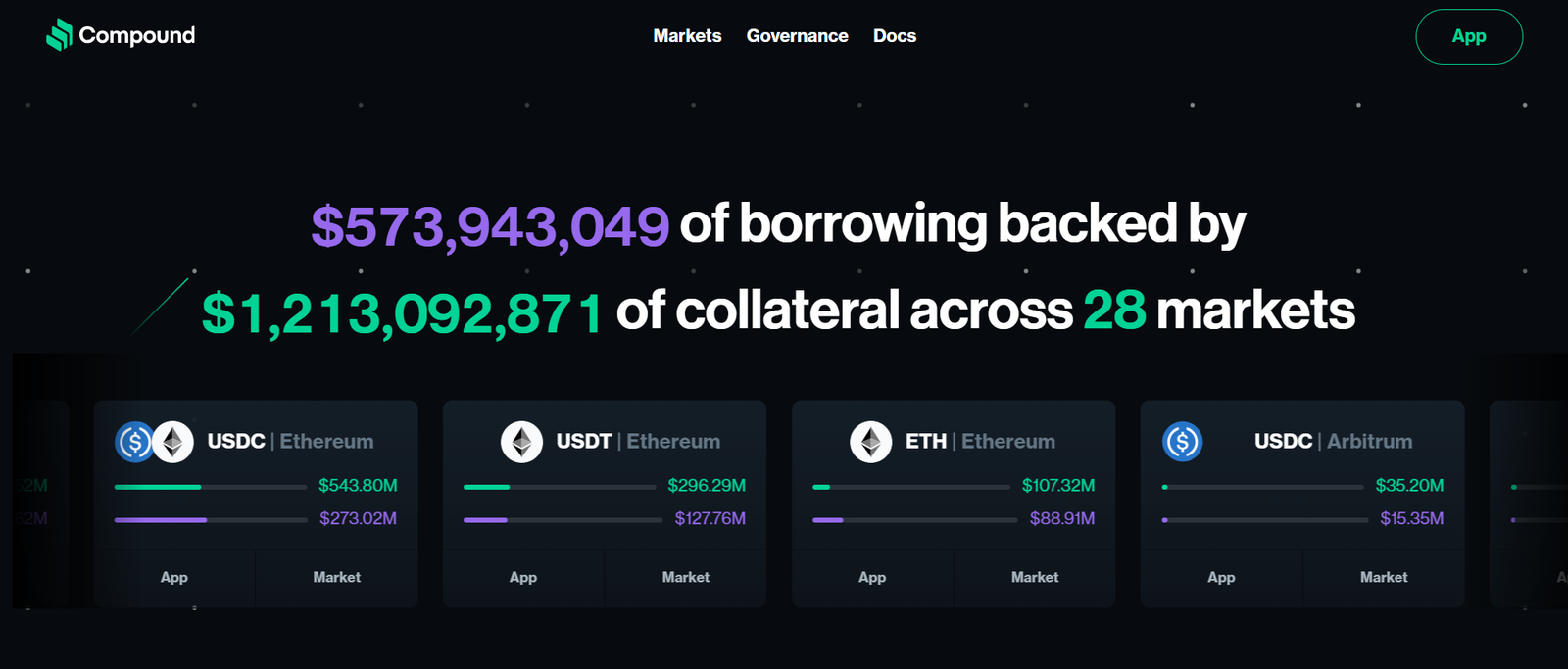
If Aave is known for feature depth, Compound is known for simplicity and protocol purity.For UK investors focused on decentralised lending as part of a staking & yield farming strategy, Compound remains one of the foundational DeFi protocols.
In most Compound review comparisons, the discussion centres on its algorithmic interest rate model and early role in DeFi lending markets.Compound is a decentralised lending protocol built primarily on Ethereum.
Users can:
- Supply assets to earn interest
- Borrow against collateral
- Earn governance tokens in some markets
Used by:
- UK DeFi investors
- Stablecoin allocators
- Yield farmers layering staking and lending
- DAO treasuries managing on-chain reserves
If you are comparing Compound vs Aave, Compound offers a more streamlined feature set with fewer complex options.
Key Features
Algorithmic Interest Rates
Compound sets supply and borrow rates automatically based on utilisation within each market.When borrowing demand rises, supply APY rises.
Why it matters: rates respond directly to market activity rather than fixed reward schedules. In many Compound review discussions, this algorithmic model is praised for transparency.
cTokens and Interest Accrual
When you deposit assets into Compound, you receive cTokens representing your claim on the pool.These tokens increase in exchange value over time as interest accrues.
For UK investors tracking yield, this structure creates passive compounding without manual claiming.
Collateralised Borrowing
Like Aave, Compound allows you to borrow against supplied collateral.This opens layered yield strategies:
- Deposit ETH
- Borrow stablecoins
- Deploy stablecoins into liquidity pools
However, falling collateral value can trigger liquidation.Understanding collateral factors is essential before entering leveraged positions.
Governance Participation
Compound token holders can participate in protocol governance.For UK investors active in DAO ecosystems, governance exposure may add strategic value beyond yield generation.
When reviewing Compound alternatives, governance participation is often a deciding factor.
Ethereum-Native Liquidity Depth
Compound’s core markets remain concentrated on Ethereum.
While this limits cross-chain flexibility compared to Aave, it concentrates liquidity and simplifies risk assessment.Gas fees must be factored into smaller allocations.
Pros & Cons
| Pros | Cons |
| Non-custodial | Smart contract risk |
| Transparent rate model | Limited cross-chain reach |
| Passive compounding via cTokens | Liquidation risk |
| Established DeFi protocol | Fewer advanced features than Aave |
Pricing
Compound does not charge traditional platform fees.Costs include:
- Borrow interest rates
- Gas fees
- Potential liquidation penalties
Interest spreads and reserve factors sustain the protocol.When comparing Compound pricing vs Aave, both rely on dynamic utilisation models rather than fixed commissions.
Best For UK Investors Seeking Simpler DeFi Lending
Compound suits:
- Stablecoin lenders seeking passive on-chain yield
- ETH holders building collateral strategies
- UK DeFi users preferring straightforward interfaces
- DAO treasuries allocating reserves conservatively
If you want multi-chain deployment and broader token support, Aave may offer more flexibility.If you want cleaner lending markets with fewer moving parts, Compound remains attractive.
Verdict: Compound remains a core DeFi lending tool for UK investors integrating lending into staking & yield farming strategies.
Advanced Yield Tactic: Stablecoin Rotation
Some experienced UK yield farmers:
- Supply stablecoins into Compound
- Monitor utilisation spikes
- Rotate capital between USDC, DAI and other pools based on APY shifts
This requires active monitoring but can produce more consistent yield compared to static staking.
Best Alternative
Aave is the most direct competitor in decentralised lending markets.If your focus shifts toward stablecoin liquidity farming instead of lending, Curve Finance becomes more relevant.
Curve Finance

In most Curve Finance review breakdowns, the key advantage is simple: highly efficient swaps between similar assets with reduced slippage, which generates trading fees for liquidity providers.
Curve Finance is a decentralised exchange designed primarily for:
- Stablecoin swaps
- Liquid staking token pairs
- Similar-asset liquidity pools
Used by:
- UK stablecoin investors
- Liquid staking token farmers
- DAO treasuries allocating treasury reserves
- Yield farmers layering multiple reward streams
If you are comparing Curve vs Uniswap, Curve generally offers more efficient pricing for similar-asset swaps.
Key Features
Low-Slippage Stablecoin Pools
Curve’s automated market maker is specifically designed for assets with similar price pegs.Why it matters: lower slippage means more volume. More volume means higher fee generation for liquidity providers.
In many Curve Finance review discussions, this efficiency is the core reason large capital allocators prefer Curve for stablecoin liquidity.
Gauge Voting and Boosted Rewards
CRV token holders can lock tokens to vote on reward distribution across pools.Liquidity providers who lock CRV can increase their yield multipliers.This introduces governance strategy into yield farming.Advanced UK investors often combine Curve with Convex to increase reward efficiency.
Liquid Staking Token Pools
Curve supports pools pairing ETH with stETH, rETH and other liquid staking tokens.
This enables:
- Base staking yield
- Trading fee income
- Governance token rewards
This layered structure makes Curve central to many staking & yield farming strategies in the UK.
Deep Stablecoin Liquidity
Curve holds some of the largest stablecoin liquidity pools in DeFi.For UK investors deploying six-figure or larger allocations, liquidity depth reduces execution risk.When comparing Curve alternatives, liquidity concentration is often the deciding factor.
Integration With Yield Optimisers
Protocols such as Yearn and Convex integrate directly with Curve to automate reward compounding.This means UK investors can access Curve yield without manually claiming and reinvesting rewards.
Pros & Cons
| Pros | Cons |
| Deep stablecoin liquidity | Smart contract risk |
| Efficient low-slippage pools | Impermanent loss exposure |
| Multiple reward layers | Governance complexity |
| Strong DeFi integrations | Variable APY |
Pricing
Curve charges trading fees on swaps within pools.Liquidity providers earn a share of those fees.
Additional returns may come from:
- CRV emissions
- External incentive tokens
Gas fees apply when depositing or withdrawing liquidity.When comparing Curve pricing vs Uniswap, Curve often provides more efficient fee generation for similar-asset pairs.
Best For UK Stablecoin and Liquid Staking Farmers
Curve suits:
- UK investors holding stablecoins long-term
- Liquid staking token holders seeking additional yield
- DAO treasuries allocating low-volatility assets
- Yield farmers combining governance incentives
If your focus is volatile token pairs, Uniswap may be more appropriate.If your goal is stablecoin capital efficiency, Curve remains central.
Verdict: Curve Finance is a core infrastructure layer for UK staking & yield farming strategies focused on stable assets.
Advanced Yield Tactic: Curve and Convex Stacking
Experienced UK yield farmers often:
- Provide liquidity to a Curve pool
- Stake LP tokens in Convex
- Earn boosted CRV and CVX rewards
- Reinvest emissions
This increases effective APY but introduces additional protocol exposure.Risk is layered alongside yield.
Best Alternative
If you prefer general token liquidity pools rather than stablecoin-focused markets, Uniswap is the primary alternative.If you want automated vault management over Curve pools, Yearn Finance becomes relevant.
Yearn Finance
For UK investors who do not want to manually harvest rewards, reposition liquidity or monitor shifting APYs, Yearn automates the heavy lifting.
In most Yearn Finance review discussions, the key theme is automation. Deposit assets into a vault, and the protocol allocates capital across strategies designed to earn yield..Yearn Finance is a decentralised yield aggregator built primarily on Ethereum and selected Layer 2 networks.
Users deposit assets into vaults. The vault:
- Deploys capital into lending markets
- Provides liquidity to Curve
- Stakes LP tokens in Convex
- Harvests and compounds rewards
Used by:
- UK stablecoin investors
- DeFi users seeking passive management
- Yield farmers stacking Curve and Convex rewards
- DAO treasuries allocating treasury capital
If you are comparing Yearn vs Beefy, Yearn tends to focus heavily on Ethereum-based strategies with deeper integration into Curve ecosystems.
Key Features
Automated Vault Allocation
Yearn vaults automatically deploy capital into strategies designed to earn the highest available yield within defined parameters.Why it matters: instead of manually moving assets between Aave, Curve and Convex, the vault handles reallocation.
In many Yearn Finance review analyses, automation is cited as the core advantage over manual farming.
Auto-Compounding Rewards
Rewards earned from strategies are harvested and reinvested automatically.This creates compounding without requiring manual transactions.
For UK investors facing Ethereum gas costs, this automation reduces friction and missed compounding cycles.
Curve and Convex Integration
Yearn vaults frequently integrate with Curve pools and Convex staking mechanisms.This means depositors can benefit from:
- Trading fees
- CRV emissions
- CVX rewards
All without actively managing gauge voting or reward claims.This layered structure makes Yearn central to advanced stablecoin farming.
Strategy Transparency
Each vault publishes:
- Strategy description
- Historical APY
- Allocation breakdown
For UK investors reviewing protocol risk, visibility into underlying strategy matters.When comparing Yearn alternatives, transparency of vault mechanics is often a deciding factor.
Governance-Led Development
Yearn operates via decentralised governance.Vault strategies evolve over time depending on market conditions and community decisions.
For DAO participants and governance-focused investors, this structure aligns with broader DeFi participation.
Pros & Cons
| Pros | Cons |
| Automated yield allocation | Smart contract risk |
| Auto-compounding | Strategy complexity |
| Deep Curve integration | Variable APY |
| Reduces manual management | Ethereum gas costs |
Pricing
Yearn typically charges:
- A performance fee on profits
- A management fee on assets within vaults
Exact percentages vary by vault.There are no upfront deposit fees in most cases, but gas fees apply.
When comparing Yearn pricing vs Beefy, Yearn often applies performance-based fee structures tied to vault returns.
Best For UK Investors Seeking Passive Yield Automation
Yearn suits:
- Stablecoin holders avoiding manual farming
- ETH and liquid staking token holders
- DAO treasuries allocating long-term capital
- UK investors comfortable with DeFi but short on time
If you want full manual control over each protocol interaction, Yearn may feel restrictive.If you prefer automated yield stacking, it reduces operational burden.
Verdict: Yearn Finance provides automated vault management for UK investors integrating lending, liquidity farming and staking rewards.
Advanced Yield Tactic: Stablecoin Vault Rotation
Experienced UK yield farmers monitor:
- Shifts in stablecoin pool incentives
- Changes in Curve gauge weight
- Convex reward rates
Capital is rotated between Yearn vaults accordingly.While Yearn automates strategy internally, vault selection still requires oversight.
Best Alternative
If you want cross-chain yield aggregation beyond Ethereum, Beefy Finance becomes the primary alternative.If you prefer manual control within Curve and Convex directly, you may bypass vaults entirely.
Convex Finance
For UK investors already providing liquidity on Curve, Convex can materially change effective APY.In most Convex Finance review discussions, the headline benefit is simple: earn boosted CRV rewards without personally locking CRV for voting power.Convex Finance is a protocol built on top of Curve.
It allows users to:
- Stake Curve LP tokens
- Earn boosted CRV rewards
- Earn CVX tokens
- Participate in governance dynamics indirectly
Instead of locking CRV yourself to increase rewards, Convex aggregates CRV and distributes boosted incentives across users.
Used by:
- UK stablecoin liquidity providers
- Advanced DeFi yield farmers
- DAO treasuries managing Curve exposure
- Investors stacking multiple reward layers
If you are comparing Convex vs Yearn, Yearn automates strategy allocation while Convex focuses specifically on enhancing Curve-based rewards.
Key Features
CRV Reward Boost Without Locking
On Curve alone, reward boosts require locking CRV tokens.Convex aggregates locked CRV and redistributes boosted yield to LP stakers.
UK investors can earn enhanced CRV emissions without personally committing capital to long lock periods.
CVX Token Incentives
In addition to boosted CRV rewards, users earn CVX tokens.This creates an additional reward stream layered on top of trading fees and CRV emissions.However, token price volatility affects total return. Yield must be assessed in real terms rather than headline APY.
Simplified Curve Participation
Convex abstracts some of Curve’s governance complexity.
Instead of managing gauge voting directly, liquidity providers stake LP tokens and receive optimised distribution.For UK investors who want improved yield without active governance management, this reduces operational friction.
Strong Integration With Yearn
Yearn vaults often route Curve LP tokens into Convex automatically.This creates a multi-layer yield stack:
- Curve trading fees
- Boosted CRV rewards
- CVX emissions
- Auto-compounding via Yearn
When reviewing Convex alternatives, this ecosystem integration is central.
Governance and veToken Dynamics
Convex participates heavily in Curve governance through veCRV holdings.For advanced UK investors, understanding the CRV vote market and gauge weight dynamics becomes part of yield strategy.
This is no longer passive staking. It becomes incentive allocation analysis.
Pros & Cons
| Pros | Cons | |
| Boosted Curve rewards | Smart contract risk | |
| Additional CVX incentives | Token price volatility | |
| No personal CRV lock required | Complex reward structure | |
| Strong DeFi integrations | Dependent on Curve ecosystem |
Pricing
Convex does not charge upfront deposit fees.Revenue comes from:
- Performance fees on CRV rewards
- Protocol-level reward distribution mechanisms
Users also pay Ethereum gas fees.When comparing Convex pricing vs Curve alone, net yield often improves due to boosted emissions, even after fees.
Best For UK Investors Farming Stablecoin Liquidity
Convex suits:
- Curve LP providers seeking higher effective APY
- UK stablecoin investors with medium to high risk tolerance
- Yield farmers comfortable managing multiple token exposures
- DAO treasuries active in DeFi governance ecosystems
If you are not using Curve, Convex does not apply.If you are already on Curve, Convex becomes difficult to ignore.
Verdict: Convex Finance is a yield multiplier for UK investors committed to Curve-based liquidity farming.
Advanced Yield Tactic: CRV Accumulation and Vote Exposure
Some advanced UK investors:
- Farm CRV via Convex
- Accumulate CVX
- Participate indirectly in governance weight allocation
- Target pools expected to receive higher emissions
This adds a strategic layer beyond passive liquidity provision.It also increases governance exposure risk.
Best Alternative
If you prefer automated yield vault management over direct LP staking, Yearn Finance is the primary alternative.If you want to remain at the base protocol level, Curve without Convex remains viable.
PancakeSwap
For UK investors comfortable moving beyond Ethereum, PancakeSwap offers staking and yield farming opportunities on BNB Smart Chain with significantly lower transaction costs.
In most PancakeSwap review discussions, the attraction is clear: higher headline APY and cheaper on-chain execution compared to Ethereum-based protocols.PancakeSwap is a decentralised exchange and yield farming platform built on BNB Smart Chain.
Users can:
- Provide liquidity to token pairs
- Stake CAKE tokens
- Participate in farming pools
- Join liquidity mining campaigns
Used by:
- UK yield farmers chasing higher APY
- Investors comfortable with BNB Smart Chain risk
- Liquidity providers seeking lower gas costs
- Traders rotating capital into alternative ecosystems
If you are comparing PancakeSwap vs Uniswap, the main difference is chain ecosystem and fee structure.
Key Features
Liquidity Pool Farming
Users deposit token pairs into liquidity pools and earn:
- Trading fees
- CAKE token rewards
Why it matters: on BNB Smart Chain, lower gas fees mean smaller allocations can remain profitable.In many PancakeSwap review comparisons, this cost efficiency is a primary advantage for retail UK investors.
CAKE Staking Pools
CAKE holders can stake tokens in Syrup Pools to earn additional rewards, often in new or partner tokens.
This creates:
- Base token exposure
- Additional farming rewards
However, CAKE price volatility affects overall yield.
Lower Transaction Costs
BNB Smart Chain transaction fees are typically much lower than Ethereum mainnet.
For UK investors deploying under five-figure allocations, this significantly improves net return after costs.When comparing PancakeSwap alternatives, gas efficiency becomes a major differentiator.
High Headline APY Opportunities
Some farming pools advertise double-digit or higher APY.However, these rates often depend on:
- Incentive token emissions
- Pool participation levels
- Token price stability
Headline yield must be evaluated alongside token risk.
Multi-Chain Expansion
PancakeSwap has expanded beyond BNB Smart Chain to other networks, increasing flexibility.This broadens farming access but introduces additional bridge and chain risk.
Pros & Cons
| Pros | Cons |
| Low gas fees | Smart contract risk |
| High APY potential | Impermanent loss |
| Wide token variety | Incentive token volatility |
| Active farming ecosystem | BNB Smart Chain exposure |
Pricing
PancakeSwap charges trading fees within liquidity pools.Liquidity providers earn a share of these fees.
There are no fixed staking fees beyond network transaction costs.When comparing PancakeSwap pricing vs Uniswap, PancakeSwap generally offers lower transaction costs but may carry higher token risk.
Best For UK Investors Seeking Higher Yield With Lower Gas Costs
PancakeSwap suits:
- UK investors deploying smaller allocations
- Yield farmers comfortable with alternative chains
- Traders rotating into new token incentives
- Liquidity providers seeking lower execution costs
If your focus is stablecoin farming with deep liquidity, Curve may be preferable.
If you want high APY farming opportunities outside Ethereum, PancakeSwap becomes attractive.
Verdict: PancakeSwap offers higher yield potential for UK investors willing to accept additional ecosystem risk.
Advanced Yield Tactic: Incentive Rotation Strategy
Experienced UK yield farmers:
- Monitor newly launched farming pools
- Enter early when emissions are highest
- Exit before reward dilution increases
- Reallocate to the next high-incentive pool
This requires active oversight and rapid execution.It increases yield potential but also token exposure risk.
Best Alternative
If you prefer Ethereum-native liquidity pools with broader institutional participation, Uniswap is the closest alternative.If you want automated cross-chain yield aggregation, Beefy Finance becomes relevant.
Uniswap

For UK investors participating in staking & yield farming on Ethereum, Uniswap often becomes the primary venue for volatile token pairs and liquid staking token liquidity.
In most Uniswap review discussions, the defining feature is control. You choose your price range, your capital exposure and your token pairs.Uniswap is a decentralised exchange operating primarily on Ethereum and Layer 2 networks such as Arbitrum and Optimism.
Users can:
- Provide liquidity to token pairs
- Earn trading fees
- Manage concentrated liquidity positions
- Participate in governance
Supported pairs include:
- ETH and stablecoins
- ETH and liquid staking tokens
- Altcoin pairs
- Governance token pairs
If you are comparing Uniswap vs Curve, Uniswap handles a broader range of token volatility but exposes liquidity providers to greater impermanent loss risk.
Key Features
Concentrated Liquidity Model
Uniswap v3 introduced concentrated liquidity.Instead of providing liquidity across all price ranges, you allocate capital within a defined price band.
Why it matters: capital efficiency increases if price remains within range. However, if price exits the range, you stop earning fees.In many Uniswap review breakdowns, this feature is described as powerful but requiring active management.
Broad Token Coverage
Uniswap supports thousands of ERC-20 tokens.For UK investors participating in new token launches or volatile altcoin markets, Uniswap is often the first liquidity venue.This broad exposure increases yield opportunities but also risk.
Layer 2 Deployment
Uniswap operates on Layer 2 networks such as Arbitrum and Optimism.Lower gas fees make smaller liquidity allocations more viable for UK investors.When comparing Uniswap alternatives, Layer 2 deployment significantly affects net yield after costs.
Governance Participation
UNI token holders can vote on protocol proposals.For DAO-aligned UK investors, governance participation adds strategic value beyond fee income.
Liquid Staking Token Pairs
Uniswap supports pools pairing ETH with stETH, rETH and other derivatives.
This allows:
- Base staking yield
- Trading fee income
- Optional leveraged exposure
Unlike Curve, slippage is higher for similar-asset pairs, but token flexibility is greater.
Pros & Cons
| Pros | Cons |
| Full liquidity control | Impermanent loss risk |
| Wide token coverage | Requires active management |
| Layer 2 support | Smart contract exposure |
| Concentrated capital efficiency | Yield depends on trading volume |
Pricing
Uniswap charges trading fees within pools.
Fee tiers vary, commonly:
- 0.05 percent
- 0.3 percent
- 1 percent
Liquidity providers earn a share proportional to their position within the active price range.Gas fees apply when adjusting ranges or withdrawing liquidity.
When comparing Uniswap pricing vs Curve, Uniswap often offers higher fees for volatile pairs but requires more active management.
Best For UK Investors Comfortable With Active Liquidity Management
Uniswap suits:
- UK investors trading volatile altcoins
- ETH holders pairing with liquid staking tokens
- Active liquidity managers
- DAO treasuries deploying token reserves
If you prefer passive stablecoin farming, Curve may be more suitable.If you want higher fee potential with more volatility, Uniswap fits.
Verdict: Uniswap remains a core Ethereum liquidity platform for UK staking & yield farming strategies involving volatile token pairs.
Advanced Yield Tactic: Narrow-Range Strategy
Some experienced UK liquidity providers:
- Identify strong support and resistance zones
- Allocate liquidity within a tight price band
- Earn higher fee concentration while price trades within range
- Adjust positions as volatility shifts
This increases fee yield but demands constant monitoring.It is not passive.
Best Alternative
If your focus is stablecoin and liquid staking token efficiency, Curve remains the primary alternative.If you prefer lower gas costs on BNB Smart Chain, PancakeSwap becomes relevant.
Beefy Finance

If Yearn is Ethereum-focused automation, Beefy Finance is its cross-chain counterpart.For UK investors spreading capital across multiple networks, Beefy offers automated yield farming vaults on chains beyond Ethereum, including BNB Smart Chain, Polygon, Avalanche and others.
In most Beefy Finance review discussions, the headline advantage is simple: deposit once, auto-compound continuously, across multiple ecosystems.
Users deposit assets or LP tokens into vaults. The vault:
- Stakes LP tokens
- Harvests rewards
- Sells incentive tokens
- Reinvests automatically
Used by:
- UK yield farmers active across chains
- Stablecoin liquidity providers
- Investors chasing higher APY on alternative networks
- DeFi users seeking automation without Ethereum-only exposure
If you are comparing Beefy vs Yearn, the primary difference is chain diversity.
Key Features
Cross-Chain Vault Deployment
Beefy operates vaults across numerous blockchain ecosystems.
Why it matters: UK investors can access yield opportunities on lower-cost chains without manually managing positions on each network.In many Beefy Finance review breakdowns, this multi-chain reach is the primary advantage over Ethereum-only vaults.
Auto-Compounding Rewards
Beefy vaults automatically harvest and reinvest rewards from underlying farming positions.This creates compounding without manual interaction.For UK investors allocating across smaller networks, auto-compounding improves net yield by reducing missed harvest cycles.
Support for LP Tokens and Single-Asset Vaults
Beefy supports:
- Liquidity pool tokens
- Single-asset staking
- Stablecoin vaults
This flexibility allows investors to tailor exposure between volatile pairs and lower-risk stablecoin farming.When comparing Beefy alternatives, vault variety is often cited as a strength.
Lower Gas Cost Chains
Many Beefy vaults operate on networks with significantly lower transaction fees than Ethereum mainnet.For UK investors deploying smaller allocations, this improves cost efficiency.However, chain risk must be assessed separately.
Transparent APY Display
Beefy displays projected APY including compounding assumptions.
These figures depend on:
- Incentive emissions
- Trading volume
- Token price stability
As with all yield farming, headline APY should be evaluated against underlying token risk.
Pros & Cons
| Pros | Cons |
| Cross-chain reach | Smart contract risk |
| Auto-compounding vaults | Incentive token volatility |
| Lower gas cost networks | Chain-specific risk |
| Wide vault variety | Variable APY |
Pricing
Beefy charges:
- A small performance fee on profits
- A management component embedded in vault returns
Exact percentages vary by vault.Gas fees depend on the underlying network.
When comparing Beefy pricing vs Yearn, fees are broadly similar in structure but vary by strategy and chain.
Best For UK Investors Allocating Across Multiple Chains
Beefy suits:
- UK yield farmers active beyond Ethereum
- Stablecoin investors on BNB Smart Chain or Polygon
- LP token holders wanting automated compounding
- Investors comfortable assessing chain-specific risk
If your portfolio is entirely Ethereum-based, Yearn may provide deeper integration with Curve and Convex.If you want diversified chain exposure, Beefy becomes attractive.
Verdict: Beefy Finance offers cross-chain yield aggregation for UK investors seeking broader ecosystem exposure.
Advanced Yield Tactic: Incentive Emission Monitoring
Experienced UK yield farmers:
- Track token emission schedules
- Enter vaults early during high emission phases
- Exit before dilution increases
- Reallocate to newer vaults
This requires active oversight despite auto-compounding.Yield optimisation still depends on timing and token evaluation.
Best Beefy Alternative
If you prefer Ethereum-focused vault depth and tighter Curve integration, Yearn Finance remains the closest competitor.If you want direct farming without vault abstraction, PancakeSwap or Uniswap may be more appropriate.
Marinade Finance
For UK investors holding SOL and seeking staking rewards without locking tokens in rigid validator contracts, Marinade offers liquid staking with additional DeFi integration.
In most Marinade Finance review discussions, the appeal is liquidity. Stake SOL and receive mSOL, a liquid staking token that continues earning rewards while remaining usable across Solana DeFi.Marinade Finance is a decentralised liquid staking protocol built on Solana.
Users:
- Stake SOL
- Receive mSOL
- Earn staking rewards automatically
- Use mSOL across Solana DeFi
Used by:
- UK SOL holders
- DeFi users active on Solana
- Yield farmers diversifying beyond Ethereum
- Portfolio managers seeking multi-chain staking exposure
If you are comparing Marinade vs Jito, the difference often comes down to validator strategy and MEV reward capture.
Key Features
Liquid Staking Token mSOL
When staking through Marinade, you receive mSOL at a 1:1 exchange rate adjusted for staking rewards.Unlike rebasing tokens, mSOL appreciates relative to SOL as rewards accrue.
Why it matters: UK investors can deploy mSOL into lending markets or liquidity pools while still earning base staking yield.In many Marinade Finance review analyses, this liquidity angle is the core benefit.
Automated Validator Delegation
Marinade distributes delegated SOL across multiple validators to reduce centralisation risk.
This helps:
- Improve network decentralisation
- Reduce reliance on a small validator set
- Spread slashing risk
For UK investors concerned about validator concentration, this automated distribution provides structural diversification.
DeFi Integration Across Solana
mSOL can be used in:
- Lending protocols
- Liquidity pools
- Leveraged farming strategies
This mirrors the stETH model on Ethereum.When reviewing Marinade alternatives, DeFi composability within Solana becomes a key comparison factor.
No Minimum Staking Requirement
Unlike running a direct validator, Marinade does not require a large SOL balance.Retail UK investors can stake smaller allocations without infrastructure responsibility.
Governance Participation
Marinade token holders can participate in protocol governance.For UK investors active in DAO participation, governance exposure adds an additional layer of involvement beyond passive staking.
Pros & Cons
| Pros | Cons |
| Liquid staking via mSOL | Smart contract risk |
| Validator diversification | Solana network risk |
| DeFi composability | Token price volatility |
| No infrastructure setup | Ecosystem-specific exposure |
Pricing
Marinade takes a percentage of staking rewards as a protocol fee.There are no upfront deposit fees beyond Solana transaction costs.
Compared to Ethereum gas fees, Solana transactions are typically lower cost.When comparing Marinade pricing vs Jito, fee structure and reward composition differ depending on MEV inclusion.
Best For UK SOL Holders Seeking Liquidity
Marinade suits:
- UK investors holding SOL long term
- DeFi users active within the Solana ecosystem
- Yield farmers building multi-chain staking exposure
- Investors wanting liquid staking without validator setup
If your portfolio is entirely Ethereum-based, Marinade may not be relevant.If you hold SOL and want staking plus DeFi flexibility, it becomes a core tool.
Verdict: Marinade Finance is a leading liquid staking option for UK investors building Solana exposure in 2026.
Advanced Yield Tactic: mSOL Collateral Loop
Some experienced UK investors:
- Stake SOL via Marinade
- Deposit mSOL into a Solana lending protocol
- Borrow stablecoins
- Deploy stablecoins into liquidity pools
These compounds yield streams.However, falling SOL prices can trigger liquidation if leverage is used.
Best Marinade Alternative
If you want staking exposure that incorporates MEV rewards on Solana, Jito becomes the closest alternative.
Jito

For UK investors holding SOL and seeking more than standard staking rewards, Jito introduces MEV capture into the equation.
In most Jito review discussions, the differentiator is clear: staking rewards plus MEV rewards combined into a liquid staking token.
Jito is a Solana liquid staking protocol that:
- Allows users to stake SOL
- Issues a liquid staking token called JitoSOL
- Incorporates MEV rewards into yield
MEV, or Maximal Extractable Value, refers to additional profit opportunities captured during block production.
Used by:
- UK SOL holders seeking higher effective yield
- Advanced DeFi participants on Solana
- Investors diversifying liquid staking providers
- Portfolio managers assessing MEV exposure
If you are comparing Jito vs Marinade, the core difference is MEV integration and validator strategy.
Key Features
Liquid Staking Token JitoSOL
When you stake SOL through Jito, you receive JitoSOL.JitoSOL appreciates relative to SOL as staking and MEV rewards accumulate.
Why it matters: UK investors can continue using JitoSOL within Solana DeFi while earning both validator and MEV rewards.In many Jito review comparisons, this dual-yield structure is the headline benefit.
MEV Reward Capture
Jito integrates MEV strategies into its validator operations.
This means stakers receive:
- Base staking rewards
- Additional MEV-derived income
While MEV increases potential yield, it depends on network activity and validator performance.Yield may fluctuate more than standard staking.
Validator Network Design
Jito collaborates with selected validators optimised for MEV extraction.For UK investors evaluating Jito alternatives, validator composition and performance metrics become central to comparison.Understanding validator exposure is essential before allocating significant capital.
DeFi Composability
JitoSOL can be used in:
- Lending markets
- Liquidity pools
- Leveraged farming strategies
This mirrors the liquid staking design seen on Ethereum and Solana via Marinade.However, liquidity depth may vary depending on ecosystem integration.
Transparent Reward Reporting
Jito provides reporting dashboards tracking:
- Base staking rewards
- MEV contribution
- Validator performance
For UK investors comparing yield sources, separating staking and MEV components improves clarity.
Pros & Cons
| Pros | Cons |
| Staking plus MEV rewards | Smart contract risk |
| Liquid staking token | Solana network exposure |
| DeFi composability | MEV variability |
| Potentially higher effective APY | Ecosystem-specific liquidity |
Pricing
Jito takes a percentage of staking and MEV rewards as protocol fees.There are no upfront staking fees beyond Solana transaction costs.When comparing Jito pricing vs Marinade, differences depend on validator yield and MEV contribution rather than headline fee percentage alone.
Best For UK SOL Holders Seeking Enhanced Yield
Jito suits:
- UK investors seeking higher effective SOL yield
- DeFi users comfortable with MEV exposure
- Multi-chain investors diversifying staking providers
- Portfolio managers analysing validator-level return drivers
If you prefer simpler staking without MEV variability, Marinade may feel more predictable.If you want potentially higher yield through block optimisation, Jito becomes compelling.
Verdict: Jito adds MEV-driven yield to Solana liquid staking for UK investors in 2026.
Advanced Yield Tactic: Split SOL Allocation
Some experienced UK investors:
- Allocate part of SOL to Marinade
- Allocate part to Jito
- Compare effective yield over time
- Rebalance based on performance
This diversifies validator and MEV exposure within Solana.
Best Jito Alternative
If you prefer broader validator distribution without MEV focus, Marinade Finance remains the closest alternative.
StakeWise
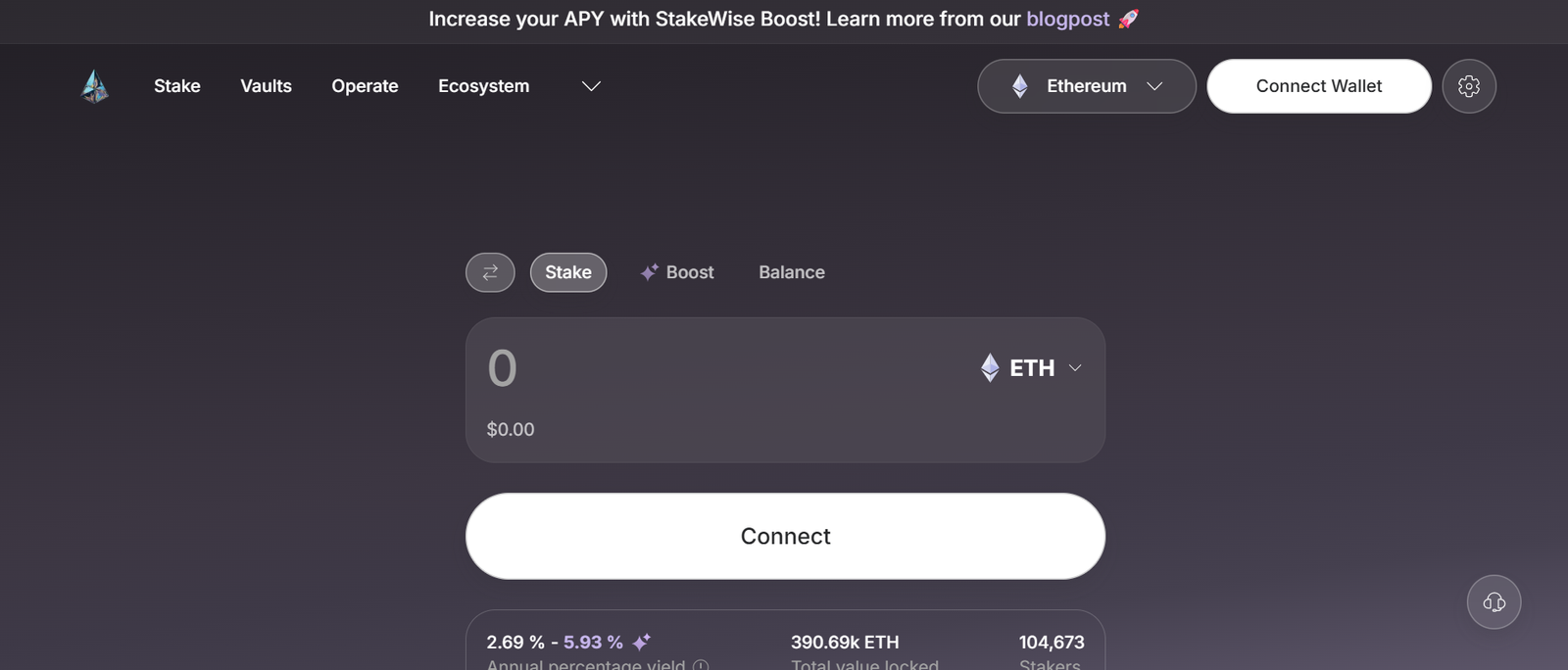
For UK investors holding ETH who want liquid staking with detailed reward accounting, StakeWise is frequently compared as an alternative in serious staking discussions.In most StakeWise review breakdowns, the emphasis falls on reward clarity and token structure.
StakeWise is a decentralised Ethereum staking protocol offering liquid staking via tokenised representations of staked ETH.
Users:
- Stake ETH
- Receive liquid staking tokens
- Earn staking rewards automatically
- Retain DeFi usability
StakeWise has evolved through protocol upgrades, refining its token model and staking architecture.
Used by:
- UK ETH long-term holders
- DeFi users seeking liquid staking alternatives
- Investors diversifying away from single-provider exposure
- Portfolio managers managing staking concentration risk
If you are comparing StakeWise vs Lido, the main discussion points are token structure and validator decentralisation.
Key Features
Liquid Staking Token Model
StakeWise issues liquid staking tokens representing staked ETH and accrued rewards.Unlike traditional locked staking, your position remains transferable and usable within DeFi protocols.
Why it matters: UK investors maintain capital flexibility while earning base Ethereum staking rewards. In many StakeWise review comparisons, token mechanics are a core differentiator.
Transparent Reward Accounting
StakeWise emphasises structured accounting of staking rewards.Rewards are distributed through token mechanics rather than opaque reward calculations.
For UK investors tracking tax reporting and yield performance, clarity in reward flow can simplify record-keeping.
Validator Infrastructure Network
StakeWise works with a distributed validator set.This reduces reliance on a single operator model and spreads staking responsibility.When reviewing StakeWise alternatives, validator decentralisation often becomes a key evaluation factor.
DeFi Integration
StakeWise tokens can be deployed into:
- Lending protocols
- Liquidity pools
- Yield farming strategies
This enables layered returns similar to stETH and rETH strategies.However, liquidity depth may differ depending on ecosystem adoption.
Modular Protocol Development
StakeWise has implemented protocol upgrades to refine staking efficiency and validator design.
For UK investors evaluating long-term staking partners, development trajectory and governance evolution matter alongside APY.
Pros & Cons
| Pros | Cons |
| Liquid staking flexibility | Smart contract risk |
| Transparent reward mechanics | Lower liquidity vs Lido |
| Validator diversification | Ethereum gas fees |
| DeFi composability | Market share smaller than competitors |
Pricing
StakeWise charges a percentage of staking rewards as protocol fees.There are no upfront deposit costs beyond Ethereum gas fees.
When comparing StakeWise pricing vs Lido, fee structures may be competitive, but effective yield depends on validator performance and liquidity.
Best For UK ETH Holders Diversifying Liquid Staking
StakeWise suits:
- UK investors splitting ETH across multiple staking providers
- DeFi users seeking alternatives to stETH
- Portfolio managers reducing single-protocol exposure
- ETH holders prioritising reward accounting transparency
If you prefer the largest liquidity pool and widest integration, Lido may remain dominant.If you want diversification within Ethereum liquid staking, StakeWise provides optionality.
Verdict: StakeWise offers a viable Ethereum liquid staking alternative for UK investors managing provider concentration risk.
Advanced Yield Tactic: Multi-Provider ETH Allocation
Some experienced UK investors:
- Allocate ETH across Lido, Rocket Pool and StakeWise
- Monitor effective yield and liquidity depth
- Adjust exposure based on validator performance and DeFi integration
This reduces dependency on a single liquid staking token.
Best StakeWise Alternative
If you prioritise maximum liquidity and ecosystem integration, Lido remains the dominant choice.If you prioritise decentralised validator participation, Rocket Pool is often compared.
Frax Finance

For UK investors looking beyond basic liquid staking tokens, Frax introduces a broader ecosystem approach combining liquid staking, stablecoins and yield strategies.In most Frax Finance review discussions, the focus centres on Frax Ether and how it integrates with the wider Frax ecosystem.
Frax Finance is a decentralised protocol known for its stablecoin infrastructure and DeFi integrations.
Within staking & yield farming, its key product is:
- Frax Ether, often referred to as frxETH and sfrxETH
Used by:
- UK ETH holders seeking alternative liquid staking exposure
- DeFi participants active in stablecoin systems
- Yield farmers layering staking and lending
- Investors diversifying liquid staking providers
If you are comparing Frax Finance vs Lido, the main difference is ecosystem integration rather than pure market share.
Key Features
Dual-Token Staking Model
Frax Ether operates with two related tokens:
- frxETH, a liquid representation of staked ETH
- sfrxETH, which accrues staking rewards
Why it matters: UK investors can choose between maintaining liquidity with frxETH or locking into sfrxETH for yield accrual.In many Frax Finance review analyses, this dual structure is considered flexible but more complex than single-token liquid staking.
Integration With Frax Stablecoin Ecosystem
Frax is not just a staking provider. It operates within a broader stablecoin infrastructure.
frxETH and related tokens can integrate into:
- Lending markets
- Stablecoin pools
- Yield strategies within the Frax ecosystem
This creates layered yield possibilities tied to Frax protocol activity.
Competitive Staking Yield
Frax Ether staking yield depends on validator performance and protocol design.In some periods, effective yield may compete closely with Lido or Rocket Pool.
When reviewing Frax alternatives, yield comparison should consider liquidity depth and token market stability.
DeFi Composability
frxETH can be deployed across DeFi protocols.
This enables:
- Collateralised borrowing
- Liquidity pool participation
- Leveraged staking loops
However, liquidity depth may differ compared to stETH.
Governance and Ecosystem Alignment
Frax governance influences staking and emission strategies.For UK investors active in DAO governance, ecosystem participation may influence long-term yield outlook.
Pros & Cons
| Pros | Cons |
| Flexible dual-token model | Smart contract risk |
| Integrated stablecoin ecosystem | More complex structure |
| Liquid staking exposure | Lower liquidity than stETH |
| DeFi composability | Ecosystem-specific risk |
Pricing
Frax charges protocol fees on staking rewards.Exact percentages vary depending on staking structure and validator configuration.
Gas fees apply when interacting on Ethereum.When comparing Frax pricing vs Lido, effective yield depends on both base staking performance and ecosystem incentives.
Best For UK Investors Seeking Ecosystem-Based Staking Exposure
Frax Finance suits:
- UK ETH holders diversifying liquid staking providers
- DeFi users participating in stablecoin ecosystems
- Yield farmers layering staking and lending
- Investors comfortable with more complex token mechanics
If you prefer simple staking with maximum liquidity, Lido may remain the default choice.If you want ecosystem-linked staking exposure, Frax becomes compelling.
Verdict: Frax Finance offers alternative Ethereum liquid staking integrated into a broader DeFi ecosystem for UK investors in 2026.
Advanced Yield Tactic: sfrxETH Yield Rotation
Some experienced UK investors:
- Convert ETH to frxETH
- Stake into sfrxETH for yield
- Monitor liquidity conditions
- Rotate between frxETH and sfrxETH depending on DeFi opportunities
This allows flexible yield participation while retaining optional liquidity.
Best Frax Finance Alternative
If you prioritise maximum liquidity and integration across DeFi, Lido remains the dominant liquid staking option.If you prefer decentralised validator participation, Rocket Pool is often compared.
Ankr
For UK investors holding assets beyond ETH and SOL, Ankr provides staking services and liquid staking tokens across several networks.In most Ankr review discussions, the focus is on multi-chain access and infrastructure scale rather than single-network dominance.
Ankr is a blockchain infrastructure provider offering:
- Staking services
- Liquid staking derivatives
- Validator infrastructure
- API and RPC services
Users can:
- Stake tokens
- Receive liquid staking derivatives
- Earn staking rewards
- Deploy liquid tokens into DeFi
Used by:
- UK multi-chain investors
- Portfolio managers consolidating staking access
- DeFi users seeking liquid staking across ecosystems
- Institutions requiring infrastructure-backed staking
If you are comparing Ankr vs Lido, Ankr’s strength lies in cross-chain coverage rather than Ethereum market share.
Key Features
Multi-Chain Liquid Staking
Ankr offers liquid staking tokens for multiple networks, not just Ethereum.Why it matters: UK investors holding diversified portfolios can access liquid staking without switching between different protocol interfaces.In many Ankr review comparisons, this multi-chain convenience is the primary advantage.
Validator Infrastructure at Scale
Ankr operates validator nodes across various blockchains.This infrastructure background provides staking services backed by operational expertise.For UK investors evaluating Ankr alternatives, infrastructure maturity often becomes part of the assessment.
Liquid Staking Derivatives
When staking through Ankr, users receive derivative tokens representing their staked assets.
These derivatives:
- Accrue staking rewards
- Remain transferable
- Integrate with DeFi protocols
This mirrors the model used by Lido and Marinade but across more chains.
API and Institutional Access
Ankr also serves developers and institutions with blockchain infrastructure APIs.For UK portfolio managers operating at scale, institutional-grade access may influence provider selection.
DeFi Integration
Ankr liquid staking tokens can be deployed into:
- Lending markets
- Liquidity pools
- Yield farming strategies
Liquidity depth varies depending on network and token adoption.
Pros & Cons
| Pros | Cons |
| Multi-chain staking access | Smart contract risk |
| Liquid staking flexibility | Variable liquidity depth |
| Infrastructure-backed provider | Ecosystem-specific exposure |
| DeFi composability | Lower market share than Lido on ETH |
Pricing
Ankr charges a percentage of staking rewards as protocol fees.There are no upfront deposit costs beyond network transaction fees.When comparing Ankr pricing vs single-chain providers, effective yield depends on validator performance and liquidity integration.
Best For UK Investors Holding Multi-Chain Portfolios
Ankr suits:
- UK investors staking across several blockchains
- Portfolio managers consolidating staking providers
- DeFi users deploying liquid derivatives across ecosystems
- Investors seeking infrastructure-backed services
If your portfolio is concentrated solely in Ethereum, Lido or Rocket Pool may offer deeper liquidity.If you hold assets across chains, Ankr reduces fragmentation.
Verdict: Ankr provides multi-chain staking infrastructure for UK investors building diversified staking & yield farming strategies in 2026.
Advanced Yield Tactic: Cross-Chain Yield Allocation
Some experienced UK investors:
- Stake ETH via one provider
- Stake SOL via another
- Use Ankr for secondary chains
- Deploy liquid derivatives into lending or liquidity pools
This diversifies provider and chain exposure simultaneously.
Best Ankr Alternative
If you want single-chain dominance and maximum liquidity, Lido remains stronger on Ethereum.
Nexo

For UK investors seeking staking & yield farming exposure without interacting with wallets or smart contracts, Nexo provides a custodial yield model.In most Nexo review discussions, the core appeal is simplicity. Deposit assets, earn daily interest, withdraw when needed subject to plan terms.
Nexo is a centralised crypto finance platform offering:
- Interest accounts
- Fixed-term deposits
- Crypto-backed loans
- Token reward programmes
Supported assets typically include:
- Bitcoin
- Ethereum
- Stablecoins
- Major altcoins
Unlike DeFi protocols such as Aave or Curve, Nexo custody is internal. You deposit assets directly into the platform.
Used by:
- UK retail investors seeking passive crypto income
- Long-term holders avoiding DeFi complexity
- Investors holding stablecoins for yield
- Portfolio managers balancing custodial and non-custodial exposure
If you are comparing Nexo vs Binance Earn, the primary difference is product structure and platform ecosystem.
Key Features
Daily Interest Accrual
Nexo pays interest daily on supported assets.Why it matters: UK investors seeking consistent yield without manual claiming can track returns in a predictable format.In many Nexo review comparisons, daily accrual is positioned as a key convenience factor.
Fixed and Flexible Terms
Users can choose:
- Flexible savings accounts with lower APY
- Fixed-term deposits with higher APY
Locking assets for a defined period increases yield.This structure resembles traditional savings models rather than DeFi farming dynamics.
Crypto-Backed Lending
Nexo allows users to borrow against deposited crypto.
This means UK investors can:
- Retain asset exposure
- Access liquidity without selling
- Use borrowed funds elsewhere
However, collateral liquidation risk exists if market prices decline sharply.
Loyalty Tier System
Nexo offers tier-based yield adjustments depending on how much of the NEXO token a user holds.Higher tiers may unlock better interest rates.Token exposure adds additional risk, as yield increases may be offset by token volatility.
Custodial Risk Management
Nexo positions itself around custody and security frameworks.However, as a centralised platform, counterparty risk remains present.When reviewing Nexo alternatives, platform solvency and transparency become key evaluation points.
Pros & Cons
| Pros | Cons |
| Simple interface | Custodial counterparty risk |
| Daily interest payments | Tier system tied to token exposure |
| Fixed-term options | No DeFi composability |
| Crypto-backed lending | Regulatory exposure |
Pricing
Nexo does not charge explicit deposit fees.
Yield rates vary depending on:
- Asset type
- Loyalty tier
- Fixed vs flexible terms
Effective APY typically ranges between:
- 4 to 8 percent for major assets
- Higher for stablecoins or fixed-term products
When comparing Nexo pricing vs Binance Earn, rates may appear competitive but depend on token tier participation.
Best For UK Investors Seeking Passive Custodial Yield
Nexo suits:
- UK investors avoiding DeFi interaction
- Stablecoin holders seeking predictable APY
- Long-term holders earning interest without active management
- Portfolio managers balancing custodial exposure
If your goal is layered yield farming across DeFi protocols, Nexo will feel limited.If your goal is a simplified yield within a centralised platform, it fits.
Verdict: Nexo offers custodial crypto yield for UK investors prioritising simplicity over DeFi composability.
Advanced Yield Tactic: Tier Efficiency Calculation
Some experienced UK investors:
- Calculate the cost of acquiring NEXO tokens to reach higher tiers
- Compare additional yield earned vs token exposure risk
- Decide whether loyalty participation improves net return
Yield optimisation here becomes a capital allocation calculation rather than a farming strategy.
Best Nexo Alternative
If you want broader exchange-integrated yield products, Binance Earn is commonly compared.
OKX Earn
For UK investors balancing custodial simplicity with access to multiple staking and yield farming options, OKX Earn provides a hybrid structure.
In most OKX Earn review discussions, the core appeal is variety. Flexible staking, fixed-term deposits and selected DeFi integrations all sit within one exchange interface.
OKX Earn is the yield platform within the OKX exchange ecosystem.
It offers:
- Flexible staking
- Fixed-term staking
- Structured yield products
- DeFi yield integrations
- Dual investment products
Supported assets include:
- Ethereum
- Bitcoin
- Stablecoins
- Major altcoins
- Emerging tokens
Used by:
- UK retail investors seeking convenience
- Multi-asset holders managing yield centrally
- Investors rotating between CeFi and DeFi products
- Portfolio managers diversifying custodial providers
If you are comparing OKX Earn vs Binance Earn, the main difference is product availability and regional access.
Key Features
Flexible and Fixed Staking Products
Users can choose between:
- Flexible accounts with lower APY and withdrawal access
- Fixed-term products with higher APY
Why it matters: UK investors can align yield products with liquidity needs rather than locking capital blindly.In many OKX Earn review comparisons, flexibility is positioned as a primary advantage.
Access to DeFi Yield Through Exchange Interface
OKX Earn sometimes integrates DeFi products within its platform.This allows users to gain exposure to DeFi yields without directly interacting with wallets or smart contracts.However, custody remains centralised.This structure appeals to investors who want exposure without technical management.
Dual Investment and Structured Products
OKX Earn includes structured yield products tied to price targets.These products combine yield with conditional buy or sell triggers.
Advanced UK investors may use these tools for structured income strategies, but understanding settlement mechanics is critical.
Multi-Asset Coverage
OKX supports a broad range of tokens across staking and yield products.This allows UK investors to consolidate yield management within one interface rather than splitting capital across multiple exchanges.
Integrated Trading and Yield Rotation
Because OKX is an exchange, users can move capital between trading and staking quickly.
This facilitates:
- Tactical allocation shifts
- Response to market volatility
- Yield rotation strategies
When reviewing OKX Earn alternatives, this integration between trading and yield is often a key comparison factor.
Pros & Cons
| Pros | Cons |
| Broad product variety | Custodial counterparty risk |
| Flexible and fixed options | Regulatory exposure |
| Integrated trading access | Less DeFi transparency |
| Hybrid CeFi and DeFi exposure | Structured product complexity |
Pricing
OKX Earn does not typically charge visible staking setup fees.
Yield rates vary depending on:
- Asset type
- Lock duration
- Market conditions
Effective APY commonly ranges from:
- 3 to 8 percent for major assets
- Higher for smaller tokens or structured products
When comparing OKX Earn pricing vs Binance Earn, headline APY may fluctuate depending on promotional campaigns and token demand.
Best For UK Investors Seeking Hybrid Yield Access
OKX Earn suits:
- UK investors wanting exchange-based staking
- Multi-asset holders consolidating yield
- Traders rotating between trading and staking
- Investors seeking some DeFi exposure without full self-custody
If you prefer full decentralisation, DeFi-native tools such as Lido, Aave or Curve remain more suitable.If you prefer simple custodial yield, platforms like Nexo may feel cleaner.
Verdict: OKX Earn offers hybrid yield access for UK investors combining exchange convenience with broader product variety in 2026
How UK Investors Should Approach Staking & Yield Farming in 2026
Staking & yield farming in the UK is no longer experimental. It is a capital allocation decision.
You now have 20 tools ranging from:
- Ethereum liquid staking leaders like Lido, Rocket Pool and StakeWise
- DeFi lending engines like Aave and Compound
- Stablecoin liquidity powerhouses like Curve and Convex
- Cross-chain aggregators like Beefy and Ankr
- Solana liquid staking via Marinade and Jito
- Custodial yield platforms such as Binance Earn, Kraken, Nexo and OKX Earn
FAQS
1. Is staking taxable in the UK?
Yes. In most cases, staking rewards are treated as income when received, subject to Income Tax. If tokens are later sold, Capital Gains Tax may apply. Treatment depends on facts and timing, so individual assessment is essential.
2. Is yield farming legal in the UK?
Participating in DeFi protocols is not illegal. However, tax reporting obligations apply. Investors must track income, gains and token swaps carefully.
3. What is the safest staking option for UK investors?
Exchange staking reduces smart contract exposure but introduces custodial risk.
Liquid staking reduces lock-up risk but introduces smart contract exposure.
Solo validation reduces counterparty risk but increases operational complexity.
4. What is liquid staking?
Liquid staking allows you to stake assets while receiving a derivative token representing your position. That token can be used in DeFi while you continue earning staking rewards.
5. What is impermanent loss?
Impermanent loss occurs when the price of tokens in a liquidity pool diverges relative to holding them separately. It affects liquidity providers on platforms such as Uniswap or PancakeSwap.
6. What is MEV in staking?
MEV stands for Maximal Extractable Value. Some validators capture additional profit from block ordering and transaction inclusion. Protocols such as Jito incorporate MEV into staking rewards.
7. Is custodial staking risky?
Yes. Custodial platforms carry counterparty risk. If the platform experiences financial distress, access to funds may be affected.
Final Thoughts
Staking & yield farming in the UK in 2026 is not early-stage experimentation.It is a capital strategy.
You now have access to:
- Liquid staking providers
- DeFi lending markets
- Stablecoin liquidity platforms
- Cross-chain vault aggregators
- Custodial yield products
The difference between sustainable yield and avoidable loss is design.A well-structured staking stack can:
- Preserve liquidity
- Reduce concentration risk
- Generate layered yield
- Limit liquidation exposure
- Maintain reporting clarity